
Plan the movement before touching the asset
Successful equipment recovery begins with a verified scope, safe access, and a shared sequence. The seller, qualified contractors, rigging team, and carrier should understand the same equipment list and release requirements.
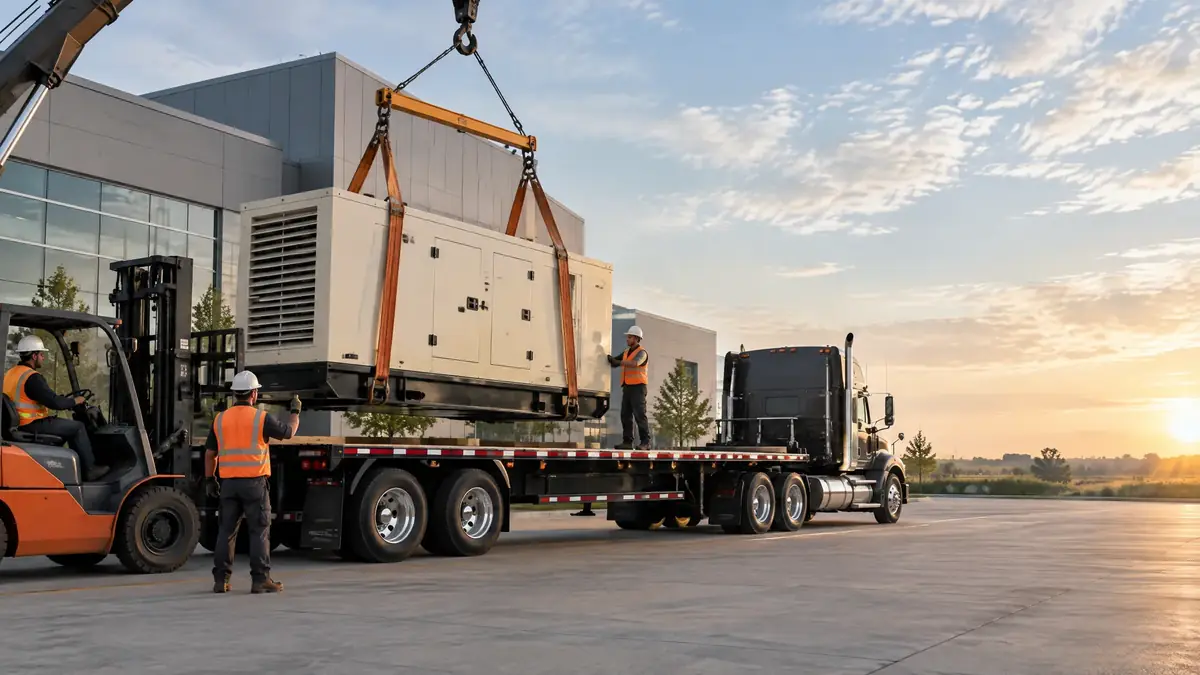
Pre-removal documentation
The team records equipment identifiers, dimensions, approximate weight, center-of-gravity considerations, included accessories, and current condition. Photographs document the asset before movement. The site contact confirms whether utilities have been isolated and whether batteries, fuel, coolant, or other materials require special handling. A final asset schedule should match the purchase documents so the crew does not have to make commercial decisions while a truck or crane is waiting.
Access and lift planning
Routes are reviewed for overhead clearance, floor capacity, door openings, curbs, grade changes, security restrictions, and staging space. The appropriate contractor determines rigging, lifting points, forklift capacity, crane requirements, and exclusion zones. Weather, public access, overhead utilities, neighboring operations, and emergency routes may also affect the plan. No generic field note replaces a site-specific safety plan or the judgment of qualified tradespeople.
Isolation and release responsibilities
The seller should identify who is authorized to shut down, disconnect, drain, and release the equipment. Electrical isolation, fuel handling, battery removal, coolant management, and environmental requirements vary by asset and site. The buyer needs a clear statement of what will be completed before arrival and what remains within the pickup scope. When a facility stays operational, the project sequence must protect critical loads and avoid unplanned outages.
Matching the equipment to transportation
Accurate dimensions and weight guide trailer selection, load distribution, permits, securement, and routing. Enclosures, exhaust components, radiators, tanks, and loose accessories may require separate protection. A compact generator can still create a difficult load when the only exit has limited height or turning radius. Early measurement is faster and safer than solving clearance problems after the crew arrives.
Pickup coordination
Carrier arrival, loading equipment, crew access, and facility operations must align. Clear roles reduce idle time and prevent unsafe improvisation. The site contact should know the driver or dispatcher, expected arrival window, security procedure, and loading location. After loading, the seller and buyer confirm the released assets, photograph the completed load when appropriate, and retain the transaction documentation.
Protecting the facility during movement
The removal route may need floor protection, temporary barriers, spotters, traffic control, dust management, or scheduled elevator and dock access. Doors, walls, overhead systems, finished surfaces, landscaping, and nearby equipment should be considered before the load moves. In occupied properties, the team may also need noise limits, public separation, infection-control measures, or after-hours work. These requirements belong in the plan rather than being discovered during removal. A clean work area and documented condition after pickup help the seller close the project confidently.
Post-project records
Keep the signed purchase documents, serial-number list, photographs, carrier information, and site release record. For corporate, healthcare, education, and government sellers, these records may support accounting, asset retirement, insurance, security, or internal audit requirements. A disciplined closeout also makes future projects easier because the organization has a repeatable model for identifying, evaluating, and releasing surplus equipment.
Questions resolved before mobilization
Before a field team is scheduled, the parties should know the exact asset, responsible site contact, approved access route, isolation status, loading method, required credentials, arrival window, weather limitations, and escalation contact. The seller should also identify any areas that must remain operational or protected. Resolving these questions early reduces costly standby time and gives qualified contractors the information needed to prepare their own task plans.
Why the sequence matters
Industrial removals become difficult when commercial decisions, technical work, and transportation happen out of order. The equipment should be documented before components are separated. The scope should be agreed before disconnection. Access should be checked before the lift plan is finalized. Transportation should be confirmed before the crew mobilizes. A deliberate sequence protects the equipment, the facility, and the schedule while giving every participant a clear responsibility.
Use field notes as questions, not universal instructions
Every property, asset, contractor scope, and release schedule is different. Apply the planning questions from this example to the current site, then have qualified personnel verify capacities, hazards, isolation, lifting, and transport requirements. The useful lesson is the decision sequence—not an assumption that one project plan can be copied onto another.