Do we buy ITE K-DON circuit breakers?
Yes—Surplus Generator Buyers purchases ITE K‑DON circuit breakers when the manufacturer, exact catalog/series, ratings, condition, quantity, location, completeness, and current demand align. Offers depend on ampere/frame/trip type, interrupting rating, accessory presence, and documented history. Send photos, nameplate data, and location details to begin a quick appraisal and next‑step discussion.
What sellers should know
ITE K‑DON breakers are a recognizable commercial and industrial line found in switchgear, MCCs, and service panels. Surplus Generator Buyers evaluates exact K‑DON catalog numbers, frame sizes, trip modules, and interrupting ratings before making offers. We buy intact draw‑out and molded‑case units, rebuildable cores, and documented spare inventories nationwide. Provide clear nameplate photos, serials, and any datasheets to speed appraisal. Do not perform energized inspections; qualified electrical personnel must handle live testing and disconnection.
Examples we review
Use the list below as an identification guide, not a promise that every unit will qualify. The exact model, configuration, condition, quantity, location, completeness, and present demand still control the purchasing decision.
What information should you send?
A complete submission lets a buyer answer the seller’s real question: whether this exact breaker or inventory has a practical commercial market. Copy identifiers exactly as shown and support them with current photographs.
Manufacturer (ITE) and series (K‑DON)
Complete catalog/model number from the nameplate
Ampere, frame, and trip type (thermal, electronic, etc.)
Voltage, poles, and interrupting rating (if marked)
Condition and any recent testing or maintenance records
Quantity available and physical location/access details
What affects marketability and value?
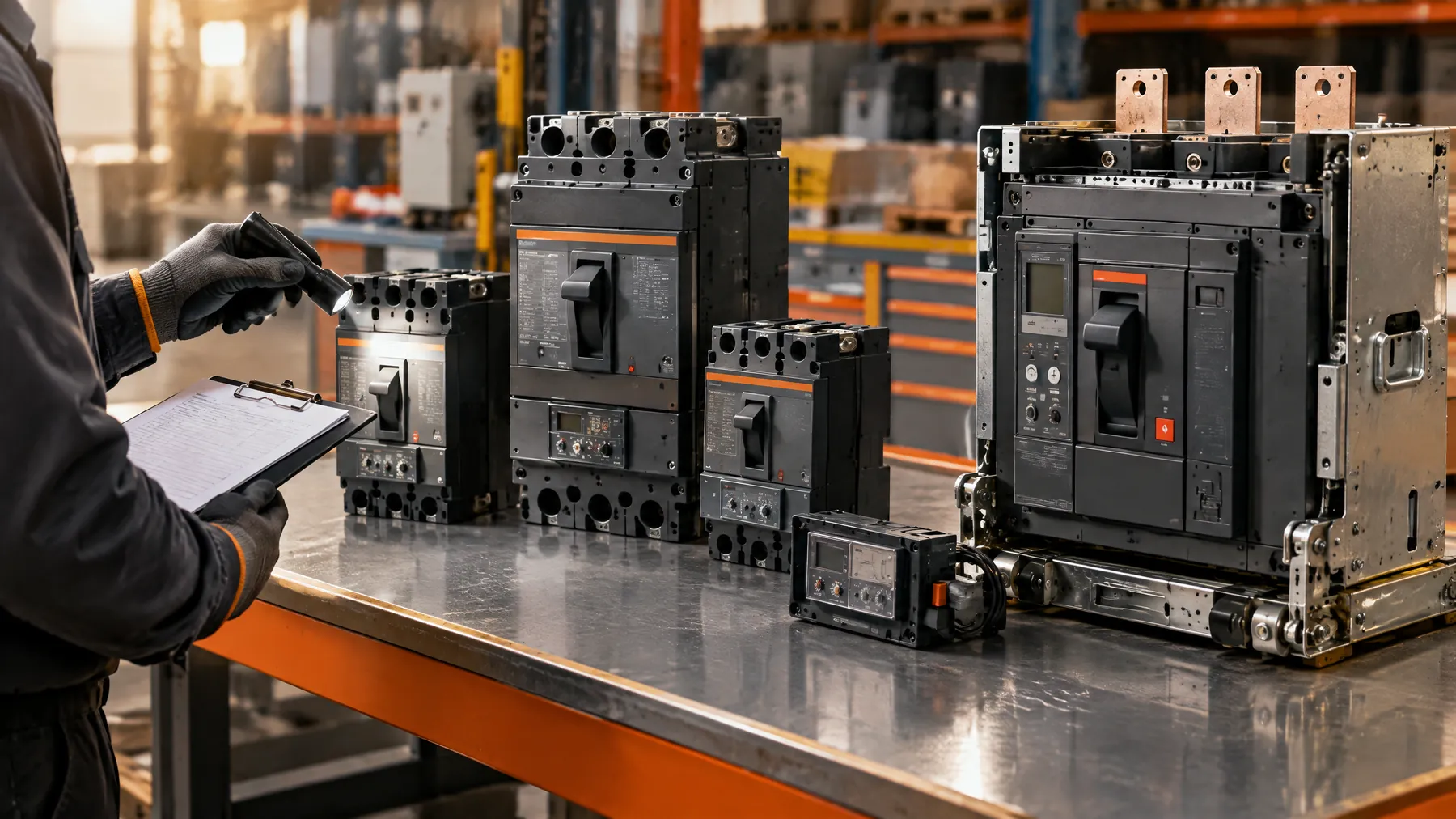
K‑DON breakers are marketable when they match common industrial frames, retain factory nameplates, and include original trip units or accessories. Buyers favor standard ampere frames and higher interrupting ratings used in MCC and switchgear projects. Units with maintenance records or recent testing move faster. Damaged or undocumented units may still sell for parts or cores, but require sufficient quantity or clear photos to be commercially attractive.
Exact Model Match
Exact K‑DON catalog and model numbers strongly affect resale. Buyers need the full code to confirm frame size, trip compatibility, and accessory fit for retrofit or replacement applications.
Interrupting Rating
A documented interrupting rating determines suitability for commercial switchgear and MCC applications. Higher ratings and intact nameplates increase buyer confidence and broaden resale opportunities.
Trip Unit Condition
Original trip modules, settings, and functional condition are critical. Electronic or factory‑calibrated trip units command more interest than missing or altered trip assemblies.
Documentation & History
Maintenance logs, test stickers, and installation history reduce perceived risk. Units with clear records and photos typically receive faster offers and more straightforward logistics planning.
Where this equipment is commonly found
ITE K‑DON breakers typically serve industrial switchgear, motor control centers, and commercial distribution panels. Project history matters because breakers removed from clean, light‑duty environments usually have longer useful life than units from corrosive or heavy‑cycling services. Knowing original load role, maintenance intervals, and trip changes helps assess resale potential. Do not attempt energized inspections; qualified electrical personnel must perform testing and disconnection before removal.
How to prepare the breaker for review
Preserve all nameplates, trip units, and accessory parts. Photograph each breaker: close‑up nameplate, front, rear, interior trip mechanism, and mounting hardware. Record serial numbers, full catalog/model codes, ampere/frame/trip settings, date codes, and exact location. Include any service labels or test stickers. Do not perform live testing or removal yourself; qualified electrical personnel must handle energized equipment and safe disconnection before shipment.
Do not clean labels with harsh chemicals, dismantle the breaker for better photographs, remove copper, separate matched accessories, or energize an unknown unit. Keep the inventory dry, protected from impact, and associated with its records. Qualified personnel must control any testing, electrical isolation, disconnection, racking, rigging, or field removal.
How the sale moves forward
Frequently asked questions
Do you buy used or obsolete ITE K‑DON breakers?
Yes. We often buy used, out‑of‑production, or obsolete K‑DON breakers for parts, cores, or rebuild programs depending on model, condition, and quantity. Provide detailed photos and nameplate data. Qualified electrical personnel must handle any energized removal prior to inspection.
What photos and information do you need to get an offer?
Supply clear photos: nameplate close‑up, front and rear views, interior trip mechanism, and any accessory tags. Include full catalog/model code, ampere/frame/trip info, serial numbers, and location. Do not work on energized equipment; have qualified personnel confirm safe access.
What quantities do you buy and do you assist with shipping or removal?
We buy single breakers up to large lots. Removal and shipping can be coordinated, but sellers should arrange qualified contractors for energized disconnection and safe rigging. Provide quantity, weight estimates, and access details so we can advise on logistics and potential pickup options.
How long does it take to receive an appraisal or offer?
Response time depends on identification quality, quantity, condition, location, and project complexity. Complete catalog information, readable labels, current photographs, and clear logistics details reduce follow-up questions. Large or installed inventories may require additional review before terms are final.