Do we buy identifying a commercial circuit breaker before requesting an offer?
Yes—Surplus Generator Buyers purchases commercial circuit breakers depending on manufacturer, exact catalog or series, electrical ratings, condition, quantity, location, completeness, and current demand. For an accurate offer, provide clear photos, full model/catalog numbers, amp/frame and interrupting ratings, and the unit’s condition. Qualified personnel must disconnect or remove energized equipment; we’ll discuss logistics and timing after initial review.
What sellers should know
Identifying a commercial circuit breaker correctly is the first step before requesting an offer from Surplus Generator Buyers. We need specific, legible identifiers: manufacturer name, full catalog or series number, serial, stamped ampere and frame sizes, interrupting ratings, and any trip unit details. Photographs of the nameplate, front face, and internal mechanism speed evaluation. Note the breaker’s installed environment, service history, and whether it was part of switchgear or MCC. Provide quantity and access details so we can advise on inspection and removal logistics. Qualified personnel must handle energized testing and disconnection.
Examples we review
Use the list below as an identification guide, not a promise that every unit will qualify. The exact model, configuration, condition, quantity, location, completeness, and present demand still control the purchasing decision.
What information should you send?
A complete submission lets a buyer answer the seller’s real question: whether this exact breaker or inventory has a practical commercial market. Copy identifiers exactly as shown and support them with current photographs.
Manufacturer name (exact spelling)
Complete catalog/model or series number (full code)
Ampere, frame, and trip information (adjustable settings noted)
Voltage rating, pole count, and interrupting rating (when applicable)
Condition and testing history (visual condition, tags, recent tests)
Quantity and precise location (building, room, rack, accessibility)
What affects marketability and value?
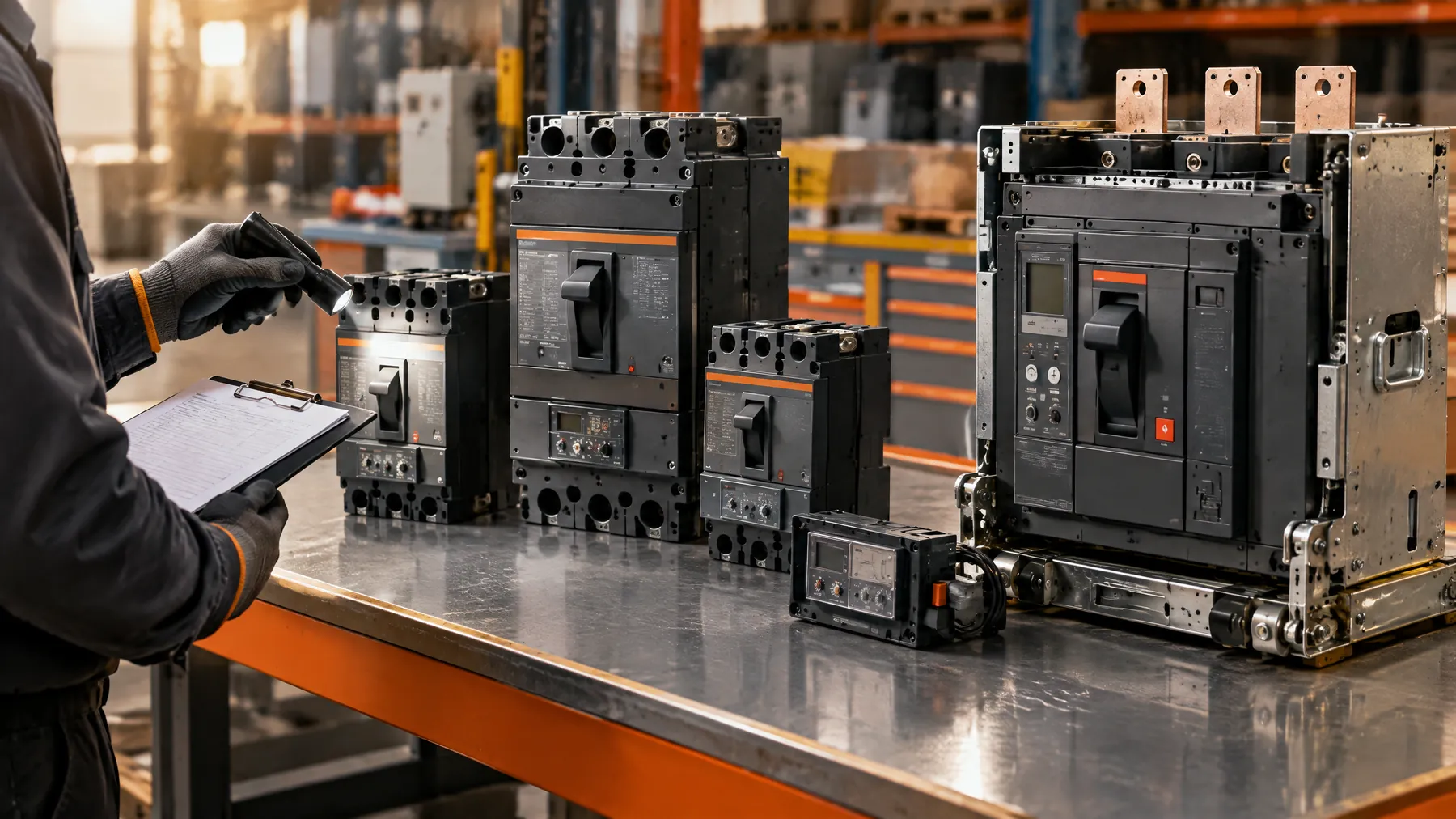
Commercial breakers are marketable when they carry clear identification, modern trip technology, and ratings that match current industrial needs. Buyers look for unmodified OEM parts, readable nameplates, and intact trip units or removable electronic modules. Matched sets, breakers pulled from retirement with maintenance records, and units with recent testing or tag history command stronger interest. Obsolete or heavily damaged units may still move as spares or cores. We evaluate each breaker against current demand from rebuilders, contractors, and asset managers before making an offer. Location and quantity affect transport economics. Accessories like handles, racking kits, and test blocks boost interest.
Manufacturer & Series
Well-known brands and complete series numbers speed resale. Exact catalog IDs let buyers match spare parts and verify original specs. Unclear or partial IDs reduce offers and increase inspection time.
Electrical Ratings
Ampacity, frame size, pole count, voltage, and interrupting rating determine compatibility for reuse. Breakers with stamped, readable ratings are far easier to price and sell than units missing key electrical information.
Condition & Testing
Evidence of recent testing, clean internals, and intact trip units increases buyer confidence. Corroded or mechanically damaged breakers require inspection or repair, lowering interest unless presented as spares or core units for refurbishment.
Quantity & Sets
Multiple identical breakers, complete panels, or full cam-operated sets sell better. Larger, uniform lots reduce per-unit handling and appeal to rebuilders and installers seeking matched components for switchgear or MCC refurbishment.
Where this equipment is commonly found
Commercial circuit breakers commonly come from switchgear, motor control centers, generator paralleling panels, UPS bypasses, and industrial distribution systems. Knowing the project history—reason for removal, service life, and fault events—helps determine reuse potential. Breakers removed after planned upgrades often have higher resale value than those retired after failure. Provide maintenance logs and trip records when available. Removal, testing, and any energized work must be done by qualified technicians before sale and during buyer inspections.
How to prepare the breaker for review
Before requesting an offer, preserve nameplates, serial tags, and any accessory parts. Photograph the breaker mounted and removed: front face, nameplate, interior, trip unit, and external damage. Note mounting style, draw-out racking features, and any auxiliary contacts or shunt trips. Keep wired accessories and fasteners with the unit. Do not power, test, or disconnect energized equipment yourself; have qualified personnel complete those steps and provide safety documentation for buyer review.
Do not clean labels with harsh chemicals, dismantle the breaker for better photographs, remove copper, separate matched accessories, or energize an unknown unit. Keep the inventory dry, protected from impact, and associated with its records. Qualified personnel must control any testing, electrical isolation, disconnection, racking, rigging, or field removal.
How the sale moves forward
Frequently asked questions
Do you buy used or obsolete commercial circuit breakers?
Yes, we consider used, end-of-life, and obsolete commercial breakers on a case-by-case basis. Value depends on identifiable model numbers, ratings, condition, and salvageability. Provide documentation and photos. Removal and testing of energized units must be handled by qualified personnel before we finalize any purchase agreement.
What photos do you need to identify a breaker?
Photograph the full nameplate, complete catalog/model number, serial number, front face, interior with trip mechanism, trip unit labels, and any accessory tags. Include close-ups of stamped amp/frame, voltage, pole markings, and any damage. Keep units powered off until qualified personnel secure them.
How many breakers do you buy, and who handles shipping or removal?
We buy single breakers up to large lots nationwide. Offers depend on quantity, type, and location. We can arrange freight or local pickup in many cases, or work with your carrier. Final logistics and costs are agreed after inspection. Qualified personnel must manage energized disconnection and removal.
How fast can I get an offer after I submit breaker details?
Response time depends on identification quality, quantity, condition, location, and project complexity. Complete catalog information, readable labels, current photographs, and clear logistics details reduce follow-up questions. Large or installed inventories may require additional review before terms are final.