Do we buy packaging and shipping commercial circuit breakers for a completed sale?
Yes—We buy commercial and industrial circuit breakers, subject to manufacturer, exact catalog/series, ratings, condition, quantity, location, completeness, and current demand. For a completed sale we’ll confirm acceptance, provide written packaging and shipping instructions, arrange insured carriers, and coordinate pickup. Qualified personnel must handle energized disconnection and removal; we’ll request photos and specifics before issuing shipping directions and a firm offer.
What sellers should know
Packaging and shipping commercial circuit breakers after sale requires clear identification, safe preparation, and coordinated logistics. Surplus Generator Buyers purchases depend on exact model data, ratings, and condition. Once a lot is accepted we provide tailored packing instructions to protect nameplates, trip electronics, and mounting hardware. We advise on palletizing, crating, moisture protection, labeling heavy lifts, and choosing insured carriers. Any energized disconnection or on-site testing must be done by qualified electrical personnel before shipment.
Examples we review
Use the list below as an identification guide, not a promise that every unit will qualify. The exact model, configuration, condition, quantity, location, completeness, and present demand still control the purchasing decision.
What information should you send?
A complete submission lets a buyer answer the seller’s real question: whether this exact breaker or inventory has a practical commercial market. Copy identifiers exactly as shown and support them with current photographs.
Manufacturer
Complete catalog/model number
Ampere/frame and trip-unit information
Voltage, poles, and interrupting rating (where relevant)
Condition and testing history
Quantity and pickup/shipping location
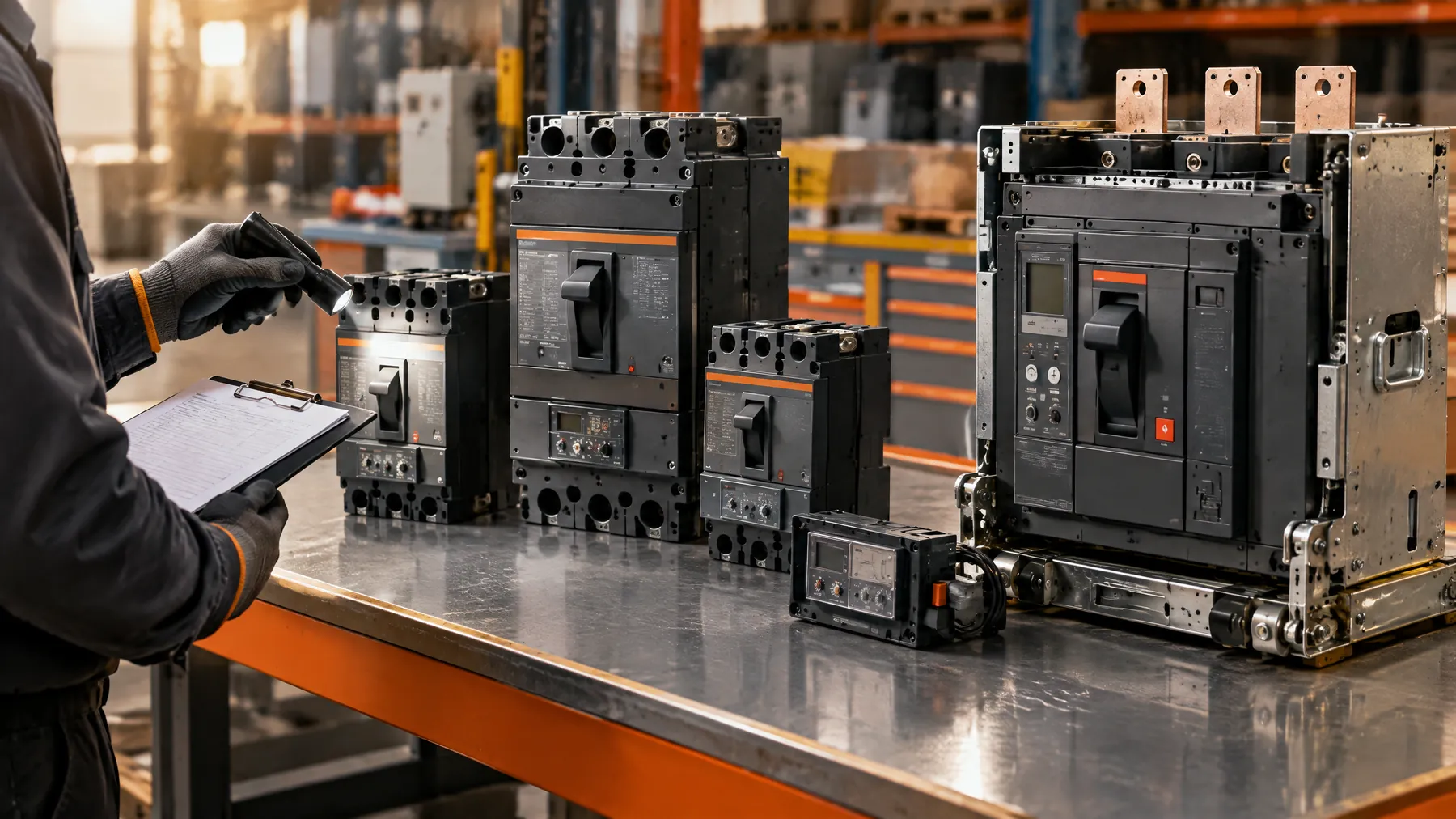
What affects marketability and value?
Marketability centers on traceable identification, intact electronics, and quantity. Breakers with readable nameplates, complete trip units, current interrupting ratings, and matching frames are in steady demand. Matched lots, spares from recent projects, and common commercial sizes (MCCB, ACB, LV power breakers) move faster. Missing tags, unknown internal damage, or mixed untested lots lower interest. We evaluate each shipment and recommend packaging or testing to maximize resale potential.
Brand and Series
Recognizable manufacturers and common series increase resale demand. Buyers look for consistent model lines to match spares and replacements. Well-documented brand and series data reduce inspection time and improve market acceptance.
Interrupting Rating
The interrupting or AIC rating defines application suitability. Higher rated breakers are rarer and more marketable; mismatched or unclear ratings require testing and reduce buyer confidence, adding handling or refurbishment costs.
Condition & Testing
Documented mechanical condition and recent trip testing dramatically affect value. Breakers with test reports, calibrated trip settings, or recent maintenance are easier to remarket than unknown-service units or untested lots.
Accessories & Completeness
Completeness—handles, racking assemblies, auxiliary contacts, and mounting hardware—preserves functionality for buyers. Missing components often force buyers to seek additional parts or lower offers for increased refurbishment expense.
Where this equipment is commonly found
Commercial and industrial breakers typically originate from distribution upgrades, plant decommissions, data center refreshes, or contractor changeouts. Project history—installation date, maintenance, fault records, and role in the system—helps buyers judge remaining life and test needs. Breakers removed as documented spares or during planned outages are preferred. Always have qualified electrical personnel perform disconnection, isolation, and any energized testing prior to packaging or shipment.
How to prepare the breaker for review
Preserve and document nameplates, catalog/model tags, serial numbers, and trip-unit part numbers. Photograph both sides, close-ups of nameplates, the trip mechanism, mounting hardware, and any damage. Keep related accessories—handles, racking assemblies, auxiliary contacts—with the unit. For shipping, cap terminals, secure units to pallets or in crates rated for weight, and protect electronic trip modules from moisture. Qualified personnel must disconnect and render equipment safe before packing.
Do not clean labels with harsh chemicals, dismantle the breaker for better photographs, remove copper, separate matched accessories, or energize an unknown unit. Keep the inventory dry, protected from impact, and associated with its records. Qualified personnel must control any testing, electrical isolation, disconnection, racking, rigging, or field removal.
How the sale moves forward
Frequently asked questions
Do you buy used or obsolete commercial circuit breakers?
Yes, we consider used and obsolete commercial breakers case-by-case. Acceptance depends on identifiable model data, condition, interrupting rating, and demand. Obsolete parts sometimes sell as spares, but we assess testing, completeness, and market interest before making an offer.
What photos and documentation do you need to make an offer?
Provide clear photos of both breaker faces, a close-up of the nameplate, serial numbers, trip-unit labels, mounting hardware, and any damage. Include quantity, location, service history, and any available test reports to speed a reliable evaluation.
What quantities do you buy and who handles shipping or removal?
We buy single units and large lots nationwide, but quantity affects logistics and pricing. For accepted lots we can arrange carriers or coordinate seller pickup. Qualified electrical personnel must handle disconnection and safe removal before carrier loading.
How quickly can you issue packing instructions and arrange pickup?
Response time depends on identification quality, quantity, condition, location, and project complexity. Complete catalog information, readable labels, current photographs, and clear logistics details reduce follow-up questions. Large or installed inventories may require additional review before terms are final.