Do we buy evaluating the resale value of surplus circuit breakers?
Yes— Surplus Generator Buyers purchases commercial and industrial circuit breakers depending on manufacturer, exact catalog or series number, electrical ratings (ampere, frame, trip unit), condition and test status, quantity and location, completeness of accessories, and current market demand. Provide full identification and clear photos for an accurate offer. Qualified personnel must handle energized verification, disconnection, and removal.
What sellers should know
Surplus commercial and industrial circuit breakers move on the secondary market when they are accurately identified and documented. We buy draw-out and fixed-mount breakers from switchgear, MCC buckets, motor control centers, and distribution panels when catalog numbers, trip unit details, ampere and interrupting ratings, and inspection or test information are provided. Lot size, lead time, and regional logistics influence an offer. We review breakers individually and by lot, then advise on packing, testing needs, and pickup. Contact us for an appraisal and logistics planning.
Examples we review
Use the list below as an identification guide, not a promise that every unit will qualify. The exact model, configuration, condition, quantity, location, completeness, and present demand still control the purchasing decision.
What information should you send?
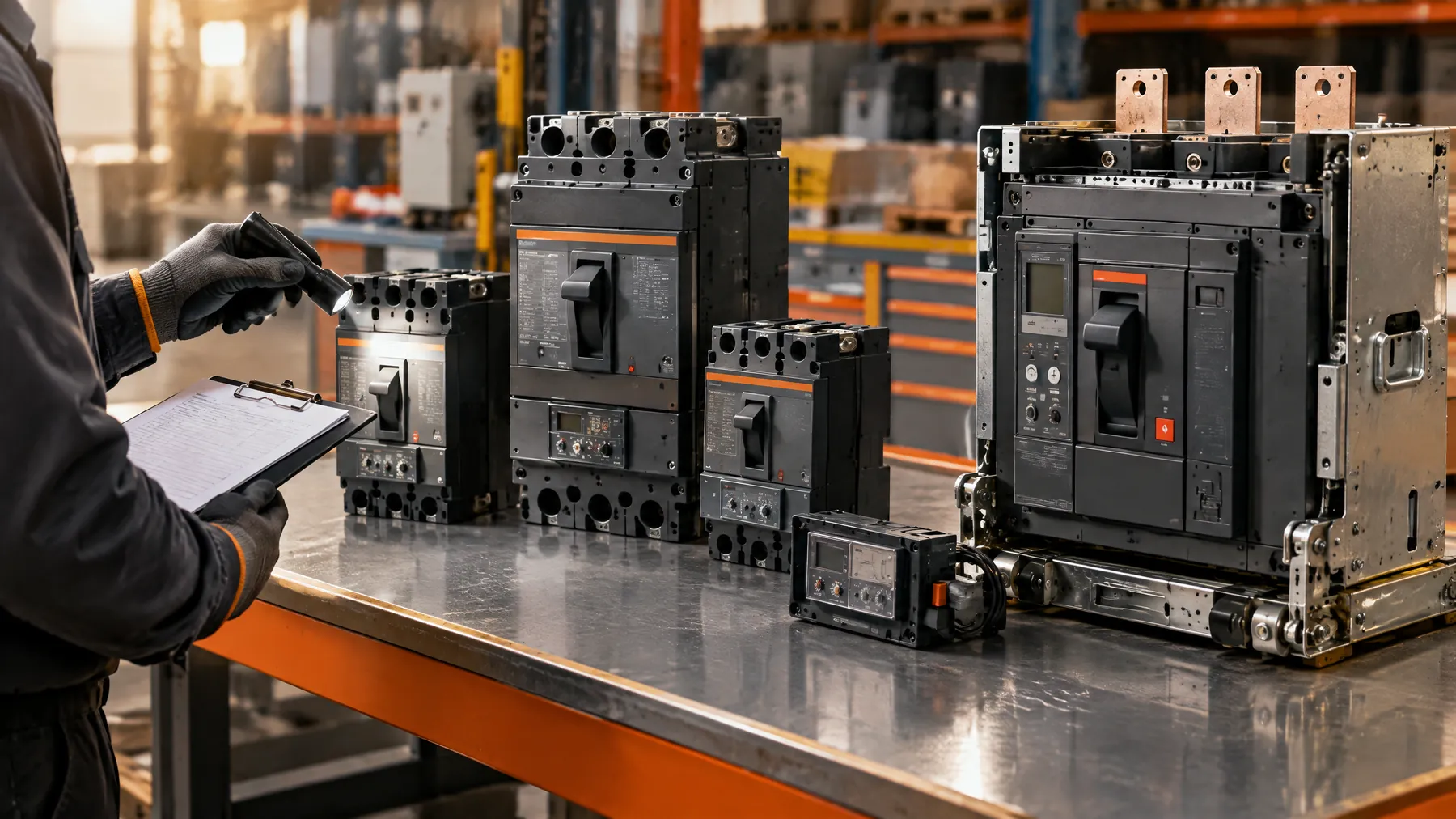
A complete submission lets a buyer answer the seller’s real question: whether this exact breaker or inventory has a practical commercial market. Copy identifiers exactly as shown and support them with current photographs.
Manufacturer
Complete catalog/model number
Ampere, frame, and trip unit information
Voltage, number of poles, and interrupting rating (kAIC) where relevant
Condition and testing status (inspection, trip test records)
Quantity and precise location (MCC ID, panel tag, pallet)
What affects marketability and value?
Marketability hinges on clear identification, ratings, and completeness. Breakers from recognized commercial switchgear lines with intact catalog numbers, documented ampere/frame values, interrupting ratings, and factory or aftermarket trip units are easier to resell. Draw-out breakers with racking assemblies, accessory kits, and recent trip testing are especially attractive. Large, uniform lots and units compatible with common switchgear increase buyer interest. Obsolete or unlabeled breakers may still sell if quantities and matching components exist, but they require more inspection and narrower buyer pools. Geographic demand varies; industrial regions and utilities often have active markets. We assess lot logistics and testing needs before making firm offers.
Manufacturer & Series
Well-known commercial switchgear manufacturers and exact series numbers reduce buyer uncertainty, speeding resale. Known series often match existing installations and spare lists. Lack of clear identification lowers offers due to inspection and testing needs.
Interrupting Rating
High interrupting capacity increases market options because breakers can be specified for heavier industrial applications. Buyers rely on nameplate kAIC/kA ratings; absent or low ratings restrict resale to lighter-duty uses or require retesting documentation.
Trip Unit Condition
Electronic and adjustable trip units that are intact and labeled add value. Records of last trip calibration, firmware or setting notes, and whether OEM or aftermarket units are installed make offers more accurate.
Lot Size & Logistics
Larger uniform lots reduce per-unit handling and shipping costs, improving interest from regional buyers. Clear staging, palletizing, and nearby access for cranes or forklifts affects final offers. We factor removal complexity into bids.
Where this equipment is commonly found
Commercial breakers commonly come from HVAC, distribution switchgear, motor control centers, data center feeds, and industrial process plants. Buyers prefer units with project histories showing reason for removal — retrofit, plant decommissioning, or spares liquidation — because that context indicates remaining life and compatibility. Records of last trip tests, maintenance, and load conditions help underwrite resale. Share project notes and panel/switchgear references. Do not energize or test live equipment yourself; qualified personnel must perform any energized verification and safe removal.
How to prepare the breaker for review
Preserve nameplates, catalog and serial numbers, trip units, handle and racking hardware, accessory kits, and any original documentation or test tags. Photograph the nameplate, front and rear connections, trip unit label, mounting rails, and any damage. Capture lot context — labeled panel, MCC bucket ID, and pallet/location. Keep breakers together by model and clearly count quantities. Do not perform live testing or disconnection yourself; qualified personnel must safely de-energize, test, and remove equipment before shipment.
Do not clean labels with harsh chemicals, dismantle the breaker for better photographs, remove copper, separate matched accessories, or energize an unknown unit. Keep the inventory dry, protected from impact, and associated with its records. Qualified personnel must control any testing, electrical isolation, disconnection, racking, rigging, or field removal.
How the sale moves forward
Frequently asked questions
Do you buy used or obsolete circuit breakers?
Yes, we consider used and obsolete commercial and industrial breakers depending on identification, quantity, and demand. Obsolete models sell better in larger, uniform lots or with hard-to-find accessories. Provide full details and photos. Do not energize or test live equipment yourself; qualified personnel should handle verification or safe removal.
What photos do you need to evaluate breakers?
Photograph the nameplate, full front view, rear connection/power terminals, trip unit labeling, any accessory or racking hardware, and close-ups of damage or corrosion. Include a wide shot showing lot context and location IDs. Do not attempt live testing; have qualified staff de-energize equipment before close inspection if required.
What quantities or shipping/removal arrangements are required?
We buy single units to large lots, but value and logistics depend on quantity and staging. Tell us counts by exact model, palletization, weight estimates, and site access. Removal and shipping options are quoted after inspection. Qualified crews must handle de-energizing and safe removal before pickup.
How long until I get an offer?
Response time depends on identification quality, quantity, condition, location, and project complexity. Complete catalog information, readable labels, current photographs, and clear logistics details reduce follow-up questions. Large or installed inventories may require additional review before terms are final.