Do we buy circuit breakers from facility shutdowns and decommissions?
Yes—Surplus Generator Buyers purchases circuit breakers removed in facility shutdowns and decommissions when the manufacturer, exact catalog/series, amperage/frame/trip, voltage and interrupting rating, condition, quantity, location, completeness, and current demand meet resale criteria. Send full ID data and clear photos for an offer. Qualified electrical personnel must handle energized testing, disconnection, and removal before pickup or shipment.
What sellers should know
When a commercial or industrial site shuts down or decommissions equipment, circuit breakers are common surplus assets. Surplus Generator Buyers evaluates those breakers case-by-case. We focus on breakers from switchgear, MCCs, main distribution panels, generators, and transfer systems. Sellers should expect a practical review based on technical identification, condition, and project logistics. Fast responses start with clear catalog numbers, rating plates, and site photos. We do not provide installation guidance; any energized work or testing must be completed by qualified electrical personnel before we accept equipment.
Examples we review
Use the list below as an identification guide, not a promise that every unit will qualify. The exact model, configuration, condition, quantity, location, completeness, and present demand still control the purchasing decision.
What information should you send?
A complete submission lets a buyer answer the seller’s real question: whether this exact breaker or inventory has a practical commercial market. Copy identifiers exactly as shown and support them with current photographs.
Manufacturer
Complete catalog/series and model number
Ampere rating, frame rating, and trip unit type
Voltage, number of poles, and interrupting rating (kAIC) where applicable
Condition, evidence of testing, corrosion, or damage
Quantity and exact facility location for removal
What affects marketability and value?
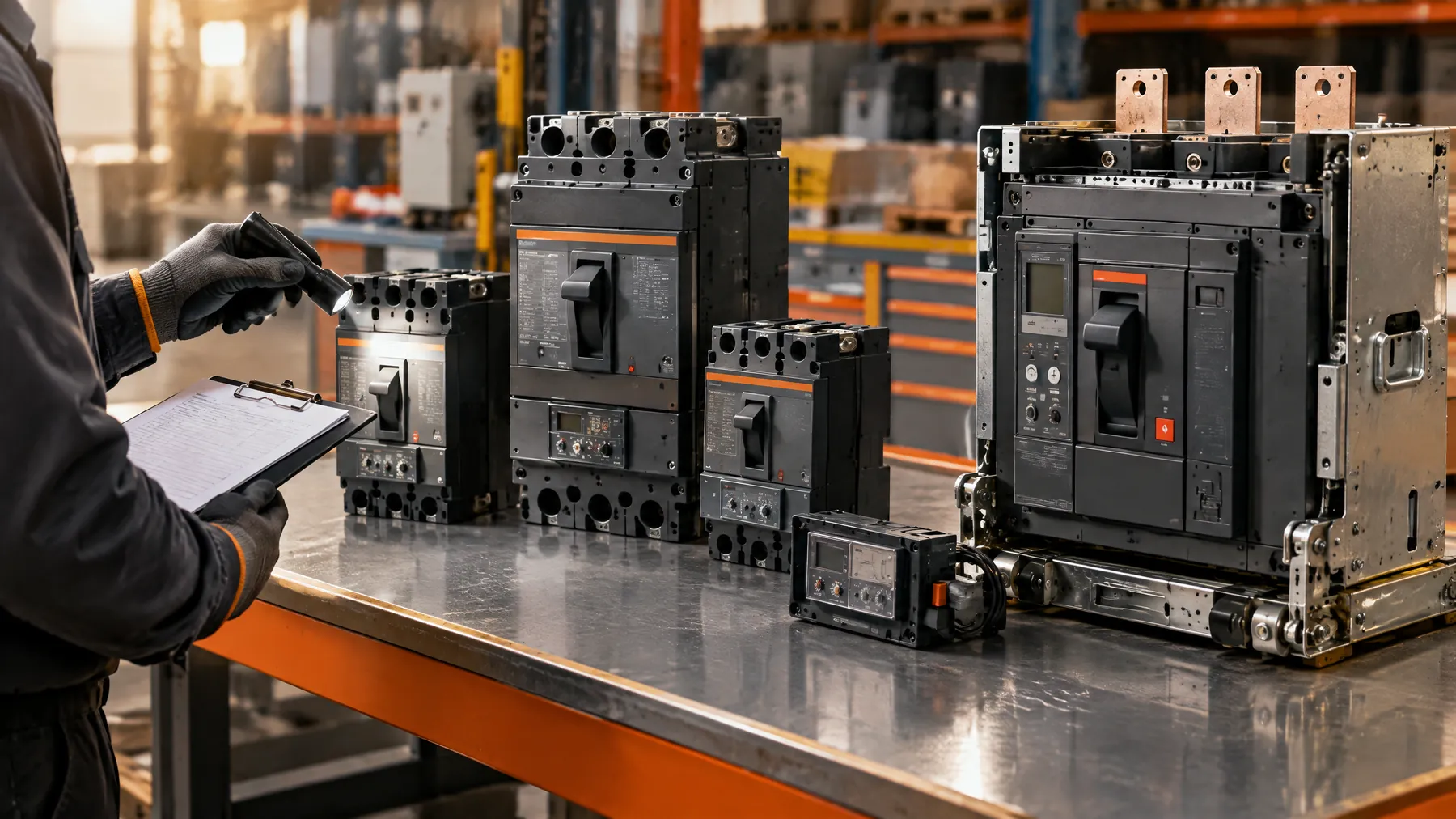
Circuit breakers from shutdown projects are marketable when they are identifiable, complete, and from common commercial product families. High-demand items include main-frame breakers, draw-out units, and well-documented generator or ATS breakers. Breakers with current interrupting ratings and intact accessories (handles, racking kits, trip units) trade more readily. Obsolete or damaged units may still sell for parts or refurbishment, but marketability depends on exact model, condition, and buyer interest at the time of listing.
Model specificity
Exact catalog and series determine resale demand. Small differences in trip modules or frame size can move a breaker from common to specialty and sharply affect buyer interest and pricing.
Interrupting rating
A breaker’s interrupting (kAIC) rating is a primary market factor. Higher rated units from primary distribution or generator outputs are more sought-after for commercial and industrial reuse.
Operational condition
Breakers with intact trip units, undamaged racking mechanisms, and clean nameplates are easier to certify and sell. Corrosion, thermal damage, or missing parts reduce commercial appeal and speed of sale.
Project logistics
Quantity, onsite accessibility, and removal complexity influence offers. Large, well-documented lots in accessible locations attract more buyers than scattered single units in restricted or high-risk sites.
Where this equipment is commonly found
Breakers removed during facility decommissions often come from power distribution systems, generator paralleling gear, switchgear, MCC sections, and transfer switches. Project history matters: breakers from maintained environments with service records and recent maintenance are easier to resell. Conversely, units exposed to water, corrosion, or unknown fault events need detailed inspection and may require refurbishment, affecting their resale path and value.
How to prepare the breaker for review
Before offering breakers, preserve nameplates, catalog tags, and any trip or auxiliary modules. Photograph the rating plate, front and rear, interior connections, and mounting/draw-out interfaces. Note service history and last energized date. Do not attempt live testing unless qualified. Label each unit with its location in the facility and keep breakers bundled or palletized for safer handling and clearer logistics when arranging pickup or shipment.
Do not clean labels with harsh chemicals, dismantle the breaker for better photographs, remove copper, separate matched accessories, or energize an unknown unit. Keep the inventory dry, protected from impact, and associated with its records. Qualified personnel must control any testing, electrical isolation, disconnection, racking, rigging, or field removal.
How the sale moves forward
Frequently asked questions
Do you buy used or obsolete breakers from decommissioned facilities?
Yes, we consider used and obsolete breakers case-by-case. Even legacy models may have resale or parts value. Provide exact model numbers, condition details, and photos so we can identify potential buyers or refurbishment paths.
What photos and documentation should I send for an offer?
Photograph the breaker rating plate, front and rear views, interior with trip and connection points, any serial or tag numbers, and surrounding switchgear. Include photos of mounting hardware and visible damage, plus any service records or maintenance tags.
How many breakers do you purchase, and what about shipping or removal?
We buy single units and large lots. Offers consider quantity and removal complexity. For large or heavy breakers we coordinate logistics; sellers should state whether items are palletized, forklift-accessible, or require specialized rigging for pickup.
Can I get an offer without energized testing on site?
Yes. We can review identification data and photos to give a preliminary offer. Any energized testing, disconnects, or final removal must be done by qualified electricians before pickup or final acceptance.