Do we buy circuit breakers from project overstock and canceled jobs?
Yes—Surplus Generator Buyers purchases project overstock and canceled-job circuit breakers depending on manufacturer, exact catalog/series, ratings, condition, quantity, location, completeness, and current demand. Provide the full catalog or serial, frame/ampere/trip details, voltage/poles/interruption rating, and clear photos for a firm offer. We evaluate each lot; removal and energized work must be done by qualified personnel before pickup.
What sellers should know
Surplus Generator Buyers purchases circuit breakers from project overstock and canceled commercial and industrial jobs across the U.S. We specialize in breakers pulled from switchgear, motor control centers, panelboards, and contractor overorders that were never energized or were removed prior to commissioning. Sellers should supply exact catalog or series numbers, amperage/frame/trip settings, voltage and interruption ratings, condition notes, quantities, and location. We evaluate each lot for compatibility with ongoing projects, lead-time relief, and transportability. All energized testing, disconnection, and removal must be handled by qualified electricians before we arrange collection.
Examples we review
Use the list below as an identification guide, not a promise that every unit will qualify. The exact model, configuration, condition, quantity, location, completeness, and present demand still control the purchasing decision.
What information should you send?
A complete submission lets a buyer answer the seller’s real question: whether this exact breaker or inventory has a practical commercial market. Copy identifiers exactly as shown and support them with current photographs.
Manufacturer name (as labeled)
Complete catalog / model number
Ampere, frame size, and trip type/details
Voltage, poles, and interrupting rating (when applicable)
Condition and any testing or removal notes
Quantity and exact storage / pickup location
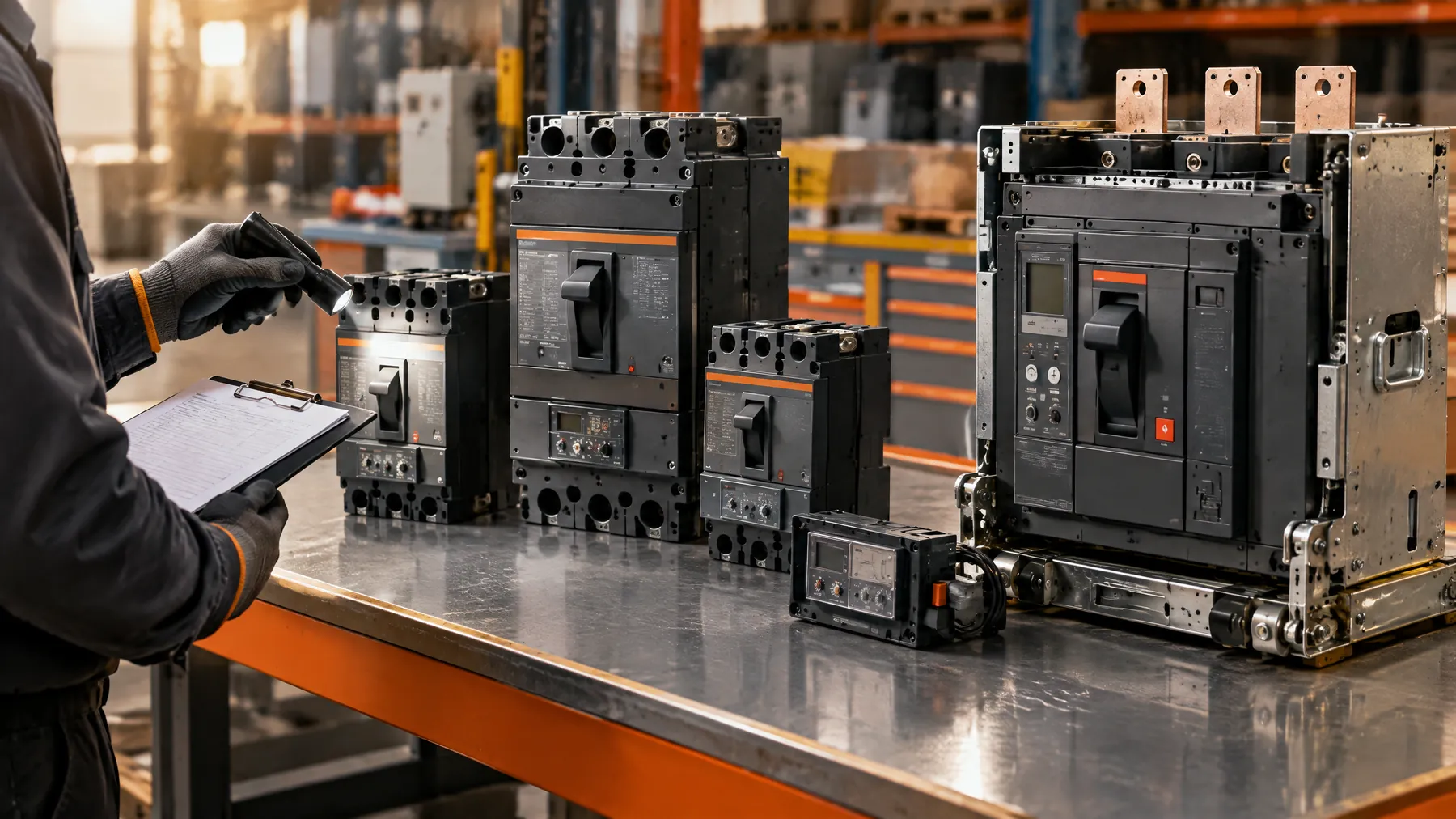
What affects marketability and value?
Circuit breakers from canceled projects are marketable when specs match in‑demand replacements or builder stock needs. High-demand brands, current catalog numbers, high interrupting ratings, and factory packaging raise interest. Larger homogeneous lots and breakers pulled but unused are easier to resell. Conversely, mismatched trip units, missing accessories, or unknown condition reduce appeal. We evaluate items against current jobsite shortages, lead times, and refurbishment options. Prompt documentation and boxed items increase buyer interest and speed to market.
Manufacturer & Series
Recognizable commercial brands and current series numbers make reselling straightforward. Buyers search for exact catalog/series matches for replacement needs. Rare or obsolete series require identification but sometimes still have aftermarket demand.
Electrical Ratings
Higher interrupting ratings, appropriate frame and trip settings, and clear voltage/pole data increase marketability. Mismatched or underspecified ratings limit which contractors can safely reuse the breaker without modification.
Lot Size & Consistency
Homogeneous lots from the same project or model simplify resale and attract buyers handling large installs. Mixed lots require sorting and reduce per-unit value because buyers face more inspection and configuration work.
Condition & Completeness
Breakers in original packaging or removed but unused fetch more interest. Missing accessories, tripped mechanisms, or corroded parts reduce acceptance and require disclosure for accurate offers.
Where this equipment is commonly found
Breakers from canceled commercial projects typically fit contractor stock replenishment, rush replacement orders, factory and distribution inventories, or build‑outs of switchgear and MCC units. Project provenance matters: breakers ordered for specific motor starters, selective coordination, or arc‑flash ratings may only suit specific applications and buyers. Knowing the project's intended use, panel types, and whether units were installed or merely boxed helps buyers match lots to active projects. Qualified personnel must handle any energized testing, disconnection, or staged removal.
How to prepare the breaker for review
Before contacting us, preserve all nameplates, catalog labels, and packaging. Photograph the breaker front, side labels, trip unit, accessory modules, and any shipping boxes or lot markings. Note whether trip units are adjustable, sealed, or electronic, and list pilot or shunt trip accessories. Keep units together by project or pallet and record quantities and exact location for pickup. Do not attempt energized testing or removal; have qualified electricians perform those tasks and document their work when requested.
Do not clean labels with harsh chemicals, dismantle the breaker for better photographs, remove copper, separate matched accessories, or energize an unknown unit. Keep the inventory dry, protected from impact, and associated with its records. Qualified personnel must control any testing, electrical isolation, disconnection, racking, rigging, or field removal.
How the sale moves forward
Frequently asked questions
Do you buy used or obsolete circuit breakers from canceled projects?
Yes. We consider used and obsolete breakers from canceled projects, subject to model, catalog/series, critical ratings, condition, and parts completeness. Obsolete breakers may need more identification and limited buyers. Provide detailed photos and specs so we can determine if there is aftermarket or refurbishment demand before making an offer.
What photos do you need for breakers from canceled jobs?
Send high‑resolution photos showing the breaker face, manufacturer label with catalog/model, serial or lot numbers, trip unit close‑ups, side and rear labels, accessories, and overall lot/pallet. Photograph any factory boxes, damage, and mounting hardware. Do not perform energized testing; have qualified staff assist.
What quantities do you buy, and how is shipping/removal handled?
We buy single units through truckloads, but offers depend on quantity, lot homogeneity, and location. Sellers should stage and document lots for pickup. We coordinate logistics or advise freight options after offer. All de-energizing, disconnection, and onsite labor must be performed by qualified personnel before removal.
How long until I receive an offer for project overstock breakers?
Response time depends on identification quality, quantity, condition, location, and project complexity. Complete catalog information, readable labels, current photographs, and clear logistics details reduce follow-up questions. Large or installed inventories may require additional review before terms are final.