Do we buy new and unused surplus circuit breakers?
Yes—Surplus Generator Buyers purchases new and unused surplus circuit breakers, with offers dependent on manufacturer, exact catalog/series, ratings, condition, quantity, location, completeness, and current demand. Provide full catalog numbers, amp/frame/trip data, interrupting and voltage ratings, and clear photos. We buy by condition or entire project inventories. Qualified personnel must handle energized testing, disconnection, and removal. Call or email to start.
What sellers should know
Surplus Generator Buyers is a nationwide purchaser of new and unused commercial and industrial circuit breakers. We buy single spare units, boxed OEM replacement lots, and entire project surplus when documentation and completeness are intact. To get an accurate offer provide manufacturer, exact catalog/series, amp/frame/trip, voltage/poles, interrupting rating, quantity, photos, and pickup location. Keeping original boxes, labels, and manuals speeds offers. Typical commercial brands and UL/IEC-rated models are especially marketable. Call or email our acquisitions team to begin a quick review.
Examples we review
Use the list below as an identification guide, not a promise that every unit will qualify. The exact model, configuration, condition, quantity, location, completeness, and present demand still control the purchasing decision.
What information should you send?
A complete submission lets a buyer answer the seller’s real question: whether this exact breaker or inventory has a practical commercial market. Copy identifiers exactly as shown and support them with current photographs.
Manufacturer and brand
Complete catalog/catalogue number and series
Ampere rating, frame size, and trip type
Voltage rating, pole count, and interrupting (AIC) rating
Condition notes and any testing or factory seal status
Quantity available and physical location for pickup/shipment
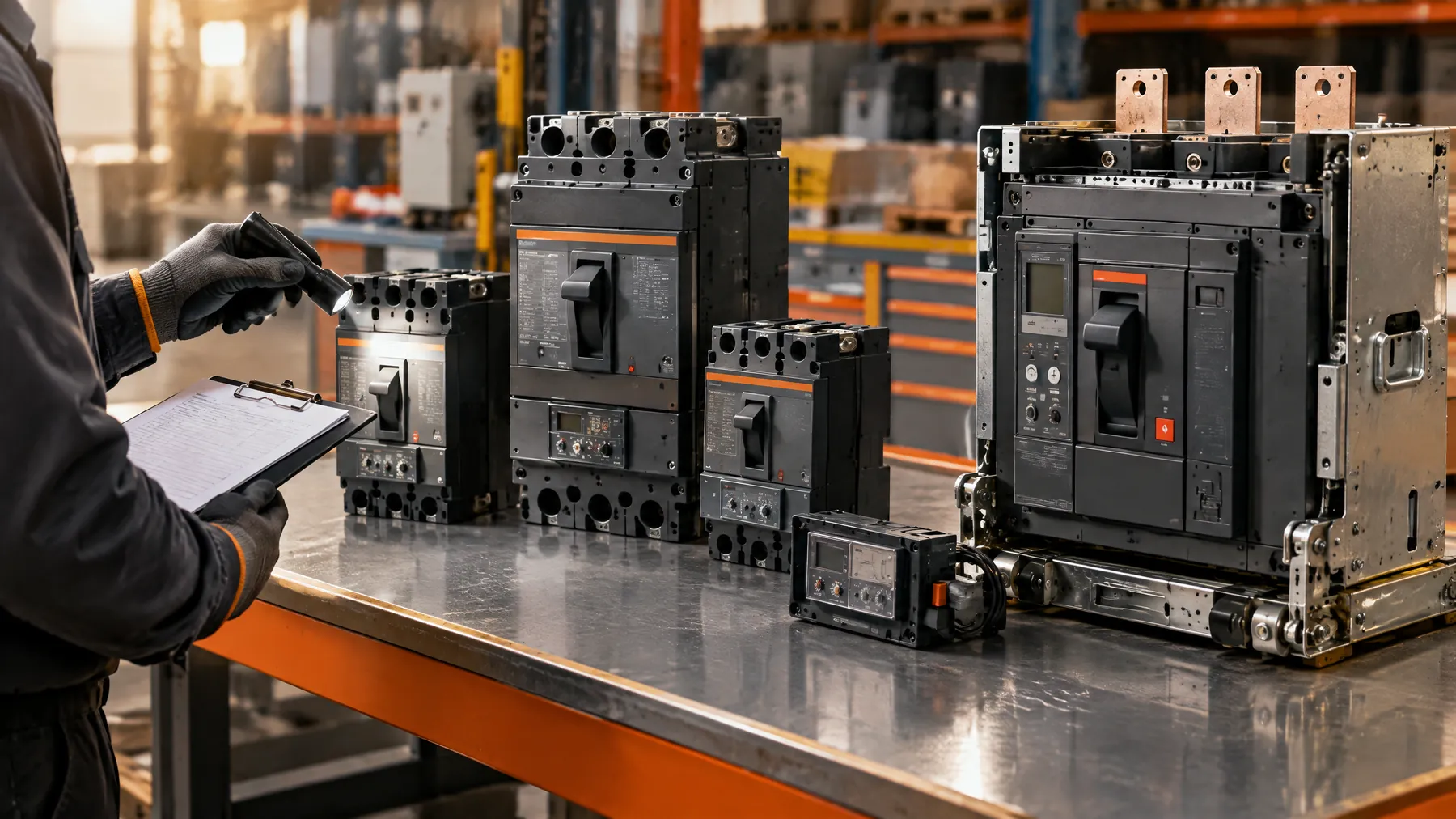
What affects marketability and value?
New, unused circuit breakers are most marketable when they match common commercial specifications and include full documentation. Buyers look for recognized manufacturer names, exact catalog/series compatibility with existing switchgear, ampere and interrupting ratings that meet code needs, original packaging, and quantity lots for distributors or contractors. UL/IEC listings, OEM part numbers, and purchase paperwork increase interest. Proof of new condition and factory seals broadens resale channels. Not every item will sell; we evaluate each lot and explain our offer.
Manufacturer/Brand
Recognized commercial brands generally resell faster. Exact manufacturer identity helps buyers match parts to existing switchgear, confirm compliance, and assess market demand. Unbranded or unknown labels lower resale options and may require extra verification.
Documentation & Packaging
Original boxes, manuals, purchase invoices, and factory seals demonstrate new condition and simplify transfer to distributors. Complete documentation shortens valuation time and widens buyer interest, especially for warranty or OEM-spare claims.
Interrupting Rating
Interrupting capacity (AIC/kA) and voltage ratings determine suitability for modern installations. Higher AIC values and common voltage classes expand resale markets. Missing or marginal interrupting ratings reduce demand and may require lab tests.
Quantity & Lots
Larger, consistent lots appeal to distributors and national contractors. Single items may sell but have narrower markets. Provide lot counts, packing method, and consolidation options to improve logistics and buyer interest.
Where this equipment is commonly found
New unused commercial breakers often come from canceled construction projects, spare parts inventories, or planned expansions that were never installed. They fit switchgear rebuilders, electrical distributors, MRO inventories, and contractors seeking OEM spares. Knowing the project history—purchase date, storage conditions, and reason for surplus—helps determine resale channels, warranty possibilities, and buyer confidence. Documentation such as invoices and shipping records speeds valuation and clarifies why the breakers are surplus.
How to prepare the breaker for review
Preserve original packing, boxes, nameplate labels, serial numbers, factory seals, manuals, and accessory hardware. Photograph clear close-ups of nameplates, catalog/model numbers, date codes, all sides of the unit, packaging, and any damage or corrosion. Provide quantity counts and pallet or crate dimensions and include an inventory spreadsheet. Do not perform live testing or attempt to disconnect energized equipment yourself. Qualified electrical personnel must handle energized testing, disconnection, and safe removal before pickup.
Do not clean labels with harsh chemicals, dismantle the breaker for better photographs, remove copper, separate matched accessories, or energize an unknown unit. Keep the inventory dry, protected from impact, and associated with its records. Qualified personnel must control any testing, electrical isolation, disconnection, racking, rigging, or field removal.
How the sale moves forward
Frequently asked questions
Do you buy used or obsolete circuit breakers?
We prioritize new, unused commercial breakers. We may consider unused obsolete series or sealed OEM spare lots if there’s demonstrable market demand and documentation. Field-used, energized, or cosmetically damaged breakers generally have limited resale value. Provide full details and photos so we can evaluate each lot.
What photos should I send for an offer?
Send clear close-ups of the nameplate, full-breaker front, catalog/model numbers, serial numbers, date codes, factory seals, all sides, packaging, and any damage. Include images showing lot counts and pallet labels. Do not attempt live testing; photos are sufficient for initial review.
What quantities do you buy and who handles shipping or removal?
We buy single breakers and large project lots. Tell us exact quantities, palletization, and pickup location. We can coordinate logistics or recommend carriers. Sellers must ensure breakers are de-energized and that a qualified electrical team performs disconnection and safe removal prior to pickup.
How quickly will I get an offer?
Response time depends on identification quality, quantity, condition, location, and project complexity. Complete catalog information, readable labels, current photographs, and clear logistics details reduce follow-up questions. Large or installed inventories may require additional review before terms are final.