Do we buy circuit breakers removed from switchgear and switchboards?
Yes—Surplus Generator Buyers purchases circuit breakers removed from commercial switchgear and switchboards, subject to manufacturer, exact catalog/series, amperage/frame/trip settings, voltage/pole/interrupting rating, physical condition, quantity, location, completeness (draw‑out trucks, handles, accessories), and current demand. We review nameplate data, trip unit type, and recent functionality history before quoting. Removal and any live testing must be performed by qualified electrical personnel; do not attempt energized work.
What sellers should know
Surplus Generator Buyers is a nationwide buyer of circuit breakers taken out of commercial and industrial switchgear and switchboards. We evaluate draw‑out and fixed breakers used in distribution gear, MCC buckets, switchboards, and medium‑ to high‑voltage panels. Sellers should provide full catalog/model numbers, nameplate ratings, trip unit details, photos showing mechanism and racking, project history, quantity, and location. We assess condition, completeness of accessories, and documentation when preparing an offer. All energized disconnection, testing, and removal work must be completed by qualified electrical personnel; we will not instruct unqualified sellers to perform live work.
Examples we review
Use the list below as an identification guide, not a promise that every unit will qualify. The exact model, configuration, condition, quantity, location, completeness, and present demand still control the purchasing decision.
What information should you send?
A complete submission lets a buyer answer the seller’s real question: whether this exact breaker or inventory has a practical commercial market. Copy identifiers exactly as shown and support them with current photographs.
Manufacturer name on nameplate
Complete catalog/series/model number
Ampere, frame, and trip unit information
Voltage, poles, and interrupting rating (kAIC)
Condition and any recent testing records
Quantity and exact pickup location
What affects marketability and value?
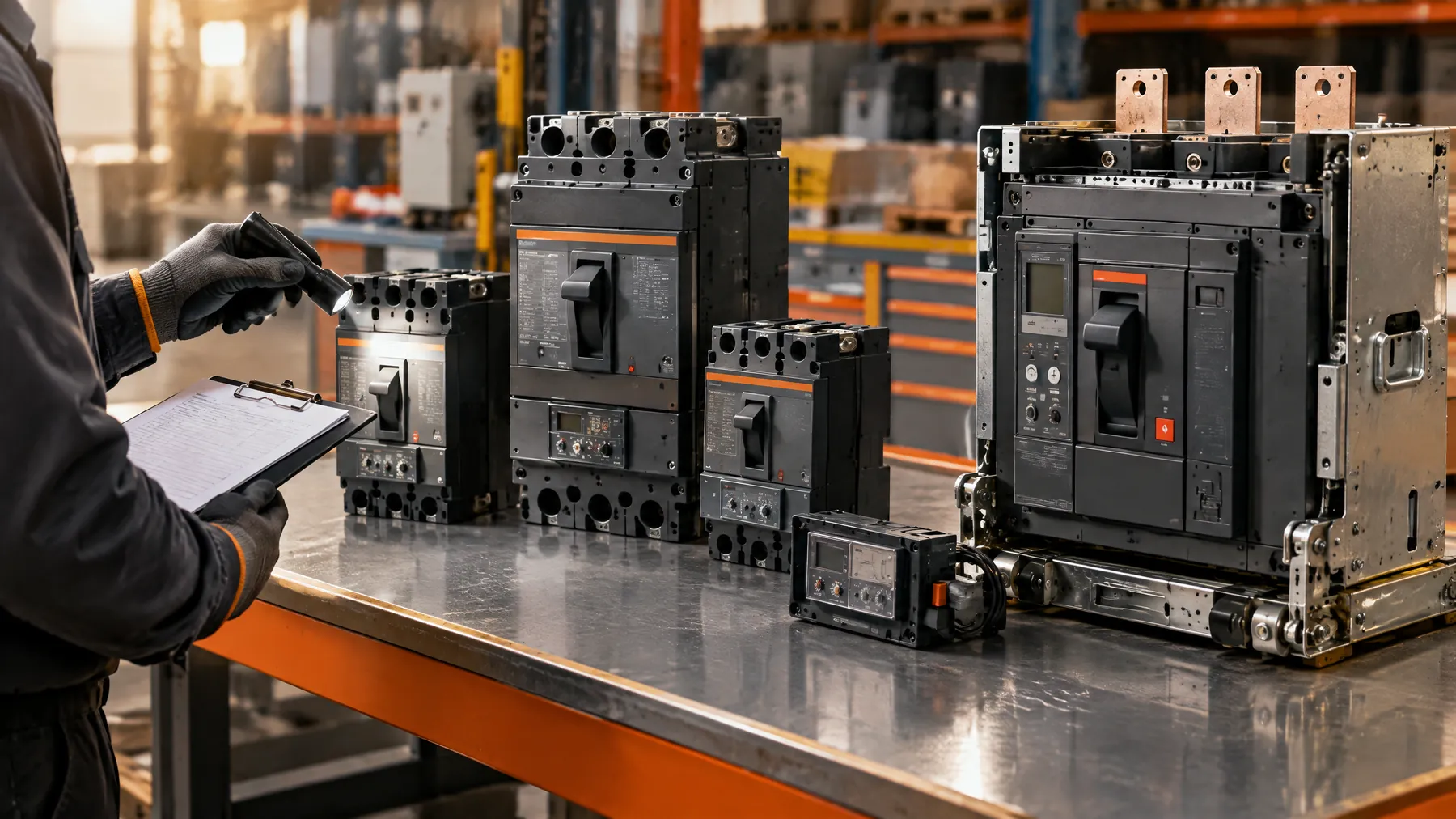
Marketability of switchgear take‑out breakers hinges on clear identification, intact nameplates, and completeness. Draw‑out breakers with trucks, handles, and trip units intact fetch stronger interest. Known manufacturers and common series that fit retrofit or spare-restore applications move more quickly. Working or recently tested breakers and units with documented project history are easier to resell. Obsolete or heavily damaged units can have parts value, but not every removed breaker has commercial value; each unit is assessed on specs, completeness, and current buyer demand.
Manufacturer and model
Known manufacturers and an exact catalog or series number greatly increase resale prospects, because buyers can match spares and confirm compatibility with common switchgear platforms.
Nameplate integrity
An intact nameplate with serial and rating data supports valuation and resale. Missing or illegible nameplates require extra research and typically reduce marketability and offer amounts.
Completeness and accessories
Units with original trucks, racking hardware, handles, and auxiliary contacts are more desirable. Missing mechanical components often limit reuse and shift value toward parts rather than full reuse.
Condition and documentation
Proof of service life, recent trip tests, or failure records helps buyers assess remaining life. Clean, mechanically operable breakers with documentation command better interest than unknown or damaged units.
Where this equipment is commonly found
These breakers are typically used as spares, replacements in plant retrofits, stock for maintenance departments, or components in equipment rebuilds. Project history — why the breaker was removed, length of service, and any failure or test records — helps buyers judge remaining useful life and market placement. Provide documentation when possible. Remember that any on‑site verification, live testing, or disconnection should be handled by qualified electrical personnel only.
How to prepare the breaker for review
Preserve nameplates, labels, and trip unit serial numbers and avoid removing ID tags. Photograph the front and rear nameplates, mechanism, draw‑out truck, racking position, auxiliary contacts, and any accessories or mounting hardware. Note cosmetic damage, rust, or oil contamination. Keep units de‑energized and secured for transport. Do not attempt energized testing or removal yourself; have qualified electrical personnel handle all live work and safety procedures before we evaluate or arrange pickup.
Do not clean labels with harsh chemicals, dismantle the breaker for better photographs, remove copper, separate matched accessories, or energize an unknown unit. Keep the inventory dry, protected from impact, and associated with its records. Qualified personnel must control any testing, electrical isolation, disconnection, racking, rigging, or field removal.
How the sale moves forward
Frequently asked questions
Do you buy used or obsolete breakers removed from switchgear?
Yes, we consider used and obsolete breakers case by case. Offers depend on identification, completeness, condition, and whether there is parts or rebuild demand. Provide photos and nameplate data so we can determine if the unit has salvageable value or appeal to rebuilders.
What photos and documentation should I send for an offer?
Send clear photos of all nameplates, front and rear views, the trip unit, draw‑out truck and racking, accessory terminals, and any damage. Include catalog numbers, serials, trip unit type, and any test records or project removal notes for faster, accurate evaluation.
How many breakers do you need and who handles shipping or removal?
We buy single units or pallet loads; offers reflect quantity. We can quote on‑site pickup arrangements or coordinate third‑party logistics, but removal and any energized disconnection must be done by qualified electrical personnel before pickup. Provide location and estimated quantity in your inquiry.
How long does it take to get an offer after I send information?
Response time depends on identification quality, quantity, condition, location, and project complexity. Complete catalog information, readable labels, current photographs, and clear logistics details reduce follow-up questions. Large or installed inventories may require additional review before terms are final.