Do we buy commercial Challenger circuit breakers?
Yes—We buy commercial Challenger circuit breakers, but offers depend on manufacturer, exact catalog/series, ratings, condition, quantity, location, completeness, and current demand. Send the full model/catalog number, ampere/frame/trip details, interrupting ratings, photos, and quantity for a prompt review. We consider molded-case and bolt-in types, trip units, and accessories. Qualified personnel must handle energized testing, disconnection, and removal.
What sellers should know
Surplus Generator Buyers purchases commercial Challenger circuit breakers nationwide when the specific model, ratings, and condition match market demand. We review complete catalog numbers, nameplate data, interrupting ratings, and physical condition before issuing offers. Provide photos, quantities, and location to speed an appraisal. We buy both individual surplus pieces and larger lots from plant decommissioning, retrofits, and inventory clear-outs. All energized testing, disconnection, and removal must be performed by qualified personnel prior to pickup or shipment.
Examples we review
Use the list below as an identification guide, not a promise that every unit will qualify. The exact model, configuration, condition, quantity, location, completeness, and present demand still control the purchasing decision.
What information should you send?
A complete submission lets a buyer answer the seller’s real question: whether this exact breaker or inventory has a practical commercial market. Copy identifiers exactly as shown and support them with current photographs.
Manufacturer (Challenger) and series name
Complete catalog/model number stamped on the unit
Ampere rating, frame size, and trip type information
Voltage class, pole count, and interrupting rating (where relevant)
Condition notes and any testing/inspection documentation
Quantity available and physical location for pickup/shipping
What affects marketability and value?
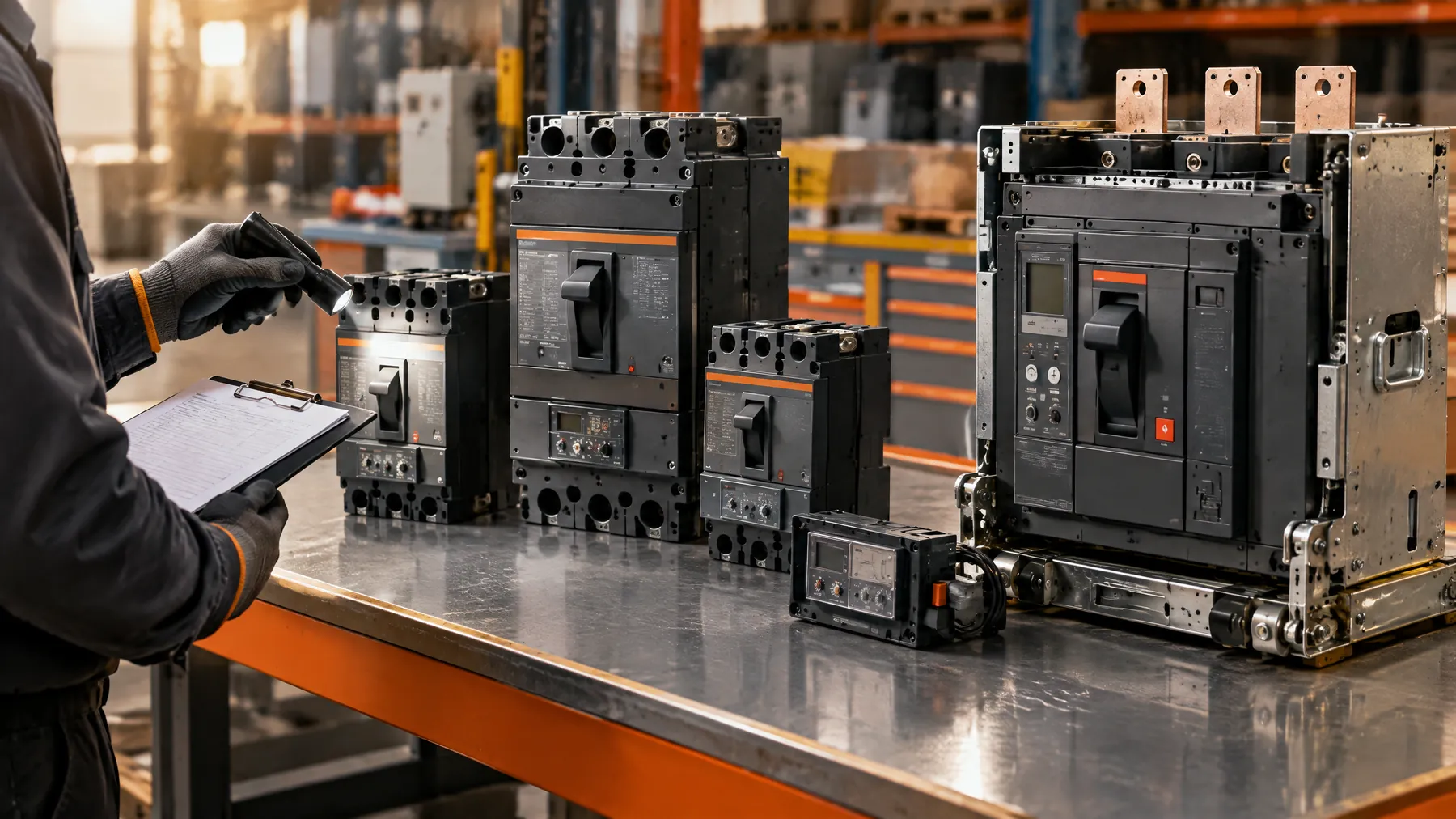
Challenger breakers are marketable when they carry intact nameplates, common catalog numbers, and usable interrupting ratings for commercial switchgear or load centers. Demand rises for complete breakers with original trip units, factory accessories, and traceable date codes. Large, consistent lots and items compatible with popular commercial panels sell more quickly. Obsolete or damaged units may still be valuable for parts or rebuilds, but each lot is evaluated individually and market-driven.
Model Rarity
Less-common Challenger series can command interest for rebuilds or legacy switchgear support. Rarity increases value when the model fits a known service population or when parts are scarce for that series.
Interrupting Rating
Higher interrupting ratings and correctly rated voltage classes are more versatile for commercial applications. Breakers with verified Icu/Ics data and intact nameplates generally attract higher buyer interest.
Nameplate Completeness
Clear nameplates with catalog numbers, date codes, and serials greatly speed valuation. Missing or illegible nameplates reduce marketability and often require additional inspection or testing.
Lot Size & Location
Larger, contiguous lots reduce unit handling and increase buyer logistics efficiency. Items located near transportation hubs or available for consolidated pickup tend to sell faster and have lower removal costs.
Where this equipment is commonly found
Challenger circuit breakers are typically used in commercial switchgear, distribution panels, generator paralleling gear, and industrial motor control. Buyers want the breaker’s project history: where it was installed, why it was removed, and any history of overloads or modifications. That context helps determine remaining useful life and market fit. Do not attempt energized testing yourself—qualified personnel should handle any live work, verification, and safe disconnection before sale.
How to prepare the breaker for review
Before contacting us, preserve all nameplates, labels, serial numbers, and the full catalog/model stamping. Photograph the breaker from multiple angles: front, back, nameplate close-up, internal trip area (if removable), and accessory connections. Keep mounting hardware, handles, stabs, and any original packaging together. Do not perform live testing yourself. Have qualified personnel handle energized testing, disconnection, and removal and document their work for buyer review.
Do not clean labels with harsh chemicals, dismantle the breaker for better photographs, remove copper, separate matched accessories, or energize an unknown unit. Keep the inventory dry, protected from impact, and associated with its records. Qualified personnel must control any testing, electrical isolation, disconnection, racking, rigging, or field removal.
How the sale moves forward
Frequently asked questions
Do you buy used or obsolete Challenger breakers?
Yes—we evaluate used and obsolete Challenger breakers on a case-by-case basis. Obsolete units may have value for parts, rebuild, or legacy support. Provide model numbers, photos, and quantity. We assess demand and condition before making an offer.
What photos and documentation do you need?
Send clear photos of the nameplate, full unit front and back, internal trip area (if accessible), accessories, and any damage. Include catalog numbers, serials, date codes, and removal/inspection notes. Qualified personnel should document any live testing or disconnection.
How many units do you buy and who handles shipping or removal?
We buy single pieces and large lots nationwide. State the quantity and location up front. We can quote pickup, brokered removal, or FOB terms. Any energized disconnection and safe removal must be completed by qualified personnel before pickup.
How long does it take to get an offer?
Response time depends on identification quality, quantity, condition, location, and project complexity. Complete catalog information, readable labels, current photographs, and clear logistics details reduce follow-up questions. Large or installed inventories may require additional review before terms are final.