Do we buy Eaton and Cutler-Hammer circuit breakers?
Yes—We buy Eaton and Cutler‑Hammer circuit breakers, depending on manufacturer, exact catalog/series, ratings, condition, quantity, location, completeness, and current demand. Provide full model/catalog numbers, nameplate photos, trip‑unit details, and removal logistics for an accurate offer. We operate nationwide and can often preliminarily value equipment from photos; qualified personnel must handle energized testing, disconnection, and removal.
What sellers should know
Surplus Generator Buyers purchases Eaton and Cutler‑Hammer circuit breakers from decommissioned commercial and industrial sites across the U.S. We accept molded‑case and low‑voltage power breakers removed from switchgear, MCCs, generator control panels, and distribution frames. Sellers should provide catalog numbers, ampere and frame data, interruption ratings, and clear photos. Nameplate legibility, trip modules, and accessories like shunt trips or auxiliary contacts materially affect offers. We operate nationwide and can often preliminarily value equipment from photos and documentation. Remember energized testing and removal must be conducted by qualified electrical personnel.
Examples we review
Use the list below as an identification guide, not a promise that every unit will qualify. The exact model, configuration, condition, quantity, location, completeness, and present demand still control the purchasing decision.
What information should you send?
A complete submission lets a buyer answer the seller’s real question: whether this exact breaker or inventory has a practical commercial market. Copy identifiers exactly as shown and support them with current photographs.
Manufacturer (Eaton or Cutler‑Hammer)
Complete catalog/model number and any sub‑series
Ampere rating, frame rating, and trip type/settings
Voltage, poles, and interrupting rating (AIC) where marked
Condition, recent testing history, and visible damage
Quantity available and exact storage/installed location
What affects marketability and value?
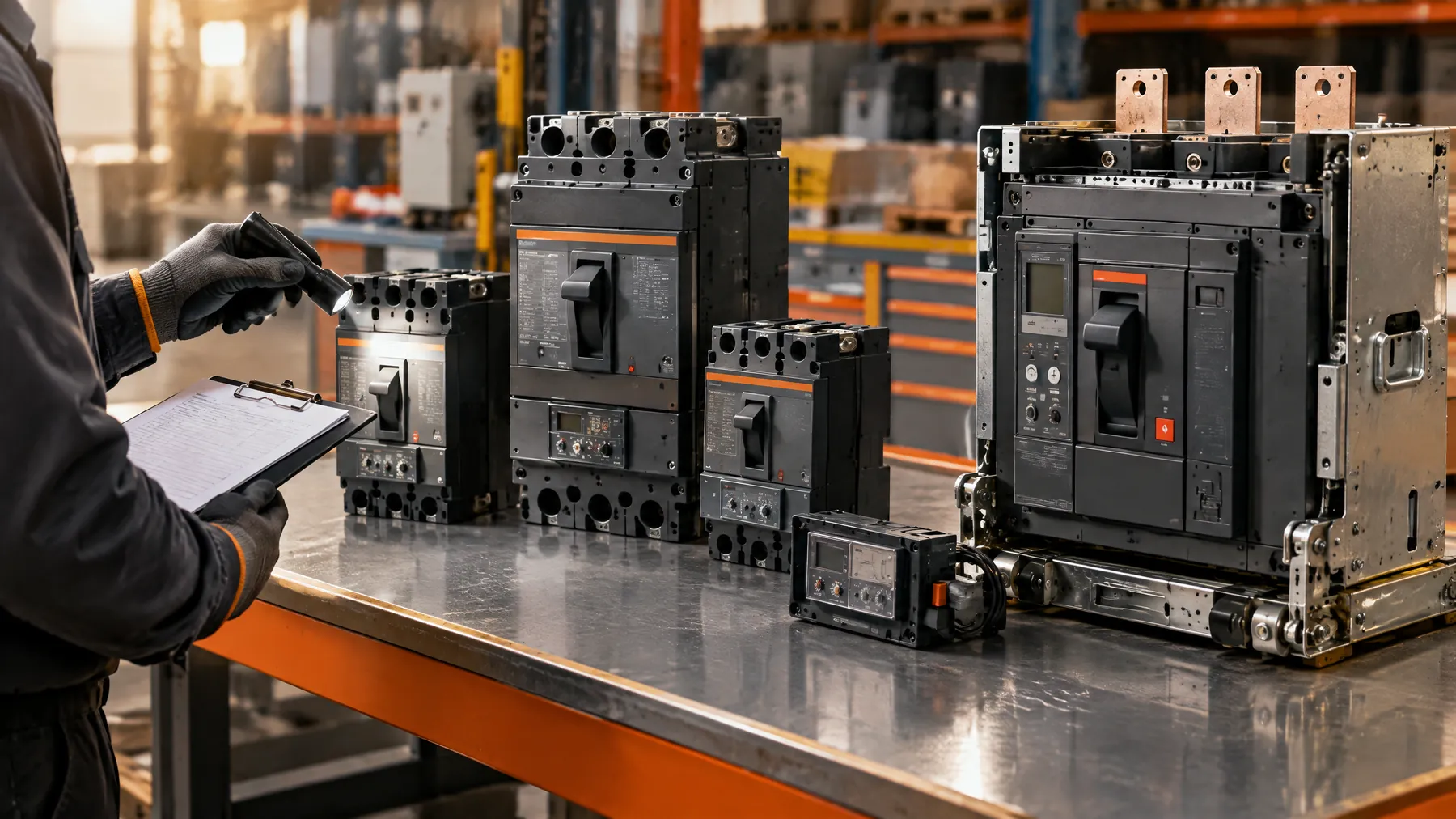
Marketability of Eaton and Cutler‑Hammer circuit breakers depends on model, electrical ratings, and physical condition. Frame‑rated power breakers, drawout replacement units, and breakers with electronic trip modules or factory accessories (shunt trips, undervoltage releases) are often in demand. Intact nameplates and verified interruption ratings increase buyer confidence. Cosmetic wear reduces value but can still be valuable for parts. Large lots and common replacement sizes sell faster. We evaluate each lot against repair‑shop demand, distributor networks, and current project cycles before making offers.
Model and series
Breakers from common Eaton and Cutler‑Hammer series with full catalog numbers and compatible trip modules are easier to resell. Exact series determines aftermarket demand, replacement part availability, and which repair shops will consider a purchase.
Nameplate ratings
Clear ampere, frame, voltage, poles, and interrupting ratings are essential. Units with verified short‑circuit and interruption ratings attract switchgear rebuilders and industrial end users who require documented performance.
Condition and testing
Breakers with recent mechanical inspection, functional trip tests, and intact handles or racking mechanisms command higher interest. Missing parts, corrosion, or unknown testing history reduce offers and increase buyer due diligence.
Quantity and lot size
Single breakers can sell, but consistent larger lots attract repair shops and distributors. Volume helps amortize shipping and testing costs and increases competitive interest for faster disposition.
Where this equipment is commonly found
Eaton and Cutler‑Hammer breakers are typically removed from switchgear, MCC buckets, generator paralleling panels, and industrial distribution frames during upgrades, plant decommissioning, or tenant improvements. Buyers prefer breakers with clear service histories, maintenance records, and known trip or fault events. Project history helps determine remaining service life and rebuild potential. Provide documentation of past usage and any test records to speed appraisal. Note that energized testing and disconnection must be done by qualified electrical personnel.
How to prepare the breaker for review
Before offering breakers, preserve all nameplates, trip modules, and accessories. Photograph the full breaker, close‑ups of the manufacturer nameplate, catalog/model, ampere/frame marking, trip unit, handle and racking mechanism, and any accessories like shunt trips or auxiliary contacts. Photograph serial numbers, date codes, and any damage or corrosion. Note the breaker’s exact mounting type and location in the switchgear. Do not attempt energized testing or removal yourself; qualified electrical personnel must perform any live work, testing, and disconnection.
Do not clean labels with harsh chemicals, dismantle the breaker for better photographs, remove copper, separate matched accessories, or energize an unknown unit. Keep the inventory dry, protected from impact, and associated with its records. Qualified personnel must control any testing, electrical isolation, disconnection, racking, rigging, or field removal.
How the sale moves forward
Frequently asked questions
Do you buy used or obsolete Eaton and Cutler‑Hammer breakers?
Yes. We buy used and obsolete Eaton and Cutler‑Hammer breakers depending on model, condition, and parts demand. Some end‑of‑life breakers have value for parts or rebuild. Provide catalog numbers and photos so we can assess. Removal and live testing must be performed by qualified electrical personnel.
What photos and documentation do you need to evaluate a breaker?
Send clear photos of the breaker front, close‑ups of the manufacturer nameplate, full catalog/model, ampere and frame markings, trip unit, handle and racking assembly, accessories, and the breaker in its installed location. Include serial numbers and any visible damage.
What quantities, shipping, or removal details should I provide?
We buy single breakers and larger lots. Tell us quantity, palletization, site access, weight estimates, and whether your team or a contractor will handle removal. For onsite pickup we coordinate logistics. Any energized disconnection or testing must be done by qualified electrical personnel.
How quickly will you provide an offer for Eaton or Cutler‑Hammer breakers?
Response time depends on identification quality, quantity, condition, location, and project complexity. Complete catalog information, readable labels, current photographs, and clear logistics details reduce follow-up questions. Large or installed inventories may require additional review before terms are final.