Do we buy ITE circuit breakers?
Yes—We buy ITE circuit breakers depending on manufacturer, exact catalog/series, ratings, condition, quantity, location, completeness, and current demand. Send clear identification, electrical ratings, photos, and quantity to get an initial offer. Quotes vary by model and condition. Removal and energized testing must be done by qualified personnel; we can advise logistics once condition and location are confirmed.
What sellers should know
ITE circuit breakers are commonly found in commercial switchboards, motor control centers, and medium-voltage distribution gear from earlier equipment generations. Surplus Generator Buyers purchases select ITE breakers for resale, parts, or refurbishment when catalog numbers, interrupting ratings, and frame compatibility match market need. We assess series, trip types, physical condition, and included accessories such as racking, handles, or shutters. Because many industrial projects remove entire panels, bundled lots can improve offers. We outline required information and logistics early to reduce delays.
Examples we review
Use the list below as an identification guide, not a promise that every unit will qualify. The exact model, configuration, condition, quantity, location, completeness, and present demand still control the purchasing decision.
What information should you send?
A complete submission lets a buyer answer the seller’s real question: whether this exact breaker or inventory has a practical commercial market. Copy identifiers exactly as shown and support them with current photographs.
Manufacturer and brand (ITE)
Complete catalog/model/series number from the nameplate
Ampere rating, frame size, and trip type (thermal-magnetic/electronic)
Voltage rating, number of poles, and interrupting rating (kAIC)
Condition, visible damage, corrosion, and functional/testing status
Quantity, packaging, and exact location for pickup/shipping
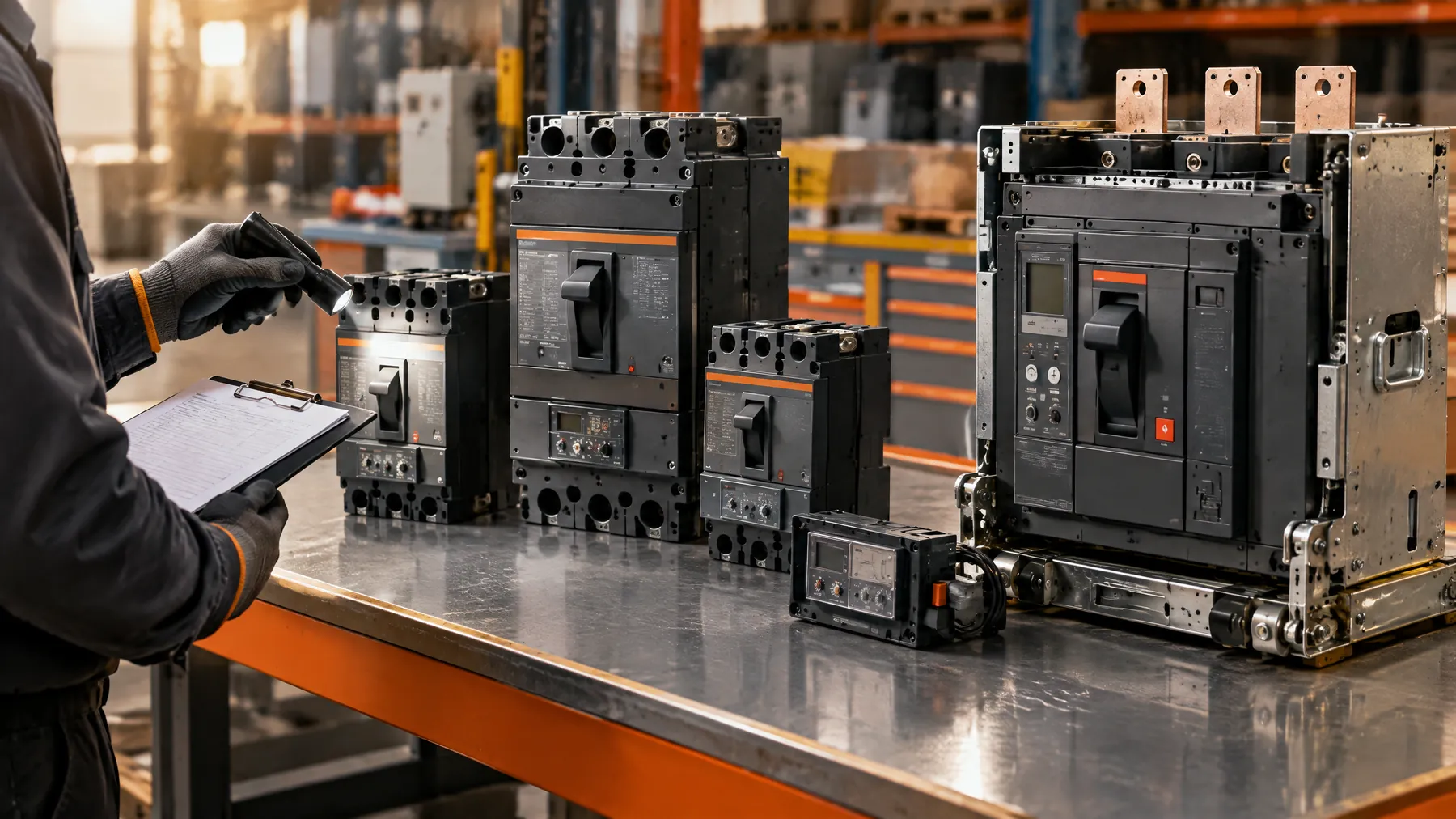
What affects marketability and value?
Marketability for ITE circuit breakers depends on model, interrupting capacity, and compatibility with common switchgear frames. Industrial buyers prefer draw-out frames, recognizable trip units, and intact nameplates with complete accessory kits. Units from recent overhaul cycles or retired plants are more liquid because they can be inspected and shipped in batches. Severely corroded or non-standard socket types reduce demand, while breakers with available replacement parts or retrofit paths retain commercial value. Each breaker is evaluated against current regional demand and downstream buyer interest.
Frame and Series
Specific ITE frame and series determine compatibility with common switchgear and aftermarket parts. Well-known series sell faster because technicians recognize retrofit paths and spare-parts availability, shortening remarketing time and increasing buyer interest.
Interrupting Rating
Breakers with higher kAIC interrupting ratings meet more industrial applications and have broader resale markets. Verified interrupting numbers from nameplates reduce buyer risk and improve offer strength compared to unmarked or low-rated units.
Physical Condition
Clean, uncorroded ITE breakers with intact insulation and undamaged bus stabs command higher interest. Heavy oxidation, water damage, or burned contacts often limit reuse to parts and reduce downstream resale options.
Accessory Completeness
Included accessories—racking mechanisms, handles, trip modules, and mounting hardware—significantly improve market value. Breakers sold with original trip cards, shunts, or coordination settings are easier to remarket and attract maintenance buyers.
Where this equipment is commonly found
ITE breakers appear in commercial distribution, MCC buckets, generator paralleling gear, and medium-voltage switchgear. Buyers value units retired during plant modernizations, facility decommissions, or generator replacements. Project history—installation date, last trip events, and maintenance records—helps determine resale routes and remaining service life. Breakers from clean indoor environments attract more buyers than units exposed to corrosive or outdoor conditions. Qualified electrical personnel must handle any energized testing or disconnection prior to sale.
How to prepare the breaker for review
Preserve all nameplates, trip assemblies, and accessory parts before listing. Photograph each breaker front, rear, and both sides plus close-ups of nameplates, serial numbers, manufacture dates, and trip settings. Photograph the breaker in-panel or rack context and capture any mounting hardware. Note draw-out versus bolted-in style and whether handles, shutters, or racking adapters are present. Do not perform live testing or attempt removal from energized equipment; qualified electricians must do energized work and safe disconnection.
Do not clean labels with harsh chemicals, dismantle the breaker for better photographs, remove copper, separate matched accessories, or energize an unknown unit. Keep the inventory dry, protected from impact, and associated with its records. Qualified personnel must control any testing, electrical isolation, disconnection, racking, rigging, or field removal.
How the sale moves forward
Frequently asked questions
Do you buy used or obsolete ITE circuit breakers?
Yes, we consider used and obsolete ITE breakers, but acceptance depends on model, ratings, condition, and parts demand. Obsolescence narrows resale options and may lower offers. Have qualified personnel de-energize and isolate equipment before removal; we cannot evaluate energized units remotely.
What photos do you need to make an offer?
We need clear photos of the breaker nameplate, catalog/model number, front and rear views, close-ups of serial numbers, trip units, accessories, and the breaker in its rack or panel context. Include photos showing damage. Do not attempt energized testing; qualified electricians must perform any live checks.
How many breakers do you buy and what about shipping/removal?
We buy single breakers to full plant lots depending on model and demand. Larger quantities often attract better interest. We can coordinate logistics or advise carriers, but sellers should ensure qualified personnel perform safe disconnection and removal. Provide exact quantity, packaging, and site access for pickup quotes.
How long does it take to get an offer for ITE breakers?
Response time depends on identification quality, quantity, condition, location, and project complexity. Complete catalog information, readable labels, current photographs, and clear logistics details reduce follow-up questions. Large or installed inventories may require additional review before terms are final.