Do we buy Square D circuit breakers?
Yes—Surplus Generator Buyers purchases Square D circuit breakers depending on manufacturer series and exact catalog/model, amp/frame/trip ratings, condition, quantity, location, completeness, and current demand. We review interrupting ratings, trip unit types, and accessory completeness before making an offer. Provide catalog data and clear photos for prompt evaluation; qualified personnel must handle energized testing, disconnection, and removal.
What sellers should know
Square D circuit breakers are common in commercial and industrial distribution, motor control centers, switchgear, transfer switches, and generator paralleling equipment. Surplus Generator Buyers buys Square D breakers from decommissioning projects, retrofit work, and excess inventory nationwide. We focus on complete units with readable catalog numbers, intact trip units, and any factory accessories. Provide model and amp/frame details, photos, and quantity so we can route the breakers to appropriate resale or parts channels. Do not perform energized work; qualified personnel should verify and disconnect live equipment.
Examples we review
Use the list below as an identification guide, not a promise that every unit will qualify. The exact model, configuration, condition, quantity, location, completeness, and present demand still control the purchasing decision.
What information should you send?
A complete submission lets a buyer answer the seller’s real question: whether this exact breaker or inventory has a practical commercial market. Copy identifiers exactly as shown and support them with current photographs.
Manufacturer (Square D)
Complete catalog or model number
Ampere rating, frame size, and trip type/settings
Voltage, number of poles, and interrupting rating (kA or kAIC)
Condition and testing history or visible damage
Quantity available and exact on-site location
What affects marketability and value?
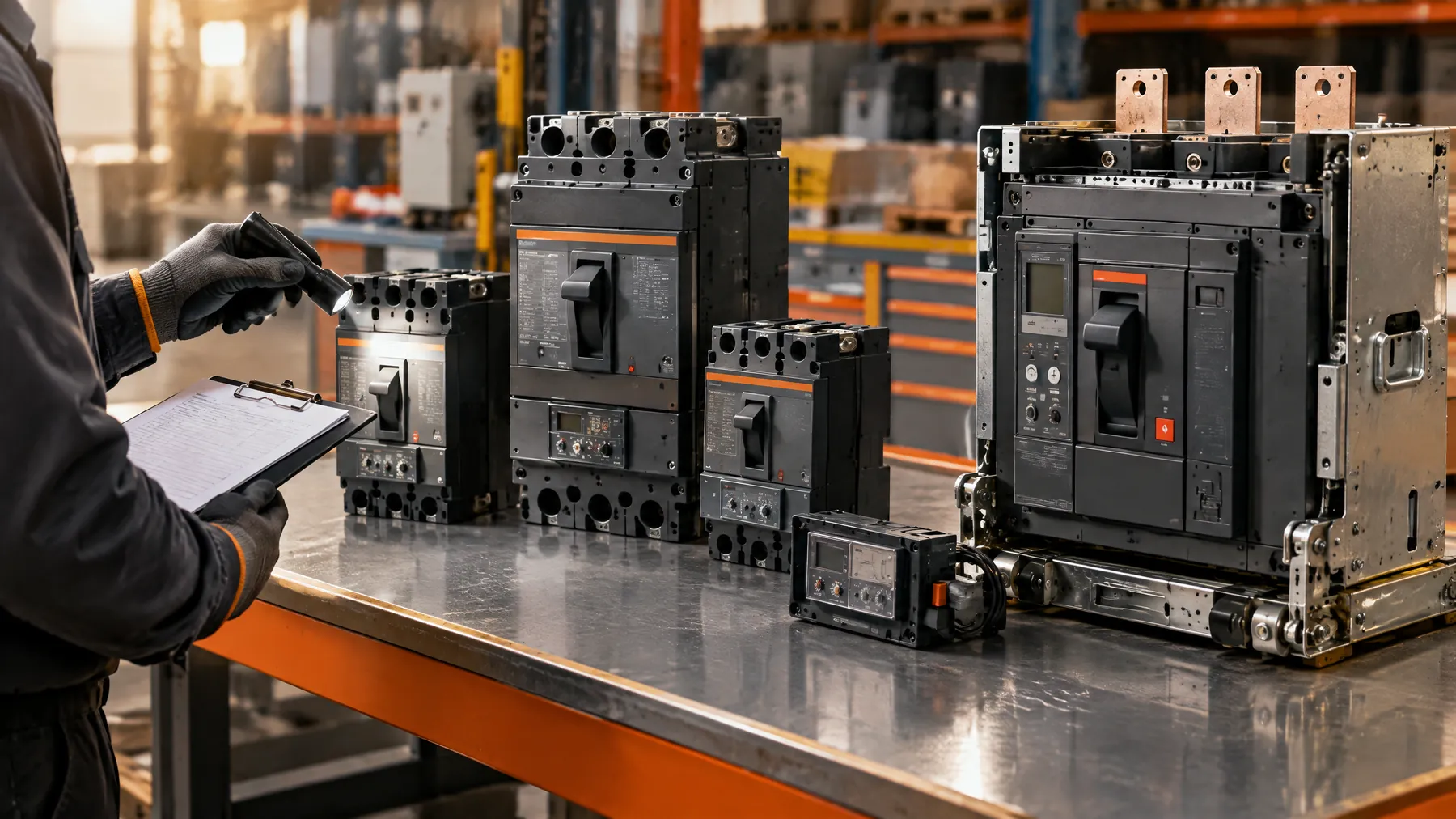
Square D breakers are marketable when they match common commercial needs: standard frame sizes, documented trip characteristics, and interrupting ratings compatible with industrial distribution systems. Units with intact nameplates and accessories attract more buyers because they reduce retrofit and installation work. Draw-out mechanisms, popular trip combinations, and serviceable parts increase liquidity. Obsolete or damaged items can still be marketable for parts when quantities justify harvesting. Offers always depend on current demand, condition, and logistical factors.
Model and Series
Exact catalog numbers and series identify trip characteristics, frame compatibility, and replacement parts. Clear identification lets us match breakers to resale markets, retrofit kits, or parts harvesting. Missing numbers reduce liquidity and typically require more inspection.
Interrupting Rating
Higher interrupting ratings match heavier industrial systems and command stronger market interest. Buyers need the interrupting capacity (kA or kAIC) to verify compatibility with existing switchgear. Absent ratings, units often require teardown or are sold for parts.
Accessory Completeness
Breakers with original handles, draw-out carriages, shunt trips, and mounting hardware are easier to resell intact. Accessories reduce buyer retrofit costs and increase market paths. Loose or missing parts lower demand and may trigger lot-level discounts.
Quantity & Lot Size
Larger quantities improve logistics and unit economics for buyers. Full lots from single projects are more attractive because handling, testing, and shipping costs spread across units. Small one-off pieces may still sell, but often at lower net returns.
Where this equipment is commonly found
Square D breakers typically appear in switchgear, distribution panels, MCC buckets, transfer switch assemblies, and generator paralleling gear. Knowledge of the breaker’s original application and load history helps determine remaining service life and resale possibilities. Breakers removed after planned upgrades tend to be lower cycle and more desirable; those removed after an event may need detailed inspection. Provide maintenance records or trip logs when available. Qualified personnel must handle energized testing, verification, and safe disconnection.
How to prepare the breaker for review
Preserve nameplates, catalog and serial labels, trip-unit markings, and any stamped date codes. Keep accessory parts like shunt trips, trip relays, handle ties, draw-out rails, and mounting hardware together with the breaker. Photograph clear close-ups of the front, nameplate, trip unit, sides, accessories, and any damage or corrosion. Include context shots showing the breaker installed in the panel or gear. Do not attempt energized testing or removal; use qualified personnel for live work, disconnection, and safe packaging.
Do not clean labels with harsh chemicals, dismantle the breaker for better photographs, remove copper, separate matched accessories, or energize an unknown unit. Keep the inventory dry, protected from impact, and associated with its records. Qualified personnel must control any testing, electrical isolation, disconnection, racking, rigging, or field removal.
How the sale moves forward
Frequently asked questions
Do you buy used or obsolete Square D breakers?
Yes. We evaluate used and obsolete Square D breakers on a case-by-case basis. Some are purchased for resale, others for parts or harvesting. Offers require catalog numbers, condition details, quantity, and acceptable removal logistics. Do not handle energized equipment for a sale; qualified personnel must control isolation and disconnection.
What photos should I send for a quote?
Send clear close-up photos of the breaker front, nameplate/catalog label, trip-unit area, accessory tags, side and rear, mounting hardware, and the breaker installed in its panel or gear for context. Include any damage or corrosion close-ups. Do not attempt energized testing; have qualified staff safe-isolate first.
What about quantities, shipping, or removal?
We purchase single breakers and large lots. Provide exact counts and on-site location details. For pickup or shipping we discuss preferred methods and access. All energized disconnection and lifting must be handled by qualified crews. Removal quotes depend on location, packaging, and lot size.
How long does it take to receive an offer?
Response time depends on identification quality, quantity, condition, location, and project complexity. Complete catalog information, readable labels, current photographs, and clear logistics details reduce follow-up questions. Large or installed inventories may require additional review before terms are final.