
Do you buy the generators covered in this directory?
We review qualifying generators by condition when exact identification, ratings, condition, completeness, location, and current demand support a commercial resale path.
Browse generators by condition
Choose the closest match, then use the page to build an accurate submission. Generator names are only a starting point. Full specifications, configuration, operating history, included components, location, access, and present market demand determine whether an individual unit qualifies.
New Surplus Generator Buyers
Qualifying new, unused and project‑surplus commercial generators are reviewed. The decisive specifications we use to determine interest are: manufacturer, model and serial; kW/kVA (standby and prime); voltage/phase/frequency; fuel type; engine and alternator details; hours; control system; enclosure and tank; breaker size; test/FAT documentation; quantity, location and access.
Used Industrial Generator Buyers
We review qualifying used industrial generators; purchase decisions rest on clear, verifiable specs. The decisive data are manufacturer and model, serial number, kW/kVA with prime vs. standby rating, voltage/phase/frequency, fuel, year and hours, engine and alternator make, control system and breaker, enclosure/tank details, test history, quantity, and site access for removal. Provide photos and paperwork to start a review.
Low-Hour Generator Buyers
Yes — we review qualifying documented low-hour commercial generator sets. Decisions hinge on clear identification (manufacturer, model, serial), power rating (kW/kVA, standby/prime), voltage/phase/frequency, verified hours and service history, engine and alternator serials, control system, enclosure and fuel system condition, and on-site access for inspection or removal.
Build evidence before asking for a price
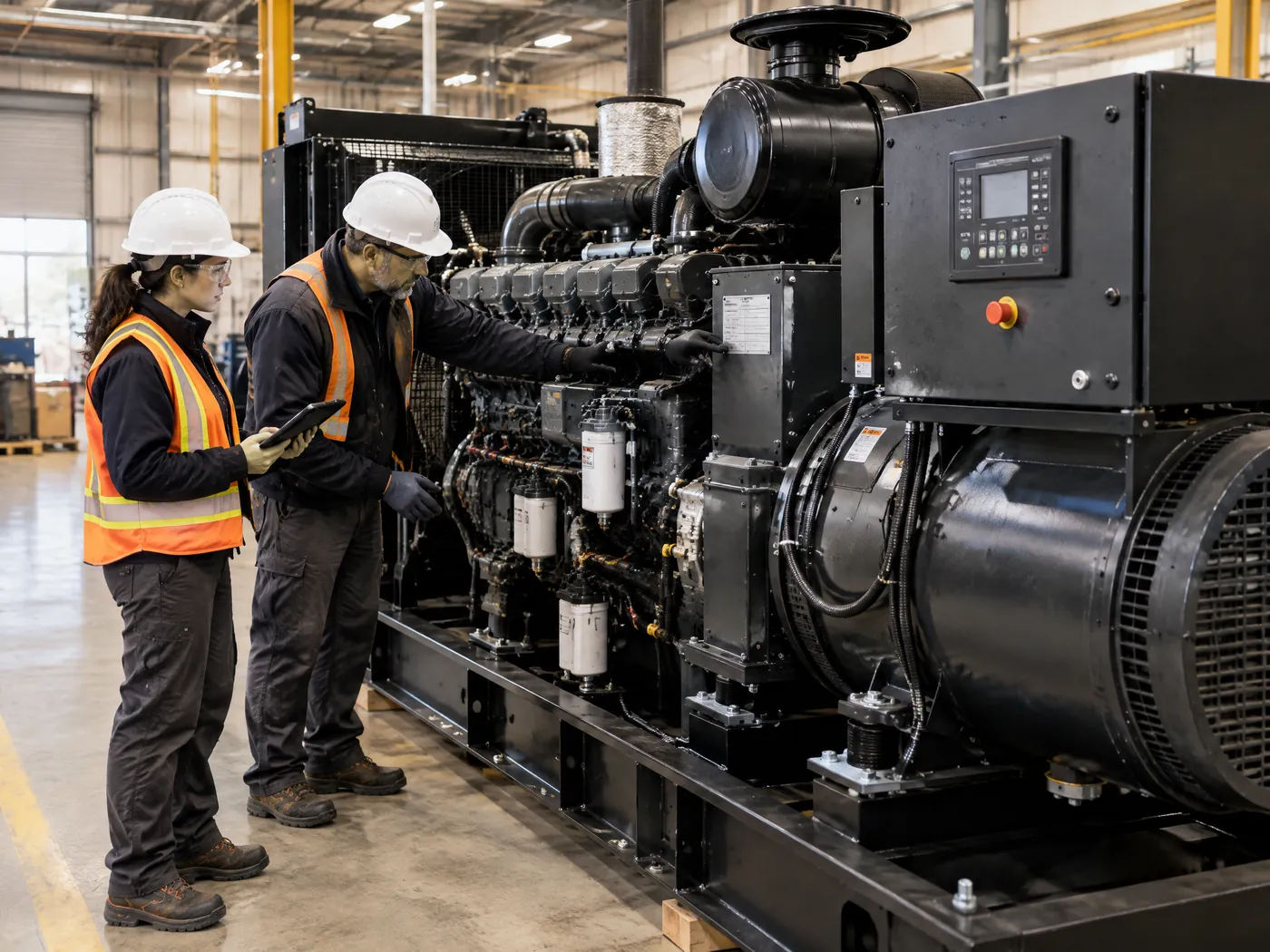
A buyer cannot value an unknown enclosure or a model name without the rest of the configuration. Record every rating line and photograph each major component before the unit is dismantled. Tie the photographs to an inventory identifier. For a fleet or warehouse release, separate identical units from mixed configurations and state whether each record has been physically verified.
A directory is useful only when every page has a distinct job
These pages are not alternate versions of the same sales pitch. Type pages explain construction and configuration. Manufacturer pages organize model and package identification without claiming affiliation. Condition pages define what a seller can support with records and photographs. Seller tools solve specific tasks such as building an inventory sheet or preparing freight. That separation creates useful internal links and reduces the risk of repetitive, search-engine-first pages.
Choose one primary page, then follow the evidence
Begin with the page that best describes the seller’s immediate question. A diesel set can also have a manufacturer page and a condition page, but the first guide should match the main decision: identifying the equipment, documenting its present state, estimating marketability, or planning its release. From there, the related links provide the next useful layer without forcing a visitor through duplicate explanations. This structure also helps a search or answer system understand which page is the central resource, which pages define subtopics, and how a detailed answer connects back to the commercial generator hub.
Frequently asked questions
What belongs in generators by condition?
We review qualifying generators by condition when exact identification, ratings, condition, completeness, location, and current demand support a commercial resale path.
What should a seller send first?
Send the complete model and serial information, ratings, fuel, voltage, hours, condition, location, and current photographs. Include quantity and release timing for multi-unit projects.
Does a page listing guarantee a purchase?
No. These pages describe equipment and seller preparation. Every purchase decision depends on the actual unit, documentation, condition, completeness, demand, location, and handling requirements.
Where can I find local pickup guidance?
Use the state and city generator directories for location-specific planning, then submit the exact site address privately during the commercial review.