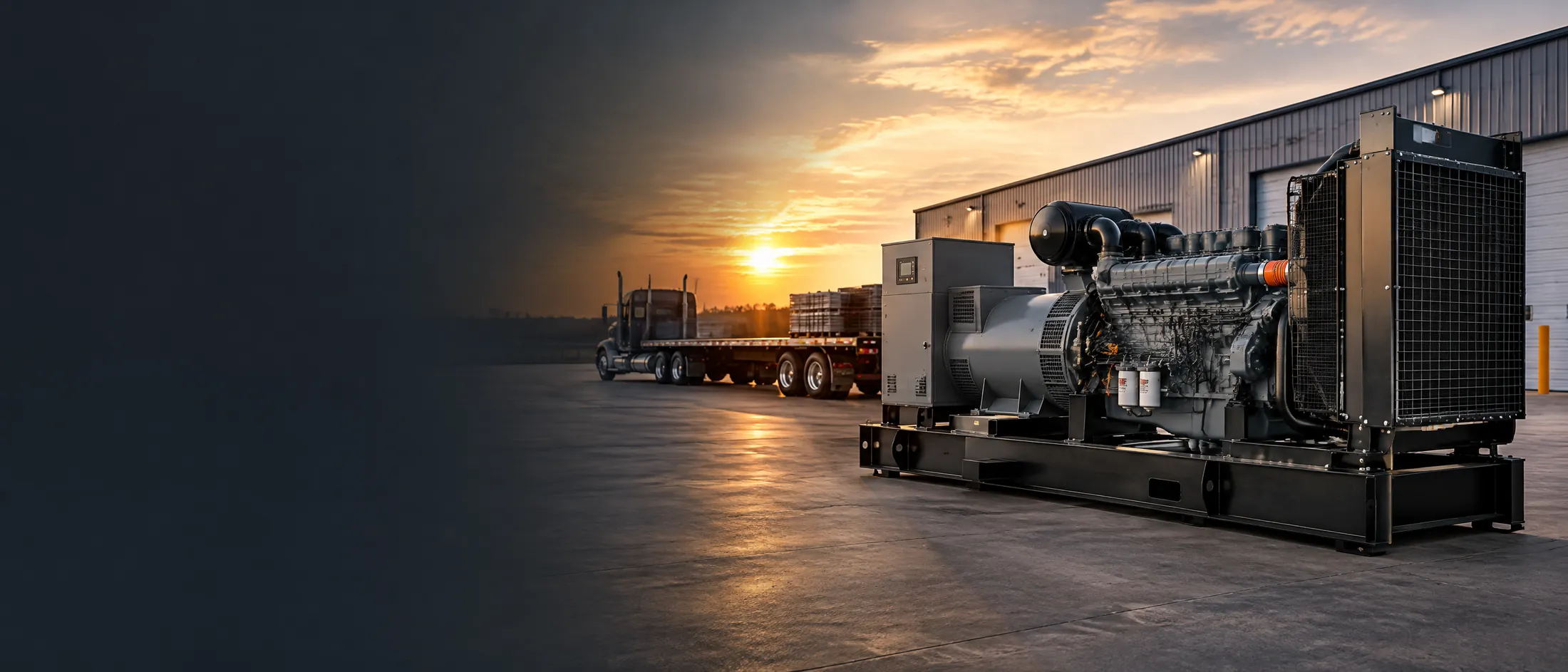
Do you review new, unused, or project-surplus commercial generators?
Qualifying new, unused and project‑surplus commercial generators are reviewed. The decisive specifications we use to determine interest are: manufacturer, model and serial; kW/kVA (standby and prime); voltage/phase/frequency; fuel type; engine and alternator details; hours; control system; enclosure and tank; breaker size; test/FAT documentation; quantity, location and access.
What sellers should know
This page covers new surplus commercial generators: units that were never placed into service, remain unused after project cancellation, or were factory tested and left in crating. Buyers evaluate these as inventory for dealers, contractors, or OEM remarketing.
We review any manufacturer — Caterpillar, Cummins, MTU, Kohler, Generac, Mitsubishi, FG Wilson, etc. — and both diesel and gaseous models. Interest depends on clear evidence of new condition and market fit rather than brand alone.
Specifications that support a purchase review
When you submit a unit for review, include the core nameplate and equipment specifications below. These are the items that most influence a buyer’s decision and any preliminary valuation.
Condition and documentation
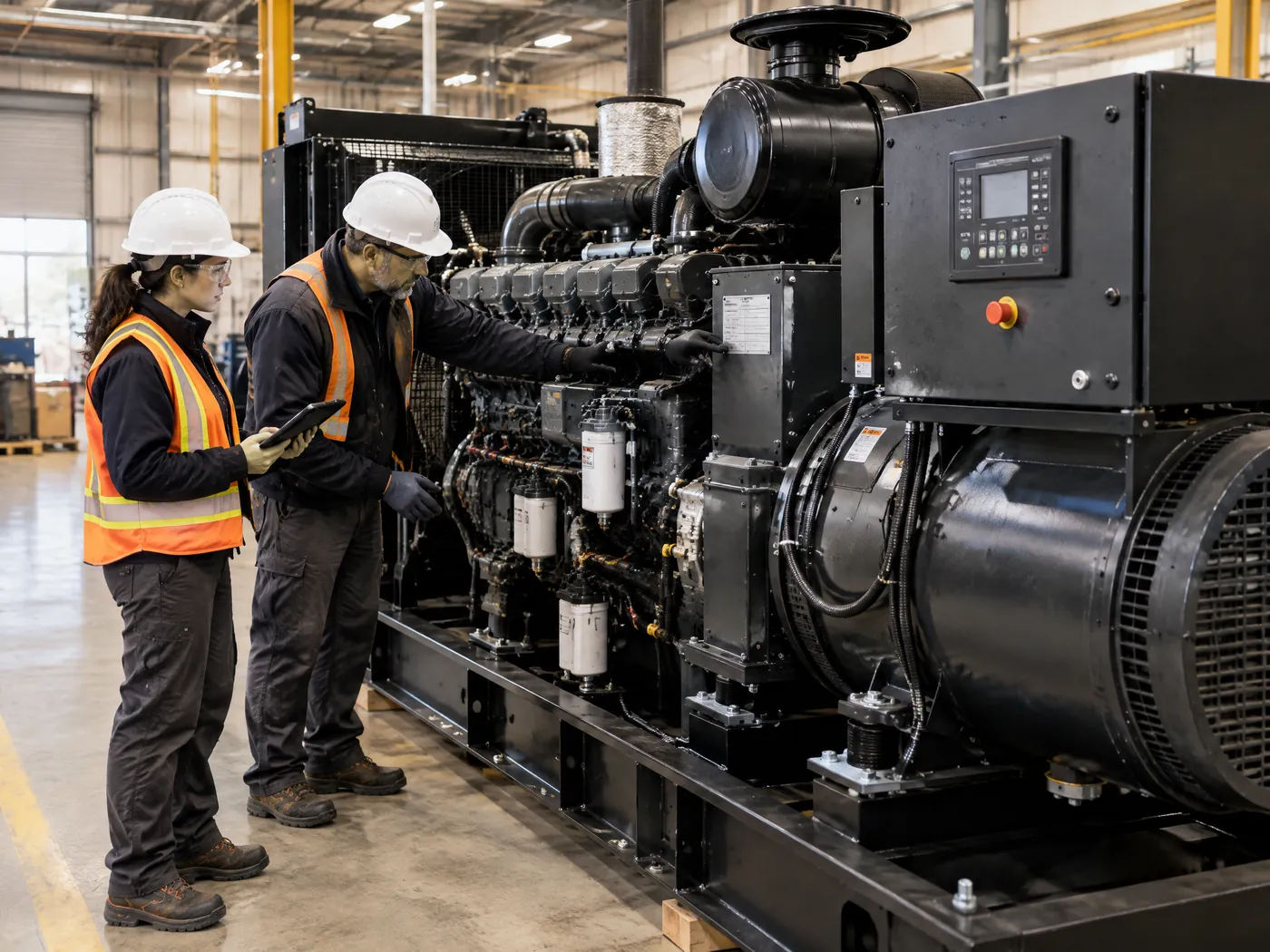
Define “new surplus” clearly: units should be uninstalled, unused or recently factory‑tested with little or no run hours, original paint and packaging, and free of corrosion or weather damage. Preferred evidence includes original packing/crate photos, factory acceptance test (FAT) reports, invoice or sales contract showing build date and that the unit was never commissioned, and visible nameplates matching documentation.
What affects marketability?
Emissions and Tier level
Buyers consider engine emissions (Tier 2/3/4 / EU Stage) because that affects where a generator can be installed today and its resaleable geographies.
Certification and test documentation
UL/CSA labels, FAT reports, and OEM packing lists materially increase buyer confidence. Units with traceable serial numbers and factory test records move through review faster.
Quantity, timing and location
Large lots or project lots are easier to remarket; single units are evaluated differently. Location, access (crane, forklift, door openings), and export port proximity affect logistical feasibility.
Fuel and application trends
Diesel remains broadly marketable; natural gas/LNG units target different buyers. Specialty configurations (parallel switchgear, sound‑attenuated enclosures, rental skid baseframes) can open specific markets but require matching documentation.
Photo and inventory checklist
Close photo of OEM nameplate showing manufacturer, model and serial number
Overall exterior shots from all sides showing enclosure and paint/packaging condition
Control panel close‑up including software/firmware label and visible hours meter
Engine and alternator nameplates and identifying tags
Crate, pallet or mounting skid photos and any OEM packing labels
Circuit breaker and switchgear photos including rating plate
Fuel tank and fill/vent locations, and any integrated jacket water heater
Photos of documentation: FAT/test reports, purchase orders, invoices, and packing lists
Pickup and logistics planning
For planning removal and transport, buyers need confirmed dimensions, gross weight, lifting points, and site access details (door heights, overhead obstructions, crane capacity or forklift ratings). Provide pickup location, available loading dates, and any permit or laydown restrictions. Supplying packing lists, skid drawings and full crate dimensions reduces the time required for a shipper or rigger to price handling — but submission does not guarantee purchase or arrangement of removal.
Safety and scope boundary
New generator equipment is heavy and often shipped with protective bracing. Ensure all on‑site work is performed by qualified riggers and trades, and verify load ratings, permits, and local codes before any lift or movement. Buyers review condition and documentation; they do not provide site safety supervision or certify removal methods.
Frequently asked questions
What minimum information do you require to evaluate a new surplus generator?
At minimum: manufacturer, model, serial number, rated kW/kVA (standby/prime), voltage/phase/frequency, fuel type, engine and alternator make/models, hours, control panel type, breaker rating, enclosure type, quantity, location, and photos of nameplates and overall condition. Any FAT, invoice, or packing list is helpful.
Do you accept single units or only full project lots?
Both single units and full lots are reviewed. Decision depends on the unit’s specifications, condition, and marketability. A single high‑spec, in‑crated unit with full documentation can be as attractive as a lot of smaller units.
Will you test or certify equipment before purchase?
Purchase review is based on documentation and photos; buyers do not guarantee on‑site testing, certification, or commissioning. Factory test records and OEM documentation carry the most weight in lieu of a witness test.
How do you prove ownership and title?
We require documentation establishing legal title and the right to sell: invoices, purchase orders, title paperwork, or a written statement from the original owner. Clear title reduces transaction risk.