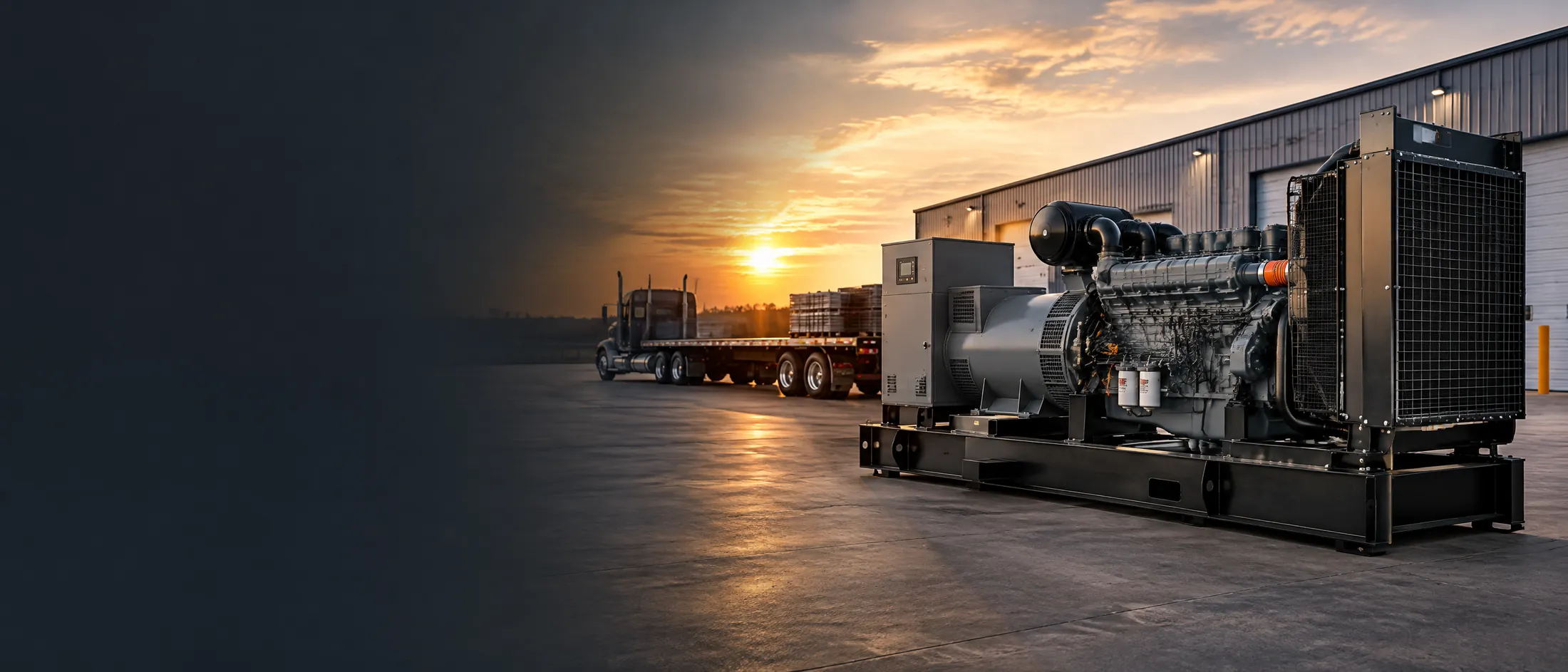
Do you buy used industrial generators and what information matters most?
We review qualifying used industrial generators; purchase decisions rest on clear, verifiable specs. The decisive data are manufacturer and model, serial number, kW/kVA with prime vs. standby rating, voltage/phase/frequency, fuel, year and hours, engine and alternator make, control system and breaker, enclosure/tank details, test history, quantity, and site access for removal. Provide photos and paperwork to start a review.
What sellers should know
This page explains what we look for when reviewing used commercial and industrial generators for potential purchase. We evaluate units ranging from 50 kW industrial standbys up to multi-megawatt prime sets. We do not guarantee a purchase, price, or removal; we review equipment that supplies the decisive specifications listed below and that has evidence supporting condition and history.
Common sellers include facility managers replacing aging standby units, contractors liquidating rooftop or plant spares, dealers handling trade-ins, and asset managers disposing of surplus hospital, data center, manufacturing, or rental-fleet generators. Typical fuels are diesel and natural gas; common manufacturers are Caterpillar, Cummins, Kohler, MTU, and Perkins, among others. Listing the manufacturer and model, plus the serial plate data, speeds any review considerably and allows verification of build configuration and ratings documentation from the manufacturer or OEM parts records where available. We are not affiliated with any manufacturer and do not provide warranty transfer or OEM certification as part of a review process here.
Specifications that support a purchase review
Key specifications and documentation we need to review a used industrial generator are:
Condition and documentation
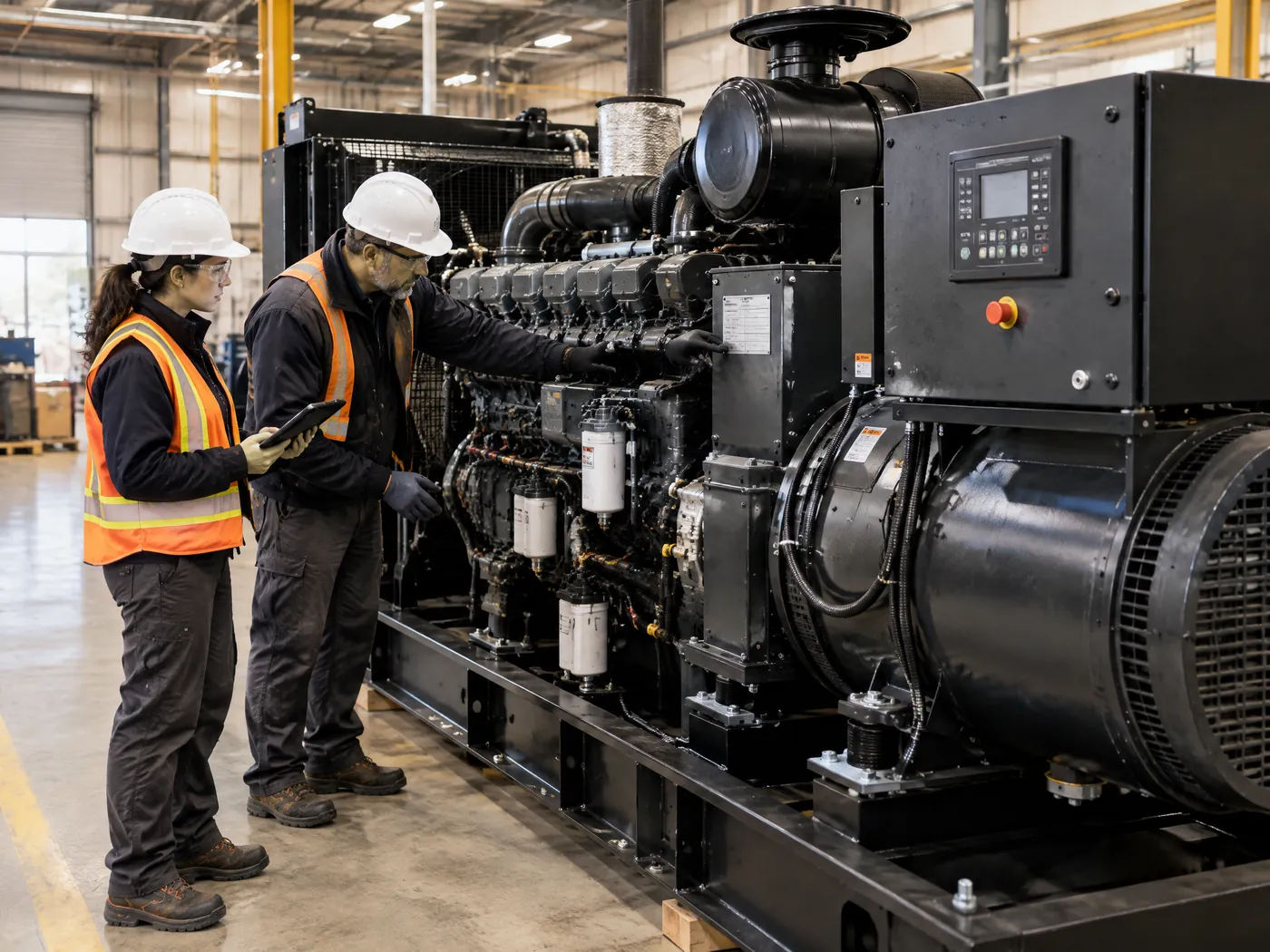
We assess condition based on verifiable evidence: clear serial-plate photos, service and test records, recent run-test reports, and high-resolution images showing overall cleanliness, corrosion, leaking, or damage. Units with documented recent load tests and oil/fuel analysis are reviewed more quickly. For site-only inspections, provide access windows, lift points, approximate dimensions and weight, and quantity — multiple identical units are evaluated as inventory lots. We do not provide in-person site testing or certifications as part of the initial review.
What affects marketability?
Age and running hours
Younger units with lower hours and documented maintenance typically attract stronger interest. Age interacts with parts availability and emissions requirements.
Fuel and emissions compliance
Units intended for urban reuse can be limited by local emissions rules; dual-fuel or newer low-emission engines may have broader markets.
Configuration and controls
Common voltage, standard breaker arrangements, and widely used control systems increase buyer flexibility. Specialized switchgear or proprietary controls can narrow buyers.
Logistics and site access
Weight, dimensions, enclosure size and ease of access affect removal cost. Generators inside buildings, on rooftops, or in tight pits reduce net proceeds due to higher removal complexity.
Photo and inventory checklist
Clear photo of the serial plate and nameplate showing model, serial and ratings
Wide shot of the entire unit showing enclosure and location
Close-up of engine nameplate and alternator nameplate
Control panel close-up showing make/model and meters
Photos of fuel tanks, day tanks, and emergency fuel connections
Images of any external damage, rust, oil stains or leaking areas
Photos showing breaker, switchgear and transfer switch if present
Photos of unit tags, decals, and any recent service stickers or records on the unit itself
Pickup and logistics planning
For logistics planning, sellers should provide unit dimensions, approximate weight, quantity, site level (ground, rooftop, basement), nearest access points (door sizes, gate clearances), and any crane or lift availability. This information enables buyers and their logistics partners to estimate removal methods and costs. We do not arrange or guarantee removal; provide constraints early so any buyer review can include realistic handling considerations.
Safety and scope boundary
We require that generators offered for review are isolated from live power and that site access follows the seller’s safety and security procedures. Provide information about required site permits, hot-work restrictions, confined-space issues and any hazmat tagging (fuel, oil, refrigerants). We do not perform site work before an accepted agreement and do not assume responsibility for site safety compliance or permits.
Frequently asked questions
What documentation speeds a review?
Provide clear nameplate photos, maintenance logs, recent load-test reports, oil analysis, and any transfer switch or ATS documentation. Serial numbers let buyers verify build specs.
Do you buy units with high hours or cosmetic damage?
High-hour or cosmetically worn units may be reviewed if mechanical records and test data indicate solid condition. Cosmetic damage alone is less important than engine, alternator and control condition.
Will you schedule a site inspection?
Initial reviews are desk-based using provided specs and photos. Interested buyers may request a site inspection, which requires seller coordination and may involve third-party inspectors at the seller’s direction.
How does quantity affect consideration?
Multiple identical units are often evaluated as inventory lots; quantity can improve interest if units are in similar condition and are co-located with straightforward removal logistics.