Do we buy circuit breakers from commercial buildings?
Yes—Surplus Generator Buyers purchases circuit breakers removed from commercial buildings, but offers depend on the manufacturer, exact catalog/series, electrical ratings, condition, quantity, location, completeness of accessories and documentation, and current market demand. We evaluate draw-out switchgear breakers, MCCBs, ACBs, and power distribution breakers case-by-case and require photos plus quantities for a prompt assessment and rapid response.
What sellers should know
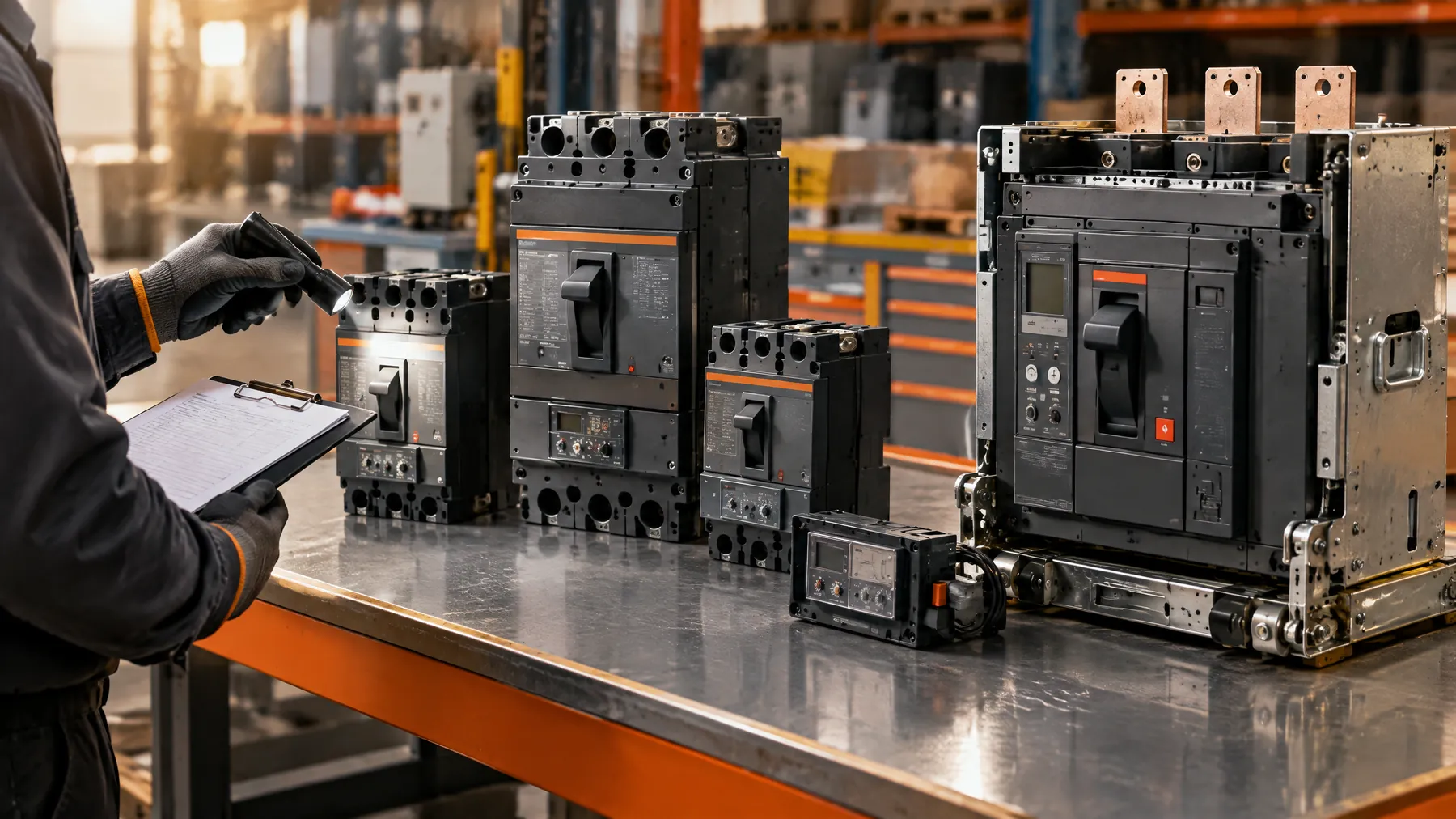
Surplus Generator Buyers acquires circuit breakers removed from commercial buildings nationwide, focusing on industrial-grade MCCBs, ACBs, draw-out breakers from switchgear, and power distribution breakers found in office towers, shopping centers, hospitals, and light-industrial facilities. We assess units by exact catalog/series, nameplate ratings, arc-interrupting capacity, and physical condition. Sellers get faster offers when they supply clear ID photos, quantities, and removal logistics. We also consider included trip units, accessories such as shunt trips and handles, mounting racks, and original technical documentation when assessing value and saleability. We do not provide field disconnection or energized work; qualified electricians or service crews must handle testing, isolation, and removal before shipment.
Examples we review
Use the list below as an identification guide, not a promise that every unit will qualify. The exact model, configuration, condition, quantity, location, completeness, and present demand still control the purchasing decision.
What information should you send?
A complete submission lets a buyer answer the seller’s real question: whether this exact breaker or inventory has a practical commercial market. Copy identifiers exactly as shown and support them with current photographs.
Manufacturer and brand name
Complete catalog or model number and series
Ampere, frame size, and trip type/settings
Voltage, poles, and interrupting rating (kAIC/kA)
Condition and testing history (removed for maintenance/failure)
Quantity and exact location on site (building, floor, room)
What affects marketability and value?
Commercial building circuit breakers are marketable when they match common replacement needs, have identifiable nameplate data, and retain factory trip units or accessories. Units removed from recent retrofits or late-model gear move faster. Standard frame sizes and common interrupting ratings fit repair shop demand and spare parts inventories. Conversely, unique custom breakers or heavily modified units may require specific buyers. We review documentation, quantities, and condition to determine market demand; pictures and site history speed the offer process. Breakers from hospitals, data centers, retail centers and large office complexes are often in demand because facilities keep similar stock. We also consider lead time for procurement and seasonal fluctuations in maintenance projects.
Manufacturer Demand
Certain OEMs and common series are in steady demand because parts and service knowledge exist. Breakers from widely used commercial brands typically move faster when model and series are clearly identified.
Nameplate Accuracy
Complete and legible nameplate data — catalog number, serial, ampere, voltage, and interrupting rating — removes guesswork and increases buyer confidence. Missing data lowers offers and slows the sale process.
Lot Size
Larger quantities of identical breakers attract commercial buyers and aftermarket users. A single unit can sell, but lots reduce per-item handling and shipping cost, improving acceptability and lead time for resale.
Condition & Completeness
Breakers with intact trip units, mounting hardware, racking mechanisms, and documentation fetch higher interest. Corrosion, missing accessories, or evidence of arcing reduce marketability and require disclosure to potential buyers.
Where this equipment is commonly found
Commercial circuit breakers typically come from switchgear in office buildings, MCCs in light industrial spaces, tenant-improvement panel swaps, and building repower projects. Project history matters because breakers from routine maintenance spares have different wear profiles than units pulled for failure or arc events. Buyers prefer units with known history, matching gear, and intact trip mechanisms. Never attempt energized testing or removal yourself; qualified electricians must isolate and disconnect breakers before sale.
How to prepare the breaker for review
Before contacting us, preserve the breaker nameplate and all attached trip unit labels. Photograph the full breaker, close-ups of catalog/model numbers, serial numbers, ampere and frame ratings, voltage, pole count, and interrupting rating. Capture mounting arrangement, racking mechanism for draw-out units, and any accessories like shunt trips or ground-fault modules. Note whether the unit was removed under power. Do not perform energized testing. Arrange for qualified personnel to isolate and disconnect equipment before shipment.
Do not clean labels with harsh chemicals, dismantle the breaker for better photographs, remove copper, separate matched accessories, or energize an unknown unit. Keep the inventory dry, protected from impact, and associated with its records. Qualified personnel must control any testing, electrical isolation, disconnection, racking, rigging, or field removal.
How the sale moves forward
Frequently asked questions
Do you buy used or obsolete commercial breakers?
Yes. We often purchase used, end-of-life, or obsolete commercial breakers if the manufacturer, model, and ratings meet buyer needs and the unit is complete and sound. Some obsolete models still have spare-parts demand. Provide photos and nameplate data for evaluation.
What photos and details should I send?
Send clear, well-lit photos of the breaker nameplate, full unit, close-ups of catalog/model and serial numbers, ampere/frame markings, pole/voltage rating, interrupting kAIC label, trip unit, and mounting or racking arrangement. Show accessories and any damage. Do not attempt energized photos.
What about quantities, shipping, and removal?
We buy single breakers and large lots, but quantities affect offer timing and handling. Sellers should disclose if removal, rigging, or shipping are required. Qualified electricians or service crews must disconnect energized equipment; we can coordinate logistics but do not perform live electrical work.
How quickly will I receive an offer?
Response time depends on identification quality, quantity, condition, location, and project complexity. Complete catalog information, readable labels, current photographs, and clear logistics details reduce follow-up questions. Large or installed inventories may require additional review before terms are final.