Do we buy circuit breakers from mining and aggregate operations?
Yes—Surplus Generator Buyers purchases mining and aggregate circuit breakers depending on manufacturer, exact catalog/series, ratings, condition, quantity, location, completeness, and current demand. We buy draw-out power breakers, vacuum and SF6 types, MCC feeders, and specialty high-interrupting assemblies when specifications match market needs. Provide nameplate and trip details so we can assess the unit and scope an offer.
What sellers should know
Surplus Generator Buyers evaluates breakers retired from crushers, conveyors, processing plants, and mobile aggregate units. We look for industrial molded-case, insulated case, and power circuit breakers sized for feeders, mains, and motor protection. Critical data include manufacturer, full catalog and serial numbers, ampere and interrupting ratings, trip unit type, and any refurb history. Units with recent testing, documentation, and compatible mounting hardware are easier to market. We buy single units and large lots nationwide. Provide photos and specs to start a quick review. Qualified electrical personnel must handle energized equipment and removal.
Examples we review
Use the list below as an identification guide, not a promise that every unit will qualify. The exact model, configuration, condition, quantity, location, completeness, and present demand still control the purchasing decision.
What information should you send?
A complete submission lets a buyer answer the seller’s real question: whether this exact breaker or inventory has a practical commercial market. Copy identifiers exactly as shown and support them with current photographs.
Manufacturer (name on nameplate)
Complete catalog/model and serial number
Ampere rating, frame size, and trip unit type
Voltage class, poles, and interrupting rating (kAIC or kA)
Condition and any recent test or refurbishment records
Quantity and physical location for inspection and shipping
What affects marketability and value?
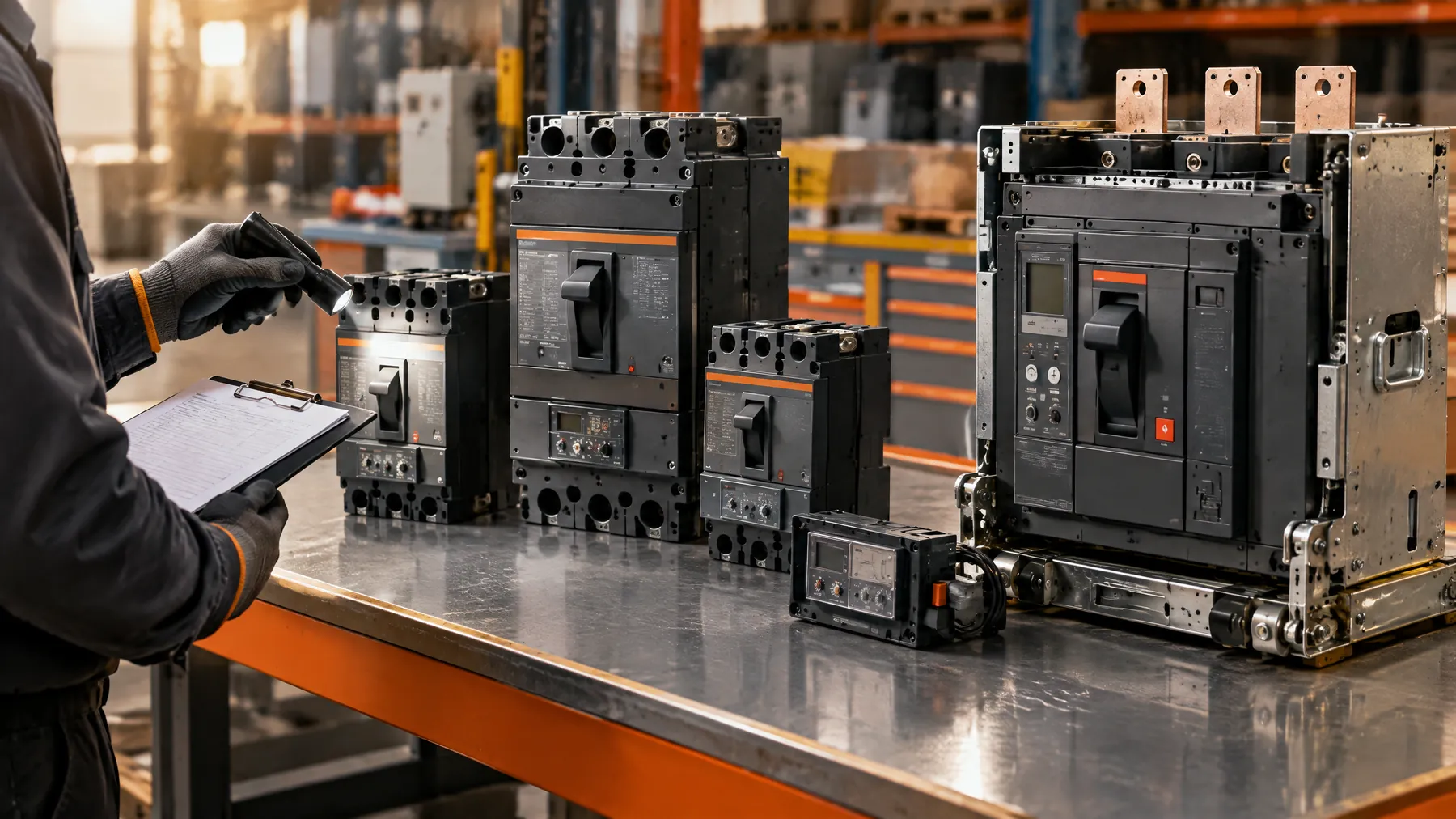
Circuit breakers from mining and aggregate sites are marketable when they meet industry ratings and show serviceable condition. High-demand items include draw-out power breakers with high interrupting capacity, vacuum and SF6 units, MCC feeder breakers, and stout motor starters removed during plant upgrades. Breakers with intact nameplates, current trip units, and maintained lubrication or sealed elements attract buyers. Obsolete or badly corroded units can still have value for parts or refurbishment, but marketability depends on identifiable model numbers, working trip components, and available quantity. Location and logistics also influence demand; units already on hardstand near transport are easier to move.
Manufacturer & Model
Recognizable manufacturers and exact series command stronger demand because buyers can source parts and trip modules. Known models reduce refurbishment time and risk when repurposing for mining electrical systems.
Interrupting Rating
Higher interrupting capacity increases marketability for mains and mill feeders. Buyers prioritize breakers rated for available fault currents in heavy mining plants; lower-rated units are limited to lighter duty or parts markets.
Condition & Testing
Complete nameplates, clean interiors, and documented functional tests raise value. Units with recent primary injection or dielectric tests require less bench work and attract refurbishers and end users seeking quick turnarounds.
Accessories & Mounting
Original draw-out carts, racking mechanisms, trip units, and wiring harnesses simplify resale and reinstallation. Missing accessories reduce offers because buyers must factor sourcing replacements or custom mounting work for mining switchgear.
Where this equipment is commonly found
Breakers used in crushers, mills, and conveyor motor circuits face heavy thermal, vibration, and dust exposure. Buyers value documented project history because it shows duty cycle, fault incidents, and whether units were used as mains, feeder, or motor protection. That context helps buyers and refurbishers match trip settings and replacement parts. Provide decommissioning records, service plans, and any fault logs. Do not attempt live testing alone; qualified electrical staff must perform energized diagnostics and safe disconnection.
How to prepare the breaker for review
Preserve nameplates, trip units, draw-out carriages, and any factory manuals or test reports. Photograph the breaker from multiple angles: front, rear, nameplate close-ups, trip unit, internal contact area, and mounting hardware. Note serial numbers, last maintenance dates, and evidence of oil or gas leaks for oil or SF6 breakers. Keep units dry and secured for inspection. Do not energize or internal-inspect without qualified personnel. Removal, lifting, and transport should be arranged or documented for accurate offers.
Do not clean labels with harsh chemicals, dismantle the breaker for better photographs, remove copper, separate matched accessories, or energize an unknown unit. Keep the inventory dry, protected from impact, and associated with its records. Qualified personnel must control any testing, electrical isolation, disconnection, racking, rigging, or field removal.
How the sale moves forward
Frequently asked questions
Do you buy used or obsolete circuit breakers from mines?
Yes. We consider used and obsolete mining and aggregate breakers for parts, refurbishment, or resale when identifiable and serviceable. Provide nameplate, model, and condition details. Value depends on demand and completeness. Do not perform energized testing yourself; qualified electrical personnel must handle live work and safe removal.
What photos do you need to get an offer?
Photograph clear, well-lit nameplate close-ups, front and rear views, trip unit and control panels, interior contact area if accessible, mounting hardware, and overall site context showing accessibility. Include any corrosion or damage. Do not open or test energized equipment; have qualified staff make safe exposures.
How many breakers do you buy and who handles shipping/removal?
We purchase single breakers up to full decommissioned plant lots. Quantity affects pricing and logistics. Sellers usually arrange or quote removal and freight; we can coordinate third-party rigging where needed. All disconnection and live work must be completed by qualified electrical contractors before pickup.
How long does the evaluation and offer process take?
Response time depends on identification quality, quantity, condition, location, and project complexity. Complete catalog information, readable labels, current photographs, and clear logistics details reduce follow-up questions. Large or installed inventories may require additional review before terms are final.