Do we buy circuit breakers from hospitals and healthcare facilities?
Yes—Surplus Generator Buyers purchases circuit breakers from hospitals and healthcare facilities depending on manufacturer, exact catalog or series, electrical ratings, condition, quantity, location, completeness, and current demand. We buy distribution, service, transfer, paralleling, and generator protection breakers from medical sites. Send photos, serials, and location details. Qualified personnel must handle energized testing, disconnection, and removal.
What sellers should know
Hospitals and healthcare facilities retire circuit breakers during plant upgrades, generator swaps, and lifecycle replacements. Surplus Generator Buyers buys breakers removed from central plant switchgear, emergency distribution, generator paralleling systems, transfer switch interfaces, UPS output protection, and critical branch panels. Offers need precise identification, clear photos, and logistics information. Many hospital sites require strict traceability and controlled access, so we work with facility managers and their contractors. Qualified electrical personnel must perform any energized testing, disconnection, and removal before equipment changes hands.
Examples we review
Use the list below as an identification guide, not a promise that every unit will qualify. The exact model, configuration, condition, quantity, location, completeness, and present demand still control the purchasing decision.
What information should you send?
A complete submission lets a buyer answer the seller’s real question: whether this exact breaker or inventory has a practical commercial market. Copy identifiers exactly as shown and support them with current photographs.
Manufacturer
Complete catalog/model number (series)
Ampere rating, frame size, trip type/settings
Voltage, poles, and interrupting (kA) rating where relevant
Condition and any recent test or maintenance records
Quantity and exact location on site (building, room, bay)
What affects marketability and value?
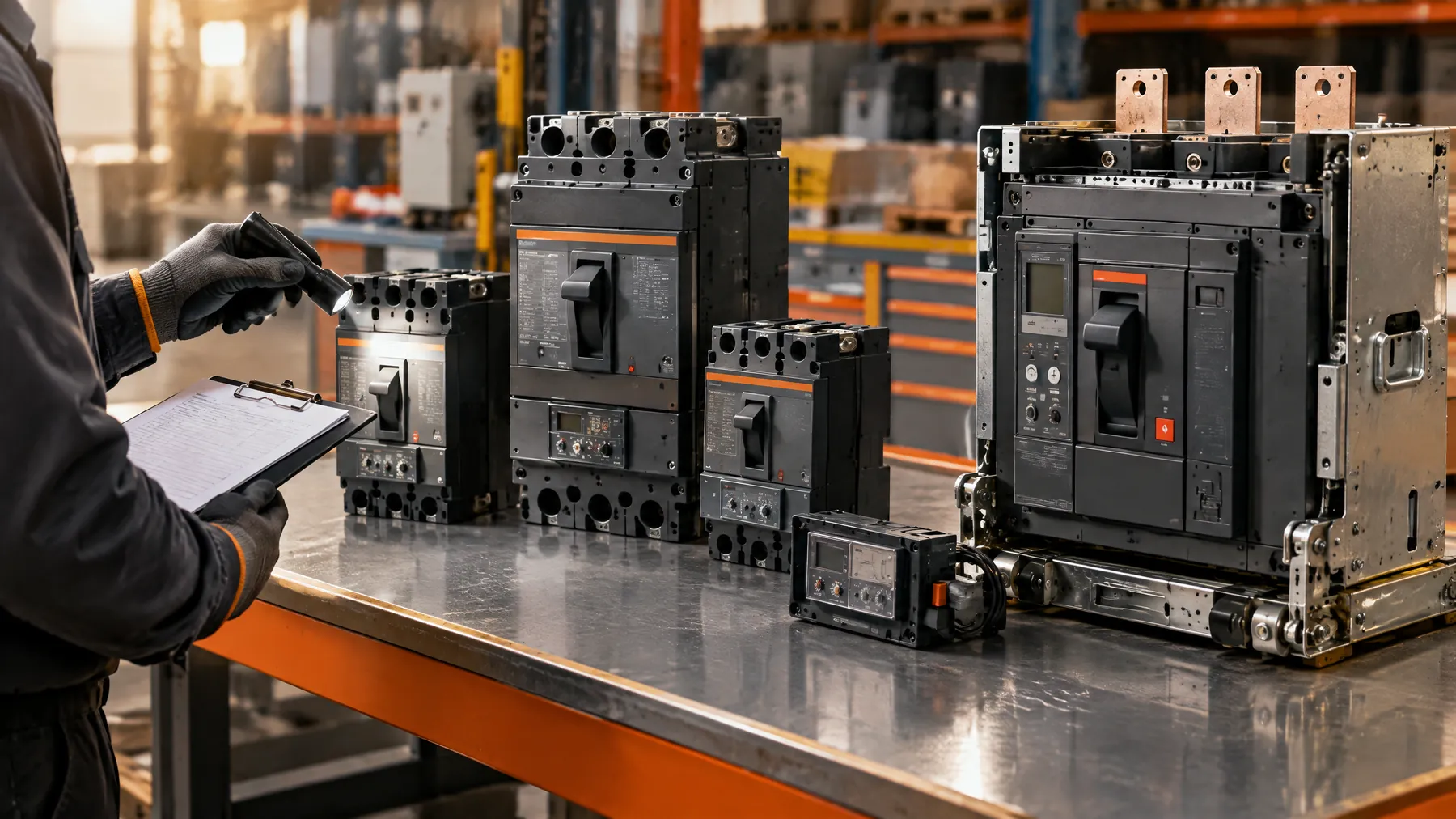
Hospital circuit breakers often carry high specifications: elevated interrupting capacity, generator/transfer ratings, draw-out frames, and documented trip units. These attributes increase appeal to resellers, other healthcare systems, and industrial buyers seeking OEM-equivalent spares. Marketability hinges on intact nameplates, serials, test tags, and matchable lots. Single obsolete or damaged breakers may have limited value, while matched sets or common frames move more quickly. Accurate IDs and paperwork speed evaluation and broaden potential buyers without guaranteeing value for every item.
Manufacturer & Series
Breakers from major industrial manufacturers and known series are easier to match with buyers and spare inventories. Exact series and catalog numbers speed offers and broaden potential markets, especially when hospitals document OEM replacement history and compatibility.
Interrupting Capacity
High interrupting ratings specified for hospital service and generator breakers increase demand. Buyers prioritize breakers rated for the facility’s fault current level. Include interrupting/kA ratings and any system studies to improve the offer accuracy.
Trip Unit & Settings
Field-adjustable microprocessor or electronic trip units with documentation are more marketable than unknown or missing trip settings. Provide trip types, instantaneous adjustments, and recent relay tests to show reuse potential in medical critical circuits.
Condition & Documentation
Clean, unmodified breakers with nameplates, test tags, and maintenance records command more interest. Hospitals that preserve removal records, motor trip curves, and last-test dates reduce buyer risk and improve bid speed.
Where this equipment is commonly found
Typical hospital applications include main service switchgear, emergency distribution feeders, generator paralleling and transfer protection, UPS output breakers, and critical branch circuits for ORs, imaging, and life-safety loads. Project history matters: replacements from a planned upgrade differ from removals after a fault. Documentation of why a breaker was removed, recent fault events, and maintenance history helps buyers assess remaining life and reuse suitability in other medical or industrial settings.
How to prepare the breaker for review
Preserve nameplates, serial numbers, trip unit covers, and any accessory parts when preparing breakers for sale. Photograph the breaker front, close-up nameplate, interior trip unit, racking mechanism, side and rear, accessory modules, and any visible damage. Include wider shots showing the breaker in its switchgear bay and surrounding labels. Record last-test dates and maintenance history. Do not energize or attempt in-field testing unless performed by qualified electrical personnel.
Do not clean labels with harsh chemicals, dismantle the breaker for better photographs, remove copper, separate matched accessories, or energize an unknown unit. Keep the inventory dry, protected from impact, and associated with its records. Qualified personnel must control any testing, electrical isolation, disconnection, racking, rigging, or field removal.
How the sale moves forward
Frequently asked questions
Do you buy used or obsolete hospital circuit breakers?
Yes, we consider used and obsolete hospital breakers, but purchase depends on identification, condition, and market demand. Obsolete models may have limited resale value unless matched lots or hard-to-find parts exist. Provide serials, nameplates, photos, and maintenance history. Qualified personnel must handle any energized work.
What photos do you need to provide an offer?
Send clear photos: breaker front, close-up of the nameplate, interior trip unit, serial numbers, racking and connector interfaces, accessory modules, and any visible damage. Also include wider shots showing the breaker’s position in the switchgear bay and surrounding labeling for traceability.
What about quantities, shipping, and removal costs?
We buy single breakers and full plant lots nationwide. Tell us quantities, weights if known, and site access constraints. We can coordinate logistics with your contractor or third-party riggers, but removal of energized equipment must be performed by qualified electrical personnel and scheduled before transfer.
How long until I get an offer for hospital breakers?
Response time depends on identification quality, quantity, condition, location, and project complexity. Complete catalog information, readable labels, current photographs, and clear logistics details reduce follow-up questions. Large or installed inventories may require additional review before terms are final.