Do we buy circuit breakers from utility and substation projects?
Yes—Surplus Generator Buyers purchases circuit breakers from utility and substation projects when offers can be verified by manufacturer, exact catalog/series, ratings, condition, quantity, location, completeness, and current demand. We also consider included accessories, control wiring, racking, and removal constraints. Send clear photos, nameplate data, and location details by email or phone for a prompt appraisal.
What sellers should know
Surplus Generator Buyers purchases circuit breakers removed from utility and substation projects nationwide. We evaluate breakers used in transmission and distribution substations, switchyards, and generator step-up stations. We need nameplate and series details, interrupting ratings, maintenance history, and reason for removal to assess reuse or resale potential. We buy high-voltage SF6 and oil-filled power breakers, as well as medium-voltage vacuum and withdrawable units when condition and quantity justify handling. Provide photos, location, estimated quantities, and access details to speed an offer and scheduling for removal. Qualified personnel must handle energized testing and disconnection.
Examples we review
Use the list below as an identification guide, not a promise that every unit will qualify. The exact model, configuration, condition, quantity, location, completeness, and present demand still control the purchasing decision.
What information should you send?
A complete submission lets a buyer answer the seller’s real question: whether this exact breaker or inventory has a practical commercial market. Copy identifiers exactly as shown and support them with current photographs.
Manufacturer (name on nameplate)
Complete catalog/series and model numbers
Ampere rating, frame size, and trip unit type
Voltage class, number of poles, and interrupting/kAIC rating
Physical condition and recent test records or test dates
Quantity available and exact storage/removal location
What affects marketability and value?
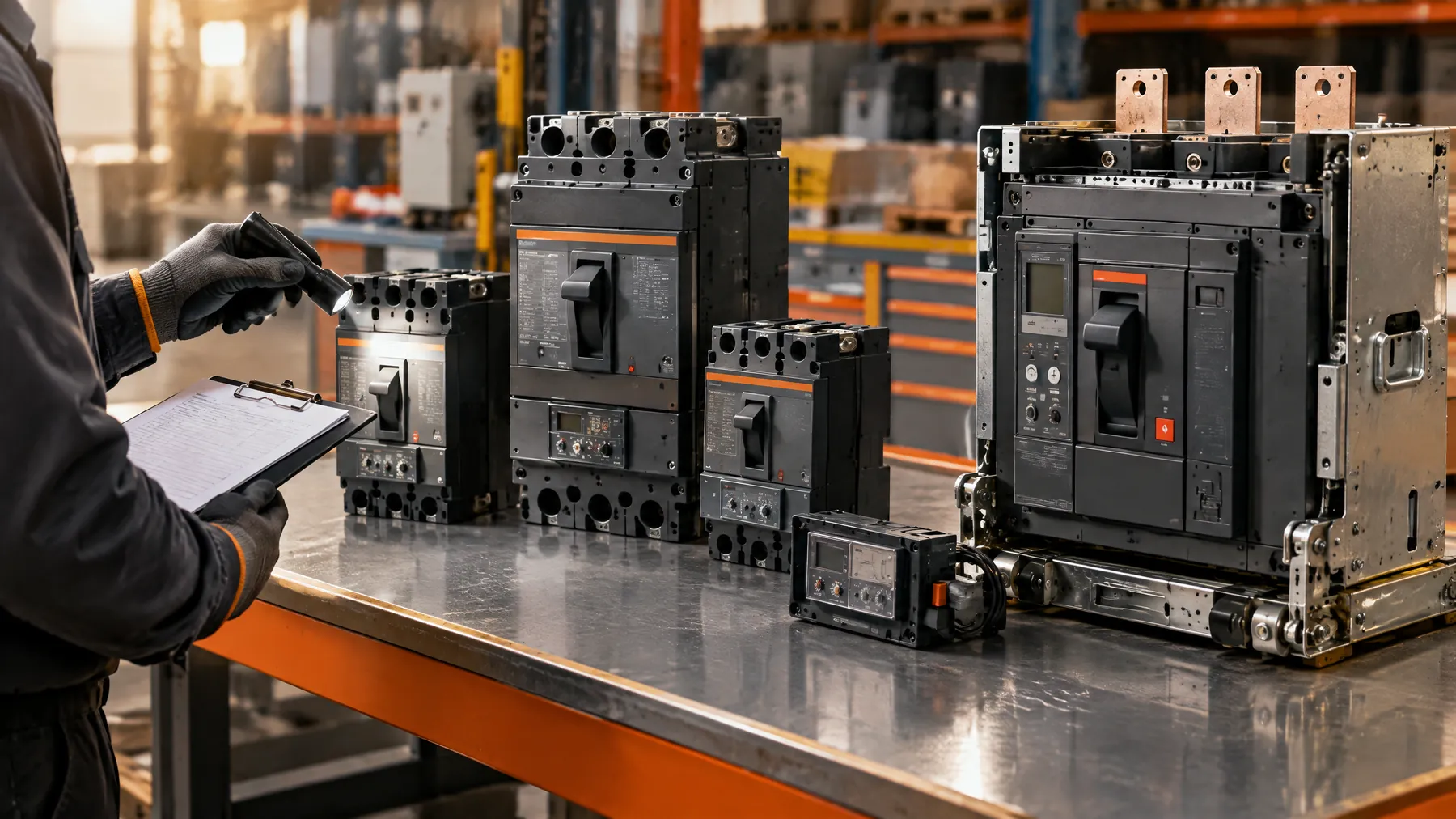
Marketability of utility and substation breakers depends on technical specs and documentation. Breakers with intact nameplates, clear catalog numbers, and known interrupting and voltage ratings are easier to resell. Widely used makes, standard frame sizes, recent mechanical or dielectric tests, and included accessories like racking trucks, trip units, and control cabinets increase buyer interest. Large lots and staged decommissioning reduce per-unit handling cost. Obsolete or specialty models may still have parts value, but environmental handling for SF6 or oil can affect logistics and marketability.
Manufacturer & Model
Known brand and exact model let buyers match parts and spare schematics. Common series command wider market interest and ease of testing. Unknown or scratched nameplates slow appraisal and reduce demand.
Interrupting Rating
Interrupting capacity and voltage class determine reuse potential. Buyers need clear kAIC and ampere ratings to confirm station duty. Higher rated breakers find reuse in transmission projects; low-rating units suit distribution or parts markets.
Mechanical Condition
Mechanism integrity, contact wear, and visible corrosion affect testing outcomes. Units with smooth racking and intact interlocks command better offers. Heavily corroded or seized mechanisms often sell only for parts or scrap.
Accessories & Controls
Included trip units, protection relays, control wiring, and racking trucks greatly improve resale. Buyers often require matching trip modules and control cabinets. Missing accessories reduce marketability and increase handling costs.
Where this equipment is commonly found
These breakers originate in transmission and distribution substations, switchyards, and generator step-up facilities where they perform fault interruption and feeder switching duties. Project history matters: a breaker removed after a planned upgrade has different expected wear than one removed after a fault. Relay settings, short-circuit duty history, and maintenance records help buyers assess remaining life. We buy from utilities, EPCs, and owners decommissioning stations.
How to prepare the breaker for review
Before offering breakers, preserve nameplates, serial numbers, trip units, racking trucks, and protection/control accessories. Photograph wide shots and close-ups of nameplates, mechanism, contacts, control cubicles, oil tanks or SF6 valves, and visible damage or corrosion. Record removal history, last test dates, and whether the unit was de-energized and gas/oil evacuated by qualified personnel. Do not attempt live work yourself. Qualified electrical personnel must handle energized testing, disconnection, and physical removal.
Do not clean labels with harsh chemicals, dismantle the breaker for better photographs, remove copper, separate matched accessories, or energize an unknown unit. Keep the inventory dry, protected from impact, and associated with its records. Qualified personnel must control any testing, electrical isolation, disconnection, racking, rigging, or field removal.
How the sale moves forward
Frequently asked questions
Do you buy used or obsolete circuit breakers from substations?
Yes — sometimes. We evaluate used or obsolete breakers case by case. Parts demand, condition, nameplate data, and quantity drive interest. Obsolete models may sell for parts, but not every obsolete breaker has commercial value. Provide details and photos for appraisal.
What photos and documentation should I send for an appraisal?
Send clear photos of the nameplate, full-unit wide shots, close-ups of the mechanism and contact areas, racking truck, control cubicle, and any visible damage. Include catalog/model numbers, last test dates, maintenance records, and reason for removal to speed evaluation.
What quantities do you buy and do you handle shipping or removal?
We consider single units and larger lots. Larger, contiguous quantities are more attractive because they reduce per-unit handling. We coordinate logistics case by case. Qualified electrical contractors must perform energized disconnection and safe removal before shipment.
How do I start to get an offer from Surplus Generator Buyers?
Email photos, nameplate data, model numbers, estimated quantities, location, and removal timing. Our buying team reviews the details and responds with next steps. A site inspection may be required for final offers. Timelines depend on unit complexity and logistics.