Do we buy circuit breakers from solar, wind, storage, and renewable-energy projects?
Yes—Surplus Generator Buyers purchases circuit breakers from solar, wind, storage, and other renewable-energy projects nationwide, subject to manufacturer, exact catalog/series, ratings, condition, quantity, location, completeness, and current demand. Send full model numbers, photos, nameplate data, and quantities for an evaluation. We consider LV and MV project breakers when specifications and condition meet market need.
What sellers should know
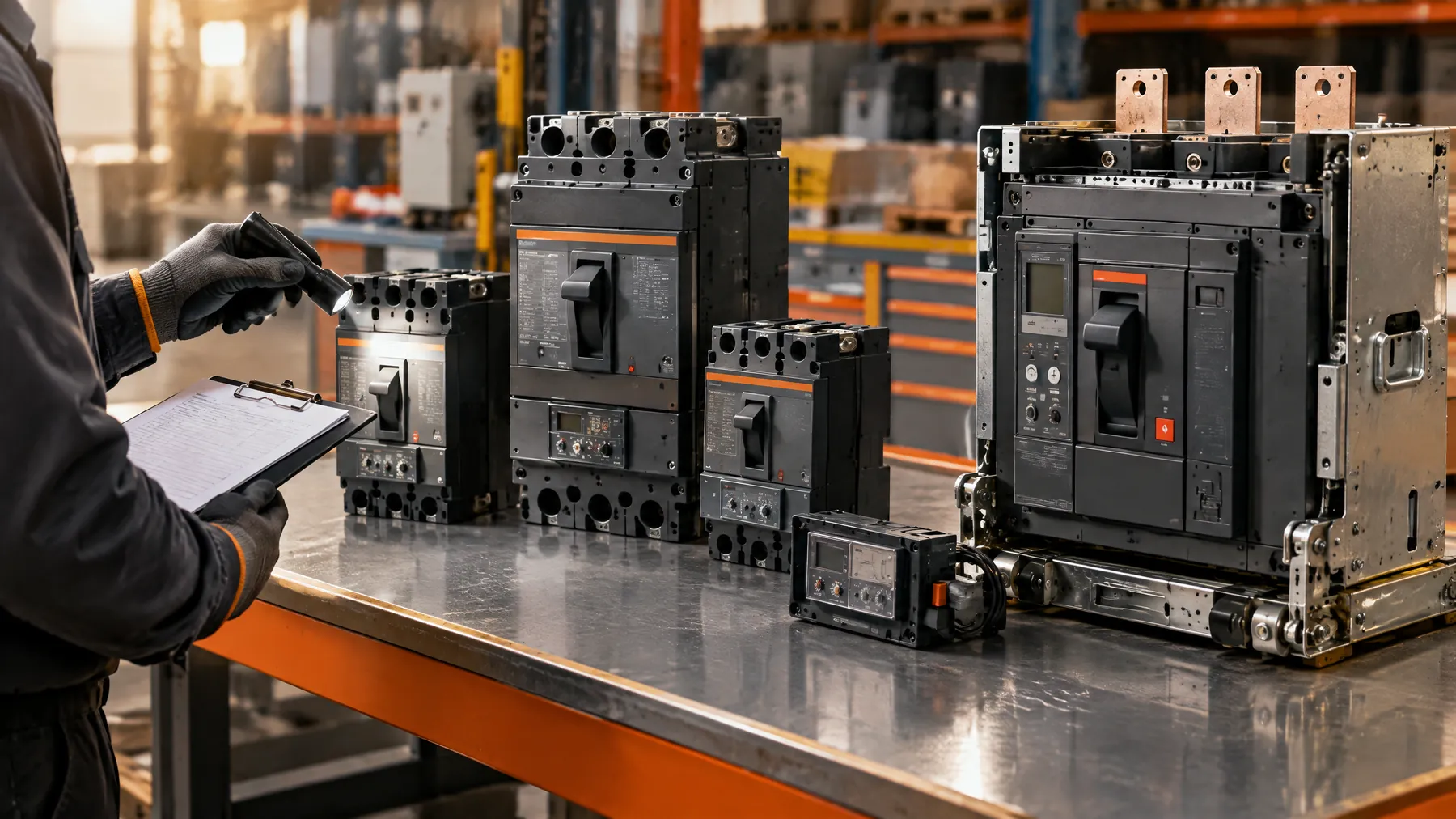
Surplus Generator Buyers specializes in buying circuit breakers removed from solar farms, wind sites, battery energy storage systems, and associated renewable-energy switchgear. We handle molded-case, MCCBs, ACBs, withdrawable drawout units, vacuum MV breakers and inverter/DC disconnects used in commercial projects. Provide nameplate data, catalog numbers, clear photos, quantities, and project location to receive a prompt evaluation. We review trip units, accessories, service records, and storage condition. Qualified electrical personnel must handle energized equipment, testing, disconnection, and removal before any transfer or shipment.
Examples we review
Use the list below as an identification guide, not a promise that every unit will qualify. The exact model, configuration, condition, quantity, location, completeness, and present demand still control the purchasing decision.
What information should you send?
A complete submission lets a buyer answer the seller’s real question: whether this exact breaker or inventory has a practical commercial market. Copy identifiers exactly as shown and support them with current photographs.
Manufacturer (OEM name)
Complete catalog/model number and serial
Ampere/frame rating and trip unit type
Voltage, poles, and interrupting rating (kA) where applicable
Condition and any testing or fault history
Quantity and precise project location
What affects marketability and value?
Marketability depends on clear identification, interrupting rating, and compatibility with common OEM switchgear used in renewable projects. Items with intact nameplates, service history, working trip electronics, and retained racking or accessories attract broader buyer interest. Large lots from decommissioned PV or storage projects are especially marketable. Obsolete or heavily damaged breakers are assessed case-by-case; some sell to refurbishers or parts buyers while others have limited resale value. We evaluate each unit against current project demand and resale channels before issuing an offer.
Model and Series
Specific catalog or series numbers determine interchangeability and buyer demand. Common renewable project models have established aftermarket channels, so clear model ID speeds appraisal and increases acceptability compared with unlabeled or generic parts.
Interrupting Rating
The rated short-circuit interrupting capacity (kA) must meet project specifications. Higher interrupting ratings and verified nameplate data make units suitable for more applications and improve resale prospects to utilities and EPCs.
Trip Unit Type
Electronic trip units and communication-capable breakers retain more value than simple thermal-magnetic units. Trip electronics condition, firmware/version, and removable modules are important for refurbishment and compatibility with modern control systems.
Quantity & Lot Size
Bulk lots from decommissioned solar or storage projects reduce per-unit handling and increase buyer interest. Single or mixed small quantities may still sell, but prices and logistics are evaluated differently by recyclers and refurbishers.
Where this equipment is commonly found
These breakers typically come from commercial PV arrays, utility-scale battery systems, wind turbine collector substations, and inverter/transformer skids. Where a breaker was used, run hours, fault incidents, and maintenance records affect resale prospects. Breakers removed for routine upgrades differ from those removed after faults or events. Provide removal reason and service history when contacting us. Qualified electrical personnel must perform any energized testing, disconnection, and safe removal prior to shipment.
How to prepare the breaker for review
Preserve nameplates, trip units, auxiliary contacts, drawout mechanisms, and original mounting hardware. Photograph clear close-ups of the nameplate, catalog/model, trip electronics, contact faces, arc chutes, and any corrosion or heat damage. Record serial numbers and exact quantities. Bag and tag small fasteners and accessories with their breaker. Do not energize or test live equipment yourself; qualified electrical personnel must handle energized testing, disconnection, and removal. Email photos and service records when requesting an offer.
Do not clean labels with harsh chemicals, dismantle the breaker for better photographs, remove copper, separate matched accessories, or energize an unknown unit. Keep the inventory dry, protected from impact, and associated with its records. Qualified personnel must control any testing, electrical isolation, disconnection, racking, rigging, or field removal.
How the sale moves forward
Frequently asked questions
Do you buy used or obsolete breakers from renewable projects?
Yes — we sometimes buy used or obsolete breakers from renewable projects when model numbers, interrupting ratings, and condition fit secondary markets. Obsolete units may attract refurbishers or parts buyers. Send nameplate photos, quantities, and history. Qualified electrical personnel should handle any live testing or removal.
What photos and documentation do you need?
Clear photos of nameplates, full catalog/model numbers, serials, trip units, front and rear faces, racking mechanisms, and any damage. Include service records and removal reason if available. Do not energize equipment for photos; have qualified electrical personnel handle live checks and safe access.
What quantities do you buy and how is shipping/removal handled?
We evaluate single breakers up to full decommission lots nationwide. Large, contiguous lots are easier to place. Shipping or removal depends on location and condition; sellers may arrange pickup or request our logistics quote. Qualified rigging and electrical personnel must handle disconnection and safe removal.
How long does it take to get an offer?
Response time depends on identification quality, quantity, condition, location, and project complexity. Complete catalog information, readable labels, current photographs, and clear logistics details reduce follow-up questions. Large or installed inventories may require additional review before terms are final.