Do we buy circuit breakers from water and wastewater facilities?
Yes—Surplus Generator Buyers purchases circuit breakers removed from water and wastewater facilities, but offers depend on manufacturer, exact catalog/series, ratings, condition, quantity, location, completeness, and current demand. We review molded-case, low- and medium-voltage power breakers, air and vacuum types, and motor protection units. Submit clear nameplate data, trip-unit details, and photos for a prompt review.
What sellers should know
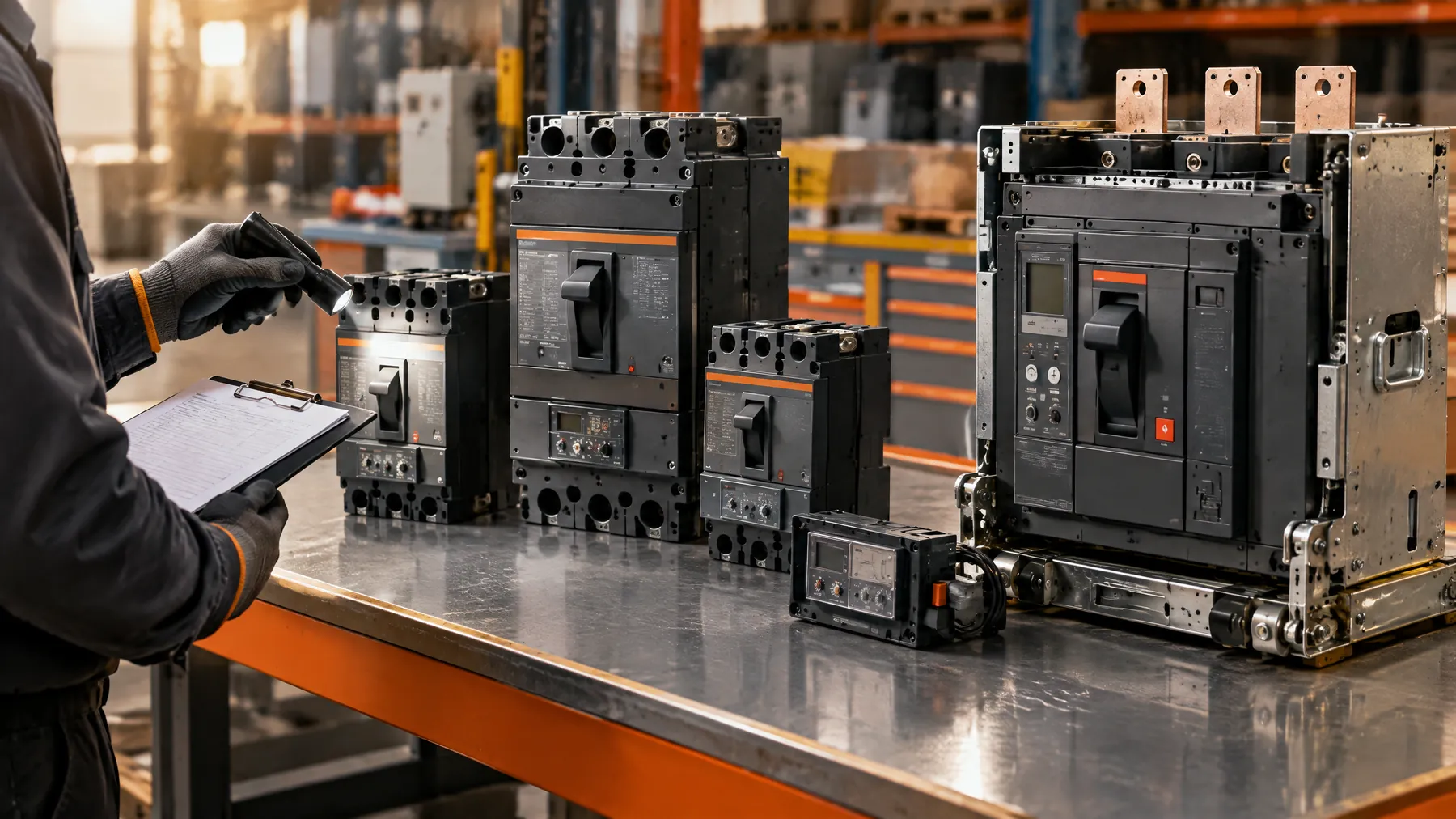
Water and wastewater plants remove a wide range of commercial circuit breakers during upgrades, expansions, and equipment refreshes. Surplus Generator Buyers is a nationwide buyer of commercial and industrial electrical surplus and evaluates breakers used on pump motors, main switchgear, MCC feeders, and service entrances. We look for complete nameplates, intact trip mechanisms, and consistent documentation so we can determine market channels and potential buyers. Provide catalog/model data, condition notes, and site location to get a tailored response and next steps for collection or inspection.
Examples we review
Use the list below as an identification guide, not a promise that every unit will qualify. The exact model, configuration, condition, quantity, location, completeness, and present demand still control the purchasing decision.
What information should you send?
A complete submission lets a buyer answer the seller’s real question: whether this exact breaker or inventory has a practical commercial market. Copy identifiers exactly as shown and support them with current photographs.
manufacturer
complete catalog/model
ampere/frame/trip information
voltage/poles/interrupting rating where relevant
condition/testing
quantity/location
What affects marketability and value?
Breakers from water facilities are marketable when they meet common industrial specs and have intact identification. High-demand items include main feeders, pump motor protection, and switchgear-compatible frames. Marketability improves with known manufacturer and series, visible interrupting ratings, and service history. Units removed from recent projects or maintained to OEM standards often move faster. We do not imply all breakers are valuable; each asset is evaluated on specs, condition, and current buyer interest.
Manufacturer & Series
Brand and series determine demand and interchangeability. Common water utility brands and standard series often resell easily. Rare OEM lines can be harder to place without full documentation and testing.
Interrupting Rating
High interrupting ratings are critical for plant main feeders and increase marketability. Breakers rated for 35 kA or higher at service voltage attract more buyers than low-interrupting units that are limited to downstream protection roles.
Condition & Refurbishability
Intact nameplates, undamaged trip mechanisms, and minimal corrosion speed inspections and refurbishment. Units that accept replacement contact kits or calibrated trip modules often command better offers than heavily corroded or mechanically damaged breakers.
Application History
Breakers removed from critical pumps, clarifier drives, or main switchgear often have higher demand. Clear project history helps buyers judge remaining useful life and compatibility with common water-plant systems during valuation.
Where this equipment is commonly found
In water and wastewater plants, breakers protect pumps, blowers, aeration systems, and main distribution. Buyers value breakers that were part of routine maintenance cycles or planned upgrades because project history helps estimate remaining service life. Knowing whether a breaker protected a main bus, pump motor, or soft-start circuit affects resale channels and required testing. Qualified personnel must handle any energized equipment, testing, disconnection, and removal before we conduct a physical evaluation.
How to prepare the breaker for review
Preserve all nameplates, trip modules, and any removable accessories such as auxiliary contacts, shunt trips, and mechanical interlocks. Photograph front and side nameplates, trip-unit serial numbers, connection points, and overall mounting layout. Note signs of corrosion, overheating, or modification. Do not attempt to image energized components; de-energize and prepare units only under a qualified electrician’s supervision. Include packing or access constraints in your submission.
Do not clean labels with harsh chemicals, dismantle the breaker for better photographs, remove copper, separate matched accessories, or energize an unknown unit. Keep the inventory dry, protected from impact, and associated with its records. Qualified personnel must control any testing, electrical isolation, disconnection, racking, rigging, or field removal.
How the sale moves forward
Frequently asked questions
Do you buy used or obsolete breakers from water plants?
Yes—sometimes. We may buy used or obsolete breakers from water plants when nameplates, part numbers, and interrupting ratings match demand or for parts. Provide photos, serials, and project history. Qualified personnel must handle de-energizing, testing, and removal before we evaluate.
What photos do you need to evaluate breakers?
Send clear photos of the nameplate, full catalog/model labels, trip units, connection points, bus stabs or lugs, and overall breaker faces. Include close-ups of serial numbers and any accessories. Do not attempt energized photos—qualified personnel must disconnect and make units safe before imaging.
What quantities do you buy and who handles removal or shipping?
We buy single breakers up to full-site retirements, subject to type and location. For large lots we can coordinate or quote consolidated removal and freight arrangements. Removal of energized equipment must be done by qualified site electricians. Include quantity, weight estimates, and access constraints in your inquiry.
How do I start the sale or get an offer?
Start by emailing photos and nameplate data with quantities, location, and project history. You can also call to discuss logistics. We’ll review the information, request any missing details, and may follow up for a site inspection. Ensure breakers are de-energized by qualified personnel before removal.