Do we buy warehouse and distributor circuit breaker inventories?
Yes—Surplus Generator Buyers purchases warehouse and distributor circuit breaker inventories depending on manufacturer, exact catalog/series, electrical ratings, condition, quantity, location, completeness, and current market demand. We evaluate shelf-stock, NOS, project pullouts, and overstock. Send detailed ID and photos for an initial review; final terms follow inspection and agreed logistics.
What sellers should know
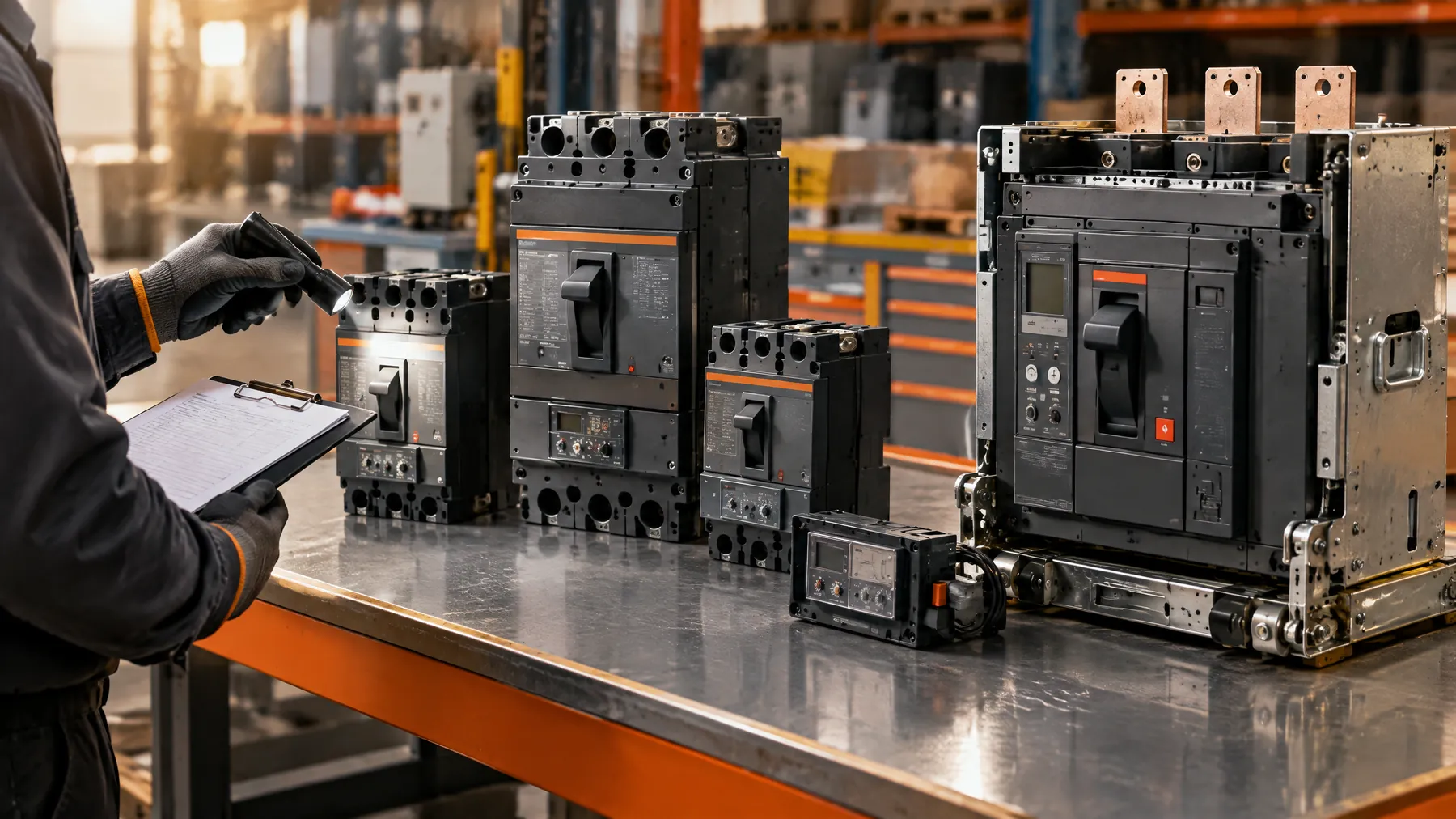
Surplus Generator Buyers specializes in buying commercial and industrial circuit breaker inventories from warehouses and distributors nationwide. We acquire new-old-stock, surplus shelf units, cancelled-project stock, and manufacturer overages when catalog numbers and ratings are verifiable. Typical inventory we evaluate includes MCCBs, molded-case breakers, ACB draw-outs, and medium-voltage breakers with documentation. Sellers should assemble catalog lists, quantities, and photos to speed valuation. We will coordinate pickup or freight details after initial review. Qualified electrical personnel must handle energized equipment, testing, and removal.
Examples we review
Use the list below as an identification guide, not a promise that every unit will qualify. The exact model, configuration, condition, quantity, location, completeness, and present demand still control the purchasing decision.
What information should you send?
A complete submission lets a buyer answer the seller’s real question: whether this exact breaker or inventory has a practical commercial market. Copy identifiers exactly as shown and support them with current photographs.
Manufacturer (name on nameplate)
Complete catalog/model and series number
Ampere, frame, and trip unit ratings
Voltage, poles, and interrupting rating (kA or kAIC)
Condition and testing history (new, unused, removed, inspected)
Quantity and physical location (lot counts, warehouse address)
What affects marketability and value?
Marketability of warehouse and distributor circuit breaker inventories depends on specific identification and condition. Breakers with complete catalog numbers, standard frames, and documented interrupting ratings are easier to place. New-old-stock, boxed multiples, or matched production lots attract distributors and service centers. Medium-voltage and specialty types sell to niche rebuilders when documentation exists. Damaged or undocumented units may still have parts value, but demand and quantity determine feasibility. Clear paperwork and photos significantly accelerate matching inventory to buyer channels.
Manufacturer & Series
Recognized manufacturers and current series numbers increase market acceptance. Known series simplify sourcing of spare parts and attract rebuild or OEM buyback programs. Rare series may have niche demand but require documentation for resale.
Interrupting Rating
Interrupting rating (kA or kAIC) is critical to resale. Breakers with industry-standard interrupting capacities match more systems and sell faster. Documented test records or OEM spec sheets improve confidence and widen buyer options across projects and service centers.
Condition & Packaging
Unopened boxes and intact nameplates reduce inspection needs and increase appeal. Units removed from service should have clean photos and service history. Corrosion, missing accessories, or burnt components reduce value and may restrict resale to parts or rebuild channels.
Quantity & Lot Size
Large, matched lots sell more efficiently to distributors and contractors. Single units can be sold but attract fewer buyers and higher handling costs. Consistent labeling and palletized shipments speed pickup and lower logistics charges for both seller and buyer.
Where this equipment is commonly found
Warehouse and distributor breaker lots typically come from overstock, cancelled orders, returns, or project pullouts. Project history matters because never-energized stock can be marketed as new-old-stock, while units removed from service require inspection records. Buyers use that history to route inventory to OEM resale, rebuild programs, parts reclamation, or end-user projects. Providing purchase orders, packing lists, and removal notes helps us position the breakers effectively.
How to prepare the breaker for review
Preserve original packaging, labels, and paperwork. Photograph each breaker nameplate, catalog/series label, rating plate, trip-unit area, serial number, and accessories in good lighting. Include full-lot shots showing box labels, pallet counts, and packing lists. If units were removed from service, include contextual photos of the panel or rack. Do not attempt live testing or energized disconnection yourself. Qualified electrical personnel must handle energized equipment, testing, disconnection, and removal. Clear counts and photos speed accurate offers.
Do not clean labels with harsh chemicals, dismantle the breaker for better photographs, remove copper, separate matched accessories, or energize an unknown unit. Keep the inventory dry, protected from impact, and associated with its records. Qualified personnel must control any testing, electrical isolation, disconnection, racking, rigging, or field removal.
How the sale moves forward
Frequently asked questions
Do you buy used or obsolete circuit breakers?
Yes. We consider used, end-of-line, and obsolete breakers depending on make, quantity, condition, and market demand. Many such units are traded for parts, rebuild programs, or niche applications. Provide detailed photos and documentation so we can evaluate. Final terms often follow inspection and logistics review.
What photos and documentation do you need to make an initial offer?
Send close-up photos of each breaker nameplate, catalog number, serial number, trip unit area, and any accessory labels. Include full-lot shots showing quantity, box labels, and packing lists. Good lighting, a ruler for scale, and readable labels speed accurate initial offers.
What quantities do you buy, and who handles shipping or removal?
We buy single units up to truckloads of warehouse stock. Purchase decisions, pickup, or freight are arranged case-by-case. Sellers must not disconnect energized equipment. Qualified electrical personnel must handle testing, disconnection, and removal. We can coordinate carriers or advise on third-party rigging when needed.
How quickly will I receive an offer after I submit inventory details?
Response time depends on identification quality, quantity, condition, location, and project complexity. Complete catalog information, readable labels, current photographs, and clear logistics details reduce follow-up questions. Large or installed inventories may require additional review before terms are final.