Do we buy draw-out breaker cells, cradles, and matching hardware?
Yes—Surplus Generator Buyers purchases draw‑out breaker cells, cradles, and matching hardware depending on manufacturer, exact catalog/series, ratings, condition, quantity, location, completeness, and current demand. Provide full identification, photos, and basic condition notes so we can evaluate. We consider single items and large lots; final offers depend on inspection, testing needs, and market interest.
What sellers should know
Surplus Generator Buyers evaluates draw‑out breaker cells, cradles, and matching hardware from commercial and industrial switchgear. We buy individual cells, cradle assemblies, and associated components when documentation, completeness, ratings, and condition meet market needs. Provide nameplates, serials, and racking details to speed evaluation. Do not attempt energized testing yourself; qualified electrical personnel must handle any live disconnection, testing, or removal during site surveys or dismantling. We accept items from decommissioned substations, plant upgrades, and maintenance spares. Key documents such as acceptance test reports, maintenance logs, and compatibility notes improve offers. We provide nationwide logistics coordination for larger lots. Offers depend on inspection and prevailing demand. Contact us by email or phone with photos and serial details to start an evaluation.
Examples we review
Use the list below as an identification guide, not a promise that every unit will qualify. The exact model, configuration, condition, quantity, location, completeness, and present demand still control the purchasing decision.
What information should you send?
A complete submission lets a buyer answer the seller’s real question: whether this exact breaker or inventory has a practical commercial market. Copy identifiers exactly as shown and support them with current photographs.
Manufacturer and product family/series
Complete catalog/model number and serial
Ampere rating, frame size, and trip unit type
Voltage rating, poles, and interrupting rating (kAIC) when applicable
Operational condition and any recent testing or failures
Quantity available and physical pickup/shipping location
What affects marketability and value?
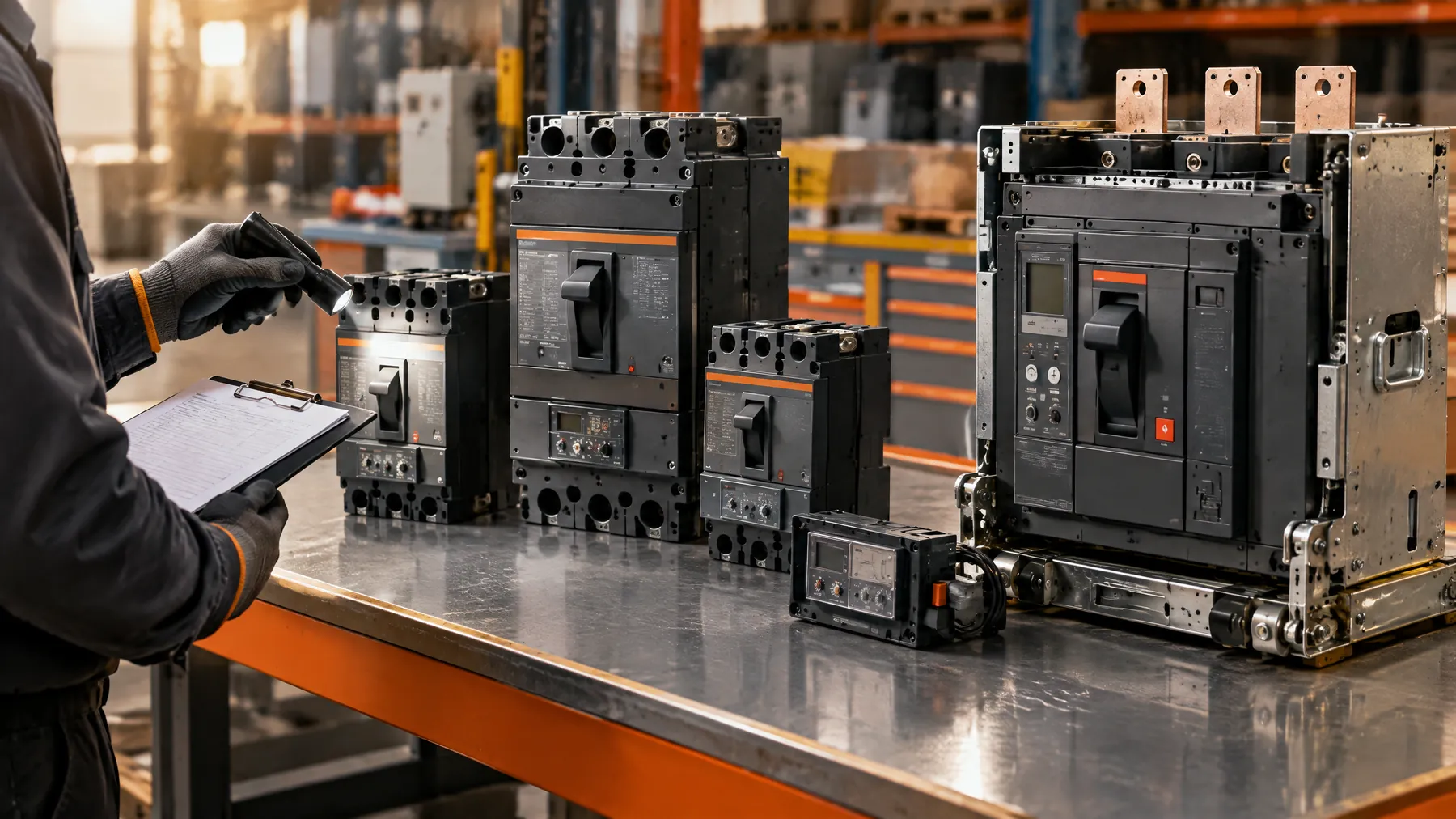
Draw‑out breaker cells and cradles sell best when they match common switchgear frames, carry industrial ampere and interrupting ratings, and include original racking, stabs, and auxiliary devices. Buyers favor complete cells with intact nameplates, serials, and maintenance or test records. Obsolete frames or missing hardware reduce demand, while lots with multiple identical cells are easier to resell. Accessories such as racking mechanisms, shunt trips, undervoltage releases, and bus connectors add value. Nationwide buyers and refurb shops frequently seek serviceable cells for medium‑voltage distribution and generator switchgear.
Manufacturer and Series
Known manufacturers and current series increase resale appeal. Buyers look for compatibility with common switchgear frames; obscure brands or mixed‑series lots need more documentation, testing, or refurbishment before re‑sale, lowering demand.
Completeness and Accessories
Cells with original racking, stabs, auxiliary devices, and mounting hardware are more marketable. Missing interlocks or shunt trips can make a cell hard to resell. Bundled accessories reduce buyer rewrite and increase acceptance.
Ratings & Interrupting
Clear ampere, voltage, pole count, and interrupting rating determine compatibility. Higher interruption ratings and standard voltage classes attract buyers for industrial distribution and generator switchgear, while unclear ratings require verification and reduce value.
Condition & Testing
Recent mechanical inspection notes, test tags, and operational history significantly raise buyer confidence. Cells with corrosion, damage, or unknown test status need refurbishment or retesting, which reduces offers and increases logistics or repair costs.
Where this equipment is commonly found
Draw‑out breaker cells and cradles commonly come from industrial distribution panels, generator switchgear, and plant main or tie applications. Buyers value items removed from planned upgrades, retrofits, or spares inventories. Project history—why a cell was removed, any fault history, repairs, or modifications—affects resale potential and required refurbishment. Provide operation logs and test records where available. Do not perform live testing or removal yourself; qualified electrical personnel must handle energized equipment and any disconnection or racking operations during site work.
How to prepare the breaker for review
Preserve nameplates, serial tags, and the breaker catalog plate. Photograph the entire cell and cradle, front breaker face, nameplates, racking mechanism, bus stabs, and any auxiliary devices like shunt trips or undervoltage releases. Note missing fasteners, corrosion, or physical damage. Record wiring details and reason for removal. Store components dry and secure. Do not energize or bench‑test live equipment yourself; qualified electrical personnel should perform powered testing, isolation, and removal.
Do not clean labels with harsh chemicals, dismantle the breaker for better photographs, remove copper, separate matched accessories, or energize an unknown unit. Keep the inventory dry, protected from impact, and associated with its records. Qualified personnel must control any testing, electrical isolation, disconnection, racking, rigging, or field removal.
How the sale moves forward
Frequently asked questions
Do you buy used or obsolete draw‑out breaker cells and cradles?
Yes—We consider used and obsolete draw‑out cells and cradles on a case‑by‑case basis. Some older frames sell as rebuild cores or spares. Value depends on compatibility, condition, quantity, and documentation. Submit photos and ID; inspection and testing needs will affect final offers.
What photos and documentation do you need to start an evaluation?
Send clear photos of nameplates, catalog/model numbers, serial tags, the breaker face, cradle rails, racking mechanism, and bus stabs. Include any test tags, maintenance records, and the reason for removal. Do not perform live testing yourself; qualified electrical personnel must handle energized equipment.
What quantities do you buy, and who handles shipping or removal?
We buy single cells, small lots, and full switchgear banks depending on make and demand. Provide exact quantities and site location. For larger lots we coordinate transport or recommend rigging contractors. All energized disconnection, isolation, and removal must be completed by qualified electrical personnel before pickup.
How quickly can I expect a preliminary offer or indication?
Response time depends on identification quality, quantity, condition, location, and project complexity. Complete catalog information, readable labels, current photographs, and clear logistics details reduce follow-up questions. Large or installed inventories may require additional review before terms are final.