Do we buy commercial circuit breaker accessories, controls, and replacement parts?
Yes—Surplus Generator Buyers purchases commercial circuit breaker accessories, controls, and replacement parts when the manufacturer, exact catalog or series number, electrical ratings, condition, quantity, location, completeness, and current demand meet buyer requirements. Send model numbers, amp/frame/trip details, photos, and quantity for a quicker evaluation. We do not provide installation advice; qualified personnel must handle energized testing, disconnection, and removal.
What sellers should know
Surplus Generator Buyers buys commercial circuit breaker accessories, replacement controls, and spares from contractors, industrial users, and facility owners across the U.S. We evaluate items such as trip units, control modules, release devices, auxiliary contacts, racks, and mounting hardware used in commercial and industrial breaker systems. Offers are based on exact cataloging, ratings, condition, and quantity. Provide clear identification and photos to speed evaluation. We can advise on logistics for larger lots. Any energized testing, disconnection, or removal must be done by qualified electrical personnel prior to shipment.
Examples we review
Use the list below as an identification guide, not a promise that every unit will qualify. The exact model, configuration, condition, quantity, location, completeness, and present demand still control the purchasing decision.
What information should you send?
A complete submission lets a buyer answer the seller’s real question: whether this exact breaker or inventory has a practical commercial market. Copy identifiers exactly as shown and support them with current photographs.
Manufacturer and brand
Complete catalog or model number (full series)
Ampere rating, frame, and trip unit details
Voltage class, poles, and interrupting rating (if applicable)
Condition, testing status, and any calibration or test reports
Quantity available and physical location for pickup/shipping
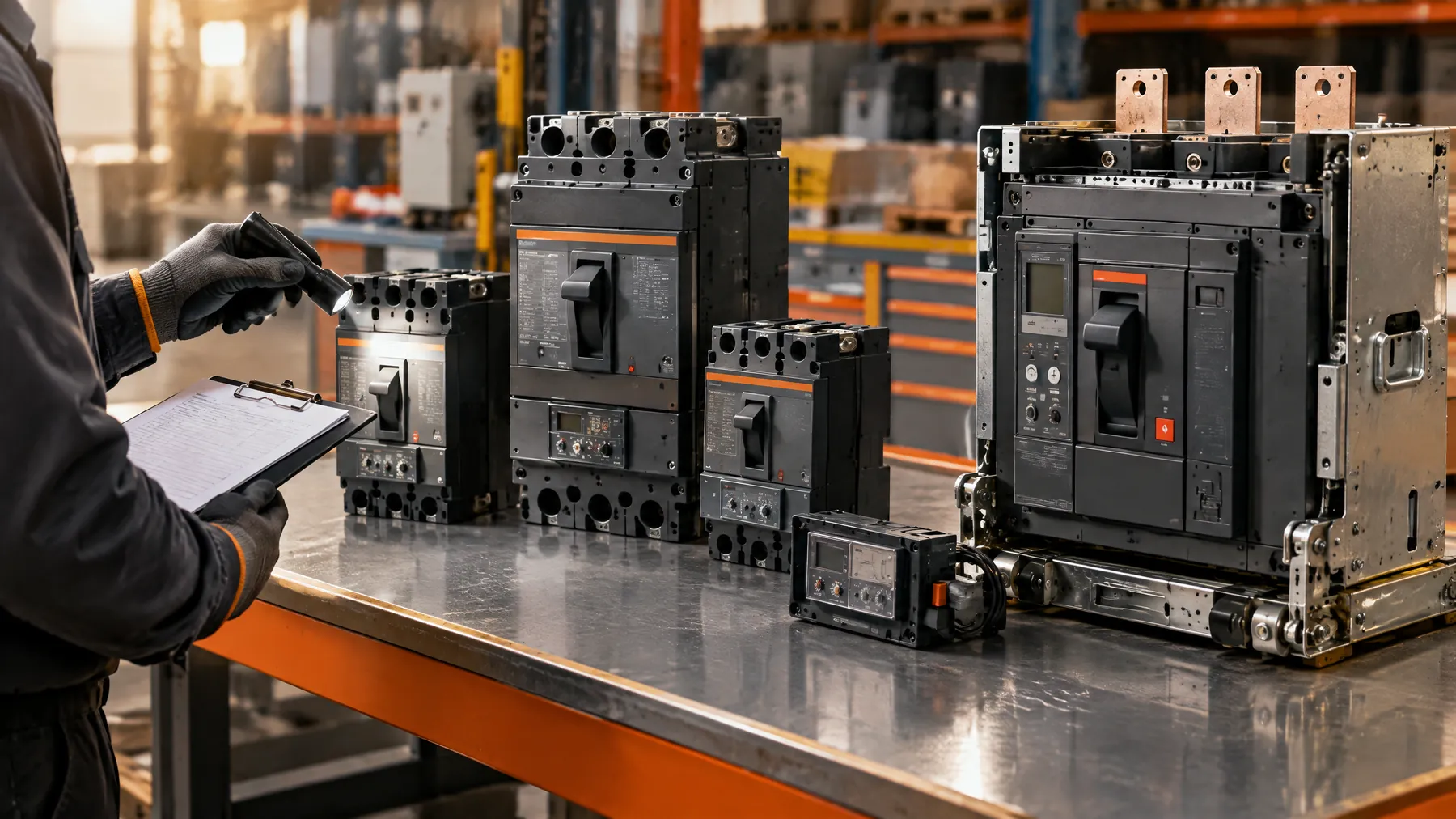
What affects marketability and value?
Marketability for circuit breaker accessories depends on specificity, compatibility, and documented condition. OEM trip units, intact control modules, and complete mounting kits are more tradable than unknown loose parts. Items for common frame sizes or popular commercial breaker families attract steady interest. Parts with serials, calibration or test records, and clear catalog numbers are easier to place. Obsolete or one-off components can still sell if they match buyer needs for legacy equipment or spares. We evaluate each submission by catalog details, condition, quantity, and current buyer demand.
Part Specificity
Exact catalog numbers and OEM part markings allow quick identification of compatibility. Specific parts that match popular breaker families or have OEM cross-references attract stronger offers and reduce buyer uncertainty during evaluation.
Condition & Testing
Clean, intact components with recent test reports or bench verification sell more readily. Buyers pay closer attention to parts that have been inspected, calibrated, or functionally tested by qualified technicians before being offered as surplus.
Quantity & Lots
Larger, matched lots of identical accessories attract OEM buyers and service providers. Volume reduces per-item handling and shipping costs, increases transaction interest, and often shortens lead time for resale into maintenance and retrofit supply chains.
Documentation & History
Maintenance logs, decommissioning records, and compatibility notes increase buyer confidence. Clear documentation speeds evaluation and can be decisive for niche or legacy parts where service history determines reuse or required refurbishment work.
Where this equipment is commonly found
Commercial and industrial projects that generate surplus breaker accessories include plant upgrades, retrofit projects, data center work, and equipment decommissioning. Buyers prefer parts with project history such as installation date, maintenance records, and environment (corrosive, high-cycle, critical-power). That context helps determine reuse potential and refurbishment needs. When submitting parts, include project background. Do not perform energized testing or removal yourself; qualified electrical personnel must handle all energized work and safe disconnection.
How to prepare the breaker for review
Preserve and photograph all nameplates, serial numbers, and full catalog/model labels. Keep calibration and test reports with the parts. Photograph front, rear, and internal views, connector terminations, mounting hardware, and any damage. Retain matching racks, frames, and instruction sheets. Note whether trip units are electronic or thermal-magnetic and list any aftermarket modifications. Qualified electrical personnel must complete de-energizing, disconnection, and safe removal before pickup or shipment.
Do not clean labels with harsh chemicals, dismantle the breaker for better photographs, remove copper, separate matched accessories, or energize an unknown unit. Keep the inventory dry, protected from impact, and associated with its records. Qualified personnel must control any testing, electrical isolation, disconnection, racking, rigging, or field removal.
How the sale moves forward
Frequently asked questions
Do you buy used or obsolete circuit breaker accessories and parts?
Yes, we may buy used or obsolete accessories and replacement parts if they fill buyer demand for maintenance or legacy systems. Value depends on completeness, compatibility, documentation, and quantity. Provide photos and descriptions; qualified electrical personnel must handle any energized disconnection or removal.
What photos do you need to evaluate breaker accessories and controls?
Photograph all nameplates and catalog labels, front and rear views, connector terminations, internal boards or trip modules, serial numbers, and any damage. Include pictures showing mounting hardware and the whole assembly. High-resolution, well-lit images speed accurate offers.
What quantities do you buy and do you handle shipping or removal?
We buy single parts and large lots, though larger quantities may attract more buyers. For sizable lots we can coordinate logistics or suggest third-party riggers. Sellers must ensure qualified electrical personnel complete de-energizing and disconnection before removal or shipping arrangements proceed.
What information will you need for a quick offer?
Provide manufacturer, full catalog number, ampere and frame ratings, voltage and interrupting rating if applicable, serial numbers, photos, quantity, location, and any test or maintenance records. Clear details shorten evaluation time and produce a faster, more accurate offer.