Do we buy circuit breaker frames and complete frame assemblies?
Yes—We buy circuit breaker frames and complete frame assemblies depending on manufacturer, exact catalog/series, ratings, condition, quantity, location, completeness, and current demand. Provide maker, model/catalog, ampere/frame/trip info, and note whether frames include draw-out trucks, racking handles, stabs, or bus sections. Large matched sets and complete assemblies are most marketable; condition and safe removal affect any offer.
What sellers should know
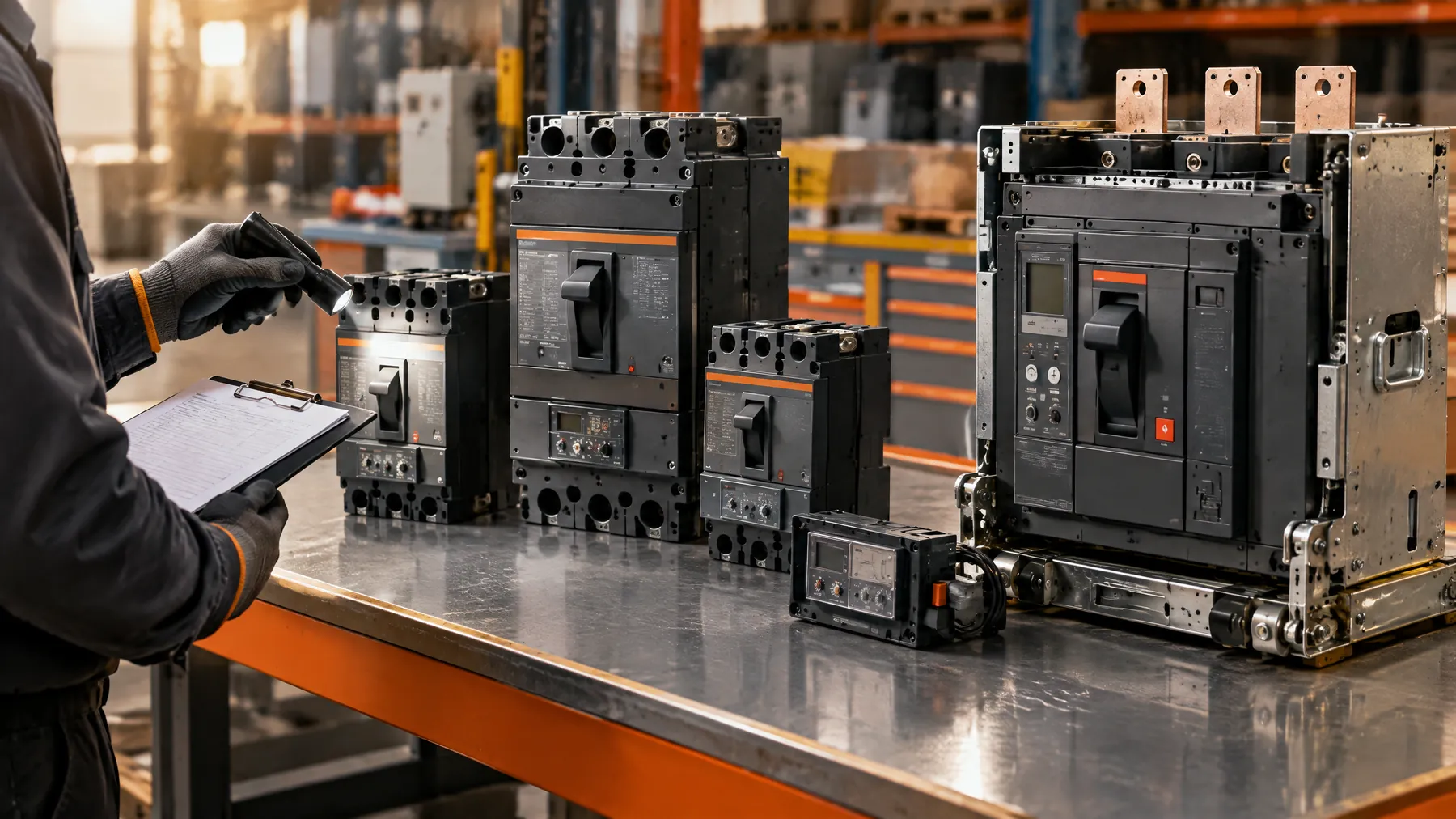
As a nationwide buyer of commercial and industrial electrical surplus, Surplus Generator Buyers accepts circuit breaker frames and complete frame assemblies when they meet buyer requirements. We evaluate fixed-frame chassis, draw-out frames with trucks, racked assemblies, and frame-bus combinations used in switchgear, MCCs, and power distribution. Sellers should supply clear manufacturer and catalog/series IDs, ratings, and condition notes. We buy single units or large project lots. We do not perform installation. Qualified personnel must handle energized testing and disconnection; we ask sellers to preserve nameplates and safe access for inspection and pickup.
Examples we review
Use the list below as an identification guide, not a promise that every unit will qualify. The exact model, configuration, condition, quantity, location, completeness, and present demand still control the purchasing decision.
What information should you send?
A complete submission lets a buyer answer the seller’s real question: whether this exact breaker or inventory has a practical commercial market. Copy identifiers exactly as shown and support them with current photographs.
Manufacturer (OEM)
Complete catalog/series and model numbers
Ampere rating, frame size, and trip unit details
Voltage class, pole count, and interrupting rating
Condition, visible damage, and testing history
Quantity, site location, and staging access
What affects marketability and value?
Marketability for circuit breaker frames hinges on exact series, ratings, and completeness. Common OEM frames and later production series are easier to resell because they match retrofit needs. Frames that include draw-out trucks, racking mechanisms, stabs, and intact buswork are especially attractive. Higher interrupting ratings and standard voltage classes expand the buyer pool. Corrosion, missing ancillaries, or significant modification shrink demand. We assess each offering against current interest from rebuilders, integrators, utilities, and service shops before making an offer.
Manufacturer & Series
Certain OEMs and series have higher demand because of interchangeability and common field use. Exact series and catalog numbers determine compatibility and resale channels; list them precisely to speed valuation and market placement.
Ratings & Interrupting
Ampere frames, trip settings, voltage, pole count and interrupting rating directly affect where frames can be reused. Higher interrupting ratings and common voltage classes yield broader demand and better resale prospects.
Completeness & Accessories
Frames with original draw-out trucks, racking handles, stabs, arc chutes, and mounting hardware are far more marketable. Missing ancillaries or modified frames often require refurbishment, which reduces immediate commercial value.
Condition & Provenance
Clean, unmodified frames with clear nameplates and service history fetch better offers. Project provenance—why the frame was removed, prior load history and repairs—helps buyers assess risk and estimate refurbishment costs accurately.
Where this equipment is commonly found
Circuit breaker frames and complete frame assemblies are used in switchgear lineups, industrial power distribution, data center feeds, and utility or plant substations. Buyers want project history: installation date, service environment, reason for removal, and any prior faults or overloads. That history affects refurbishment scope, certification needs, and resale channels. Provide any maintenance logs and removal documentation. Do not attempt energized work; qualified electrical personnel must perform live testing, disconnection, and safe removal prior to transfer.
How to prepare the breaker for review
Preserve all nameplates, serial tags, parts lists, and any original manuals. Photograph the entire frame, close-ups of catalog/model tags, nameplates, stabs, bus connections, racking mechanisms, draw-out trucks, and any damage or corrosion. Keep accessories and hardware paired with their frames and label multi-frame assemblies. Do not energize equipment for testing; qualified technicians must de-energize, disconnect, and safely remove frames. Safe staging and clear site access speed inspections and reduce removal costs.
Do not clean labels with harsh chemicals, dismantle the breaker for better photographs, remove copper, separate matched accessories, or energize an unknown unit. Keep the inventory dry, protected from impact, and associated with its records. Qualified personnel must control any testing, electrical isolation, disconnection, racking, rigging, or field removal.
How the sale moves forward
Frequently asked questions
Do you buy used or obsolete circuit breaker frames?
Yes. We buy used, end-of-life, and obsolete frames where there is identifiable demand and retrievable value. Offers depend on model, condition, quantity, and parts completeness. Some obsolete frames are only valuable for parts or scrap; we will advise after reviewing photos and documentation.
What photos do you need to get an offer?
Photograph clear nameplates and full catalog/model numbers, overall frame(s), draw-out trucks and racking mechanisms, stabs and buswork, trip or trip-unit labels, serials, any damage, and accessory hardware. Do not attempt live testing; qualified personnel must de-energize and safely access components before photographing.
What quantities do you buy and do you handle shipping or removal?
We buy single frames up to multi-frame assemblies in large lots nationwide. Quantity, location, and site access determine removal and shipping logistics. We coordinate freight or local pickup quotes, but energized disconnection and heavy removal must be performed by qualified site personnel or contractors.
How do I get an offer and how fast will you respond?
Response time depends on identification quality, quantity, condition, location, and project complexity. Complete catalog information, readable labels, current photographs, and clear logistics details reduce follow-up questions. Large or installed inventories may require additional review before terms are final.