Do we buy electronic, solid-state, and interchangeable circuit breaker trip units?
Yes— Surplus Generator Buyers purchases electronic, solid-state, and interchangeable circuit breaker trip units when manufacturer, exact catalog/series, ampere/frame/trip ratings, condition, quantity, location, completeness, and current demand align. Provide catalog numbers, serials, firmware/version data, testing and maintenance history, and removal constraints. Final offers require inspection, verification, and coordinated removal. Contact us by email or phone for a prompt appraisal and to schedule site review.
What sellers should know
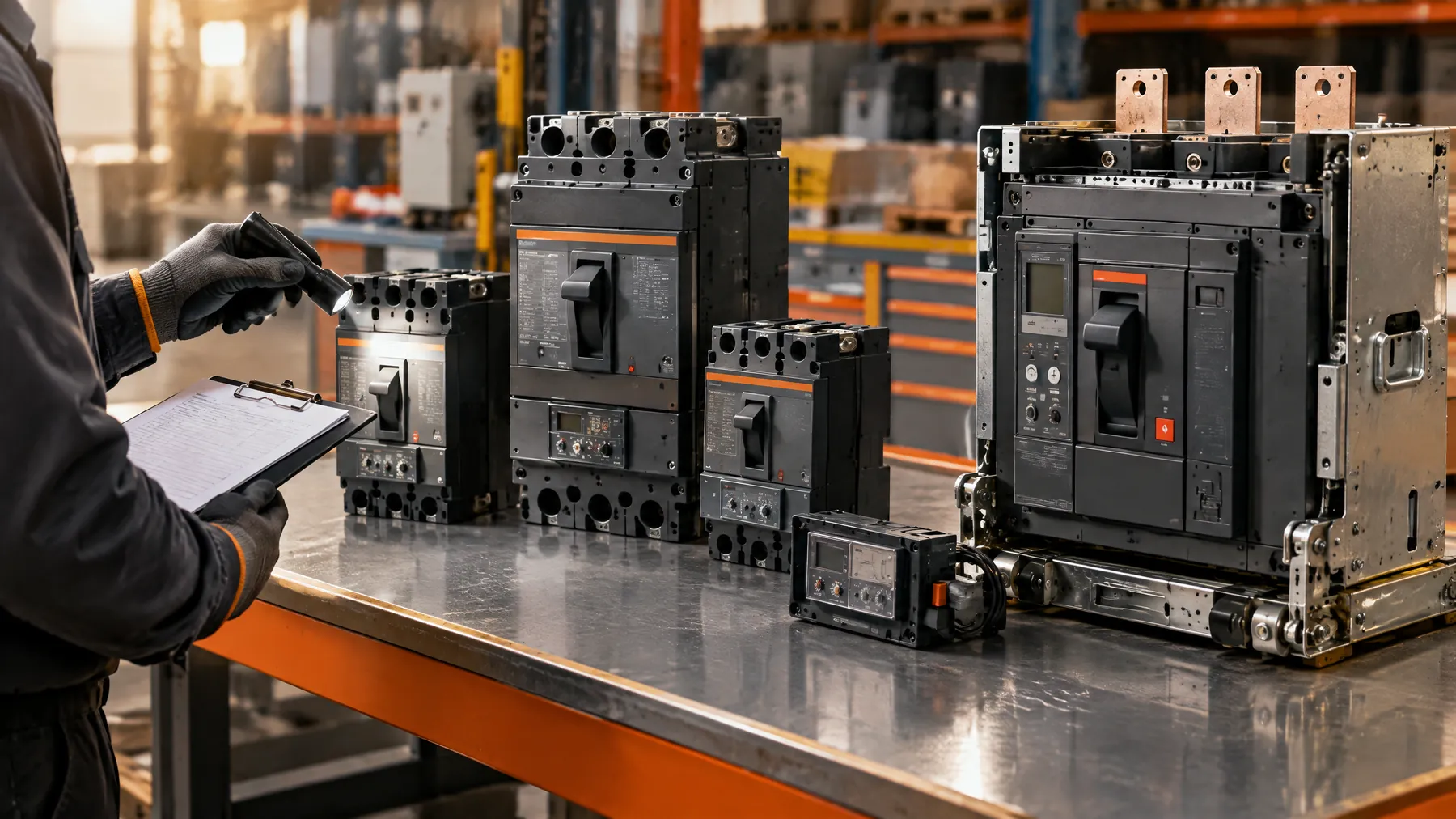
Surplus Generator Buyers buys commercial and industrial electronic, solid-state, and interchangeable circuit breaker trip units from decommissioned switchgear, MCCs, and distribution panels. We assess microprocessor-based trip modules, solid-state thermal-magnetic assemblies, and interchangeable units intended for common breaker frames. Sellers should provide full model and serial identification, firmware/version details, and any maintenance or test records. We operate nationwide and weigh quantity, condition, and logistics in our evaluations. Do not energize or test units yourself; qualified electrical personnel must perform energized inspection, disconnection, and removal.
Examples we review
Use the list below as an identification guide, not a promise that every unit will qualify. The exact model, configuration, condition, quantity, location, completeness, and present demand still control the purchasing decision.
What information should you send?
A complete submission lets a buyer answer the seller’s real question: whether this exact breaker or inventory has a practical commercial market. Copy identifiers exactly as shown and support them with current photographs.
Manufacturer and brand
Complete catalog or model number (full series)
Ampere rating, frame size, and trip type/curve
Voltage rating, number of poles, and interrupting/ICR rating where applicable
Condition, recent test history, firmware/version and calibration records
Quantity available and physical location plus removal/logistics notes
What affects marketability and value?
Marketability for electronic, solid-state, and interchangeable trip units depends on traceable identification, compatibility, and completeness. Units with intact catalog numbers, readable nameplates, firmware or calibration records, and matching accessory modules (racks, communication cards, CT/VT connections) are easier to resell. Interchangeable units that fit common breaker frames or recent firmware revisions draw more interest. Larger lots, intact OEM spares, or units with test certificates improve liquidity. Obsolete or undocumented trip units may still sell, but typically require inspection or bundling with compatible breakers or parts.
Traceable ID
Clear nameplates, catalog numbers, and serials enable precise matching, reduce inspection time, and increase resale prospects. Units with firmware/version data and original documentation are more desirable to end-users and industrial buyers seeking ready-to-install spares.
Compatibility Range
Interchangeable trip units that fit multiple breaker frames or match common OEM interfaces command broader interest. Compatibility with popular draw-out racks, communication protocols, and retro-fit kits improves marketability across service centers and refurbishers.
Documentation & Testing
Recent calibration certificates, trip settings, and test reports reduce buyer risk. Units accompanied by in-service logs or factory test records sell faster and attract bidders who need verifiable performance history for maintenance or outage planning.
Quantity & Lot Size
Large, single-lot quantities or complete decommissioned assemblies are easier to market. Buyers and refurbishers prefer palletized or crate-ready lots for logistics efficiency; small loose pieces often require inspection and rework that lowers net value.
Where this equipment is commonly found
Trip units commonly come from substation refurbishments, plant upgrades, distribution board retrofits, and OEM spare clear-outs. Buyers favor units with clear project history showing the circuit protected, reason for removal, and any fault records. Units retired during scheduled modernization are usually considered lower risk than those removed after failures. Accurate application context and protective setting history help match units to end users, reduce validation time, and speed resale to service centers and refurbishers.
How to prepare the breaker for review
Before requesting an offer, preserve all nameplates, catalog/model and serial labels, firmware/version stickers, and accessory modules or communication cards. Photograph units installed and removed, front and rear connection views, close-ups of nameplates, connector pinouts, mounting hardware, CT/VT terminations, and any damage or corrosion. Include maintenance logs and recent test reports if available. Do not perform live testing or attempt energized checks yourself; qualified electrical personnel must handle energized inspection, disconnection, and removal.
Do not clean labels with harsh chemicals, dismantle the breaker for better photographs, remove copper, separate matched accessories, or energize an unknown unit. Keep the inventory dry, protected from impact, and associated with its records. Qualified personnel must control any testing, electrical isolation, disconnection, racking, rigging, or field removal.
How the sale moves forward
Frequently asked questions
Do you buy used or obsolete trip units?
Yes, we consider used, end-of-life, and obsolete electronic and solid-state trip units. Value depends on clear identification, operational condition, documentation, and current demand. Obsolete units may sell for parts or to specialty refurbishers. Provide full IDs and photos; inspection may be required.
What photos and documentation do you need?
Photograph nameplates, full model/catalog numbers, serial numbers, firmware/version stickers, front and rear connection views, accessory cards, CT/VT terminations, mounting hardware, and any damage or corrosion. Include maintenance and test records. Do not energize units for photos; have qualified electrical personnel assist with safe removal.
What quantities do you buy and who handles shipping/removal?
We buy single units, spare inventories, and large lots nationwide. Minimums vary by model, condition, and logistics. We can coordinate removal and freight for larger lots or accept seller-arranged shipping for small items. Qualified electrical personnel must do energized disconnection and removal. Contact us with quantity and location.
How long until I get an offer?
Response time depends on identification quality, quantity, condition, location, and project complexity. Complete catalog information, readable labels, current photographs, and clear logistics details reduce follow-up questions. Large or installed inventories may require additional review before terms are final.