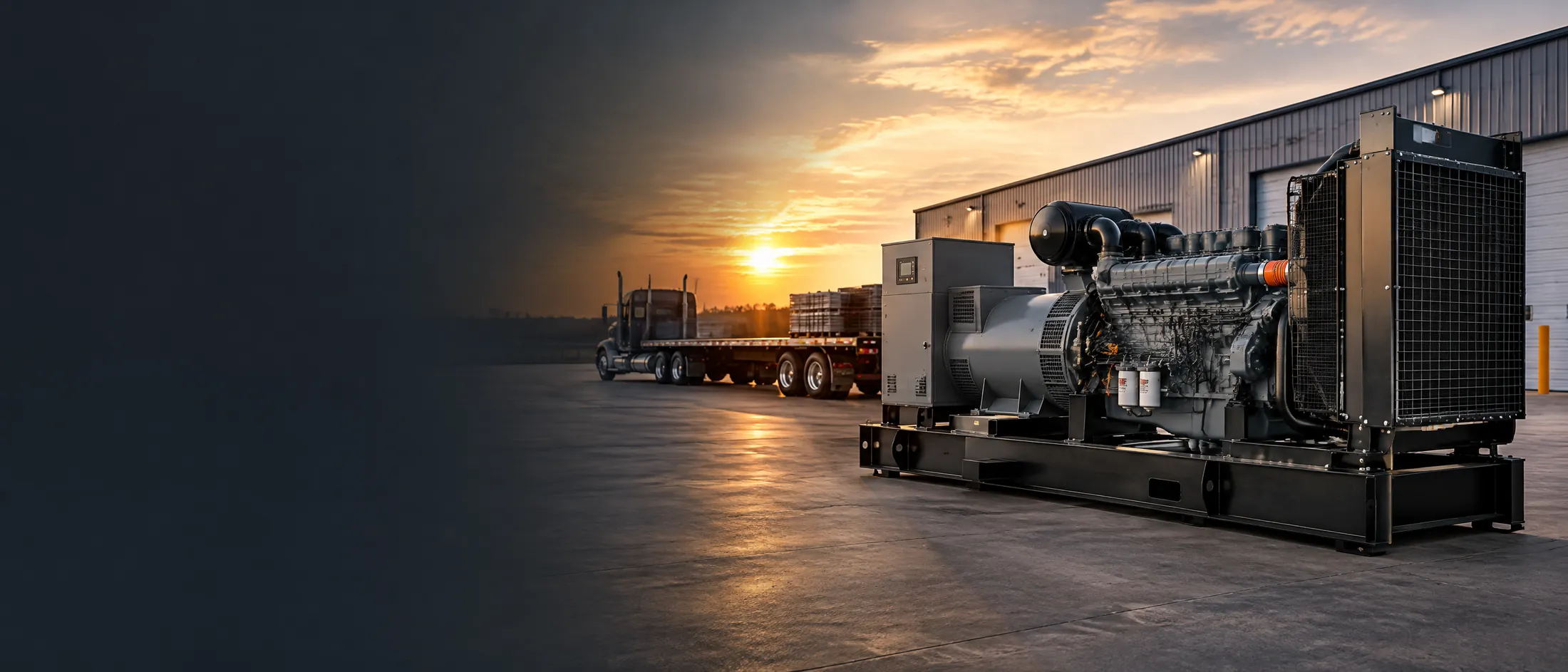
Do you buy Caterpillar generators and what information do you need?
Yes — we review qualifying Caterpillar commercial gensets for potential purchase. Decisive specs are manufacturer, model, serial number, kW/kVA (standby and prime), voltage/phase/frequency, fuel type, engine and alternator models, year, runtime hours, control system, breaker size/type, enclosure and tank details, condition, and test or maintenance records.
What sellers should know
This page explains what we look for when evaluating Caterpillar commercial generator sets (industrial sets, rental units, standby or prime power systems). We are not affiliated with Caterpillar and do not guarantee purchase, price, or removal.
We will review units ranging from small commercial sets to large industrial packages. Key facts we need up front are capacity (kW/kVA), ratings (prime vs standby), fuel, and any recent test or maintenance documentation. Clear serial plate data expedites a review.
Specifications that support a purchase review
Provide the following specifications and documentation where available. Each item below is commonly decisive in our purchase review.
Condition and documentation
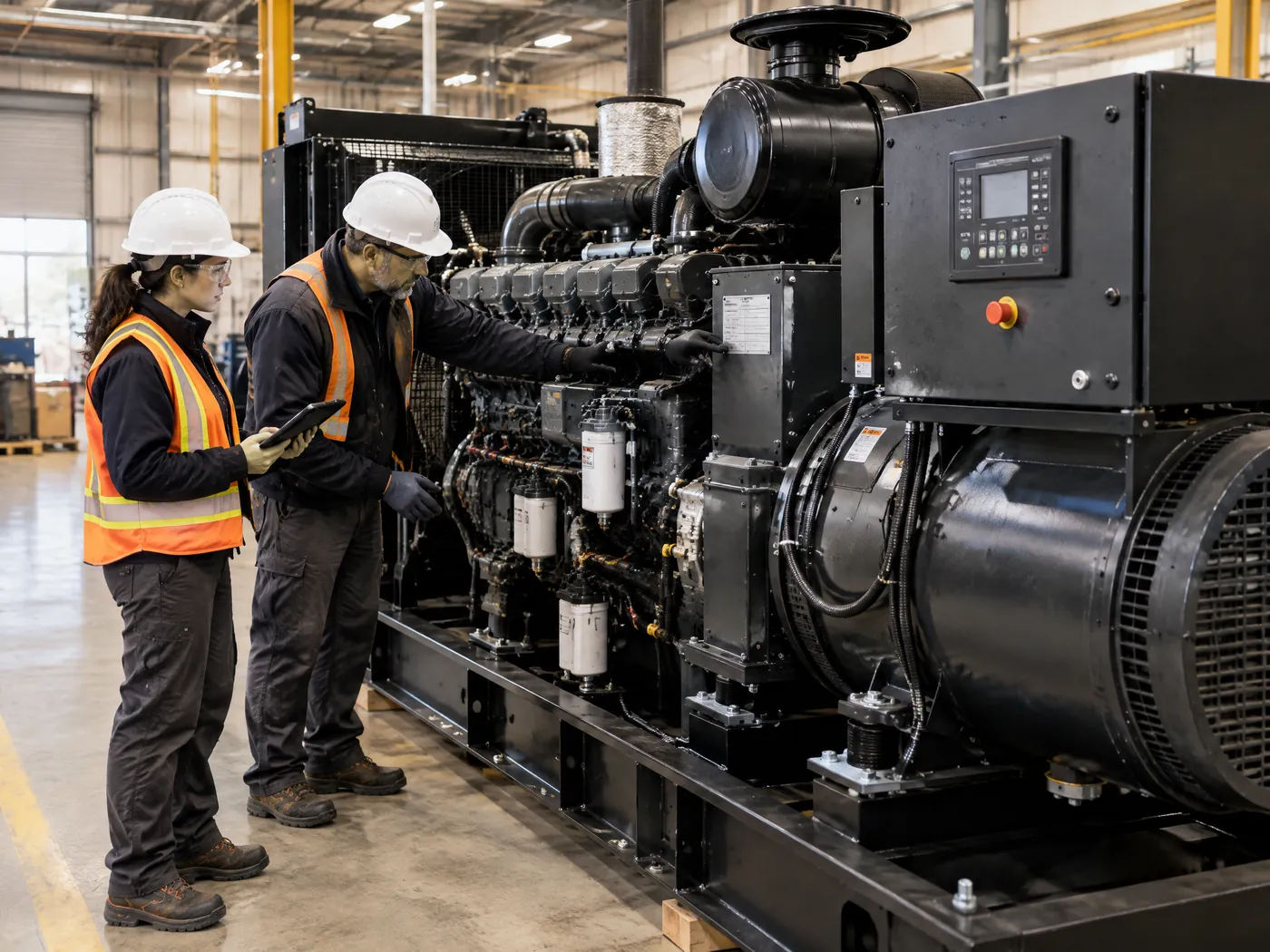
State the unit's current condition: in-service, decommissioned but intact, open skid, or partially disassembled. Include engine hours, last load-test date, any known mechanical or electrical faults, and whether the unit can be started and run. Provide maintenance records, oil and fuel analysis results if available, and documented test runs. Photographic evidence of serial plates, control panel, alternator nameplate, exterior enclosure, and tank reduces the time needed to start a review. We will review provided evidence but do not promise an offer, testing, certification, or removal.
What affects marketability?
Age and runtime hours
Younger units with lower engine hours are typically more liquid. High-hour engines still have value for parts or rebuild projects; hours combined with maintenance history helps buyers estimate remaining useful life.
Maintenance and service history
Complete maintenance logs, recent overhauls, injector or turbo work, and documented load tests materially increase interest. Lack of records increases risk and may reduce valuation.
Testing and operational status
Recent load-test results or a short video of the unit running under load is strong evidence. Units that can be started and exercised are easier to validate and generally attract more interest.
Regulatory and emissions considerations
Emissions controls, tier level, and local regulatory restrictions affect where a unit can be resold or redeployed. Provide emissions compliance documentation where it exists.
Photo and inventory checklist
Overall unit photo from multiple angles showing enclosure
Close-up of engine serial plate and model tag
Alternator nameplate and serial
Control panel close-up with any diagnostics displayed
Breaker and distribution area
Fuel tank and fill/drain points
Hours meter and odometer-style runtime display
Photos of any corrosion, damage, or missing components
Pickup and logistics planning
When submitting units for review, include quantity, exact pickup location, site access (gate hours, crane or forklift availability), dimensions and approximate weight, and whether fuel or hazardous fluids remain. We evaluate logistics but do not handle or promise removal, transport, or site work. Prepare clearance of any liens or ownership documentation in advance to speed a potential transaction.
Safety and scope boundary
Provide evidence that units have been isolated from live services and that any fuel and electrical disconnection was performed by qualified staff. We do not provide operating instructions or certify safety, and any on-site inspections or removals must be done by your qualified personnel in accordance with applicable regulations.
Frequently asked questions
Which Caterpillar models do you consider?
We review all Caterpillar commercial and industrial genset models — from small C-series sets up through 3500-series packages (for example, Cat C9, C15, 3516, 3600-series). Decision hinges on rating (kW/kVA), hours, engine/alternator condition, and documentation.
Do you buy open-frame or skid-mounted units without enclosures?
Yes. Open-frame and skid units are considered, but condition, weather exposure, and missing components (exhaust, radiator, controls) strongly affect interest and valuation.
Is a load-test required?
Not always, but a recent load-test or run video significantly improves review speed. If a unit cannot be started, provide detailed photos, component notes, and maintenance history.
How fast will you respond and do you guarantee a purchase?
Response times vary by submission detail and location. We review qualifying equipment but do not guarantee purchase, pricing, or timing. Complete specifications and photos reduce review time.