Do we buy 100- to 225-amp commercial circuit breakers?
Yes—Surplus Generator Buyers purchases 100–225 amp commercial circuit breakers when the make, exact catalog/series, ampere/frame/trip ratings, voltage and interrupting capacity, condition, quantity, location, and completeness meet current demand. Offers require clear identification and photos. Provide full specs and site details for evaluation. Qualified personnel must handle energized testing, disconnection, and removal before pickup or shipment.
What sellers should know
Surplus Generator Buyers evaluates 100–225 amp commercial and industrial circuit breakers from switchgear, panelboards, MCC buckets, and generator distribution equipment. We require catalog numbers, frame and trip ratings, interrupting capacity, pole count, and any OEM accessories such as handles, shrouds, or mounting hardware. Condition and documented project history influence market acceptability. Sellers with removal-ready or recently serviced breakers and maintenance records are easier to place. Send specs, photos, quantity, and location so we can discuss market timing, logistics, and whether onsite professional disconnection is needed.
Examples we review
Use the list below as an identification guide, not a promise that every unit will qualify. The exact model, configuration, condition, quantity, location, completeness, and present demand still control the purchasing decision.
What information should you send?
A complete submission lets a buyer answer the seller’s real question: whether this exact breaker or inventory has a practical commercial market. Copy identifiers exactly as shown and support them with current photographs.
Manufacturer (name exactly as on nameplate)
Complete catalog/model/series number
Ampere rating, frame size, and trip type/settings
Voltage, number of poles, and interrupting rating (kAIC)
Condition, testing status, and any visible damage
Quantity and exact site/panel location
What affects marketability and value?
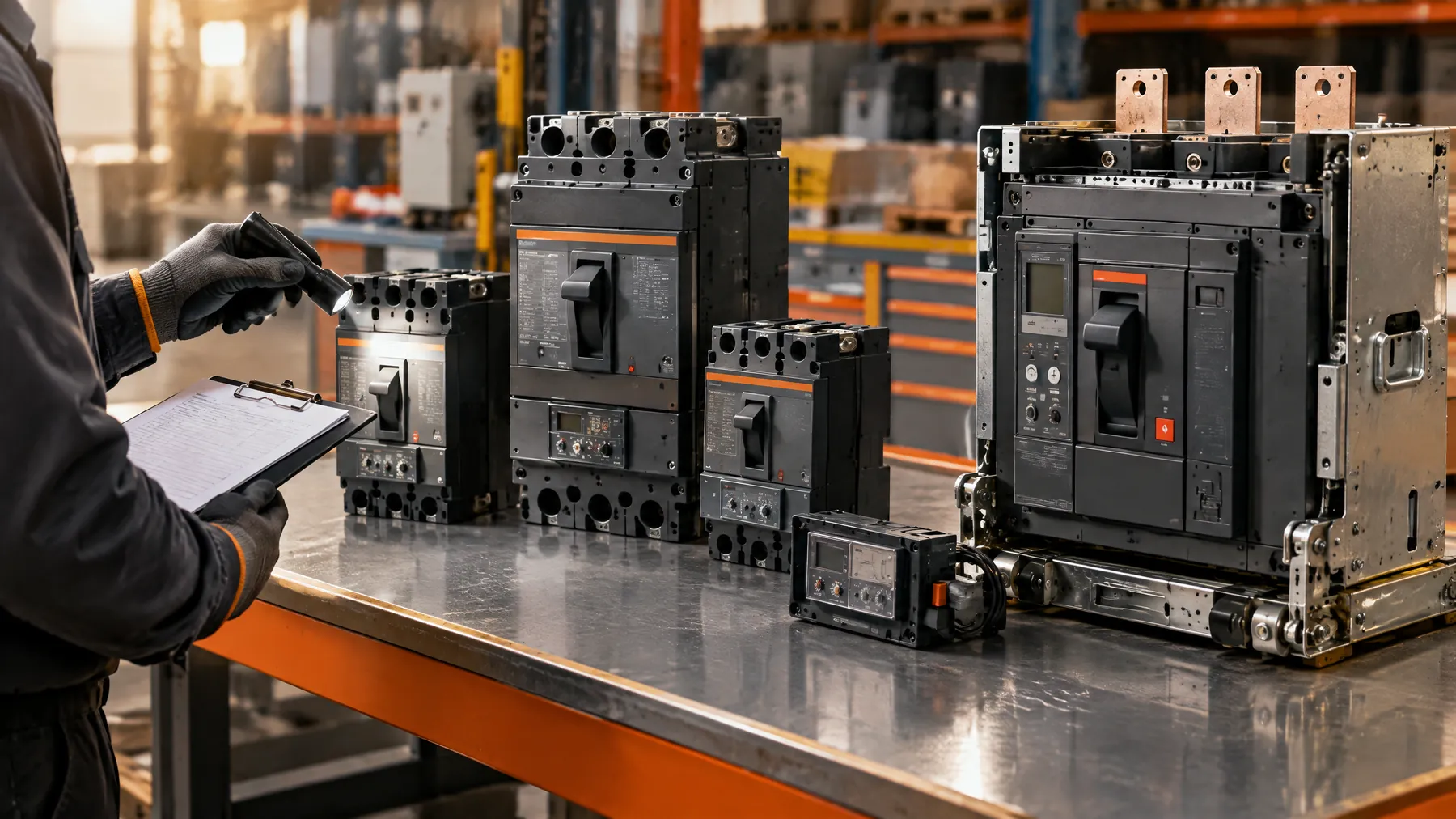
100–225 amp breakers are commonly used as mains, feeders, and motor protection in commercial applications, so they retain steady demand for spares and repairs. Units from major manufacturers and standard series with intact nameplates, compatible trip modules, and adequate interrupting ratings typically move faster. Matched lots, panel sets, or draw‑out assemblies increase buyer interest. Missing trip components, severe cosmetic damage, or unclear ID reduce marketability. Provide complete documentation and photos to improve evaluation and placement.
Manufacturer & Series
Breakers from major OEMs and well-known series hold broader buyer interest. Exact catalog or series numbers let buyers confirm compatibility and replacement parts availability, which speeds resale. Obscure or unmarked units are harder to place.
Ampere & Frame
Clear ampere, frame, and trip settings directly affect reuse. Breakers within the 100–225 amp range that match common frame sizes are more desirable for spares and repairs, allowing buyers to swap without panel modifications.
Interrupting Rating
Higher interrupting ratings expand marketability for commercial switchgear. Buyers require the IEC/ANSI interrupting capacity on nameplates to ensure safe reuse. Missing ratings typically reduce offers or require verification testing.
Condition & Completeness
Complete breakers with nameplates, handles, shrouds, trip modules, and clean lugs bring stronger interest. Cosmetic damage, missing accessories, or evidence of overheating lowers buyer confidence and reduces possible offers.
Where this equipment is commonly found
These 100–225 amp breakers are often found in commercial switchgear, distribution panels, MCC buckets, and generator switchboards. Buyers value knowing whether a breaker served as a main, feeder, or motor-protection device because duty cycle and prior fault history affect reuse. Environmental exposure and maintenance records also matter. Always have qualified personnel perform any energized testing, isolation, or removal; do not attempt live work yourself.
How to prepare the breaker for review
Preserve nameplates, catalog/model numbers, serial numbers, and attached trip units. Do not remove factory seals or disassemble trip mechanisms. Photograph the full breaker, close-ups of nameplate/catalog, trip unit, lug and terminal areas, and any accessories such as handles or shrouds. Record quantity, rack or panel location, and any test tags or maintenance logs. If breakers are part of a matched set or MCC bucket, note that in your submission. Qualified personnel must de-energize, test, and remove units before shipping.
Do not clean labels with harsh chemicals, dismantle the breaker for better photographs, remove copper, separate matched accessories, or energize an unknown unit. Keep the inventory dry, protected from impact, and associated with its records. Qualified personnel must control any testing, electrical isolation, disconnection, racking, rigging, or field removal.
How the sale moves forward
Frequently asked questions
Do you buy used or obsolete 100–225 amp breakers?
Yes, we evaluate used and obsolete 100–225 amp breakers. Purchases depend on clear identification, condition, and whether replacement parts remain available. Obsolete units with intact nameplates, matching lots, or practical spare value may be purchasable. Provide full specs and photos for evaluation.
What photos should I send for a quicker evaluation?
Provide clear photos of the nameplate/catalog label, entire breaker assembly, trip unit, lug/terminal areas, front and rear mounting features, and any accessory parts. Include a reference for scale and shots of serial numbers or test tags. Good lighting and close-ups speed review.
What quantities do you buy and who handles removal or shipping?
We buy single breakers and full lots. Larger matched quantities, panel sets, or MCC buckets typically attract more interest. Sellers should state quantity, crate or skids availability, and onsite access. Qualified electricians must disconnect and prepare units for pickup or freight; we advise logistics after inspection.
How do I submit equipment for an offer?
Email photos, full catalog/model numbers, nameplate data, quantity, and site location to our acquisitions team. Include any maintenance records and decommissioning dates. We review submissions, request clarifications, and provide a conditional offer. An onsite inspection may be required before final terms.