Do we buy 2500- to 3200-amp circuit breakers?
Yes—We buy 2500–3200 amp circuit breakers, subject to manufacturer, exact catalog/series, ampere/frame/trip ratings, voltage and interrupting capacity, mechanical and electrical condition, quantity, location, completeness of accessories, and current market demand. Provide full nameplate details, trip-unit data, photos, and site specifics so we can evaluate. Heavily damaged or undocumented units may be declined.
What sellers should know
We purchase commercial 2500–3200 amp circuit breakers from industrial sites, utilities, contractors, and facilities nationwide. Our review centers on the exact catalog/series, frame and trip ratings, interrupting rating, and service history. Common styles we handle include fixed-frame ACBs, draw-out breakers with racking mechanisms, and vacuum units. Sellers should be ready to provide nameplate photos, trip-unit serials, and removal logistics. Qualified personnel must handle energized, testing, disconnection, and removal work when relevant. After initial documentation review, we’ll discuss next steps and site access.
Examples we review
Use the list below as an identification guide, not a promise that every unit will qualify. The exact model, configuration, condition, quantity, location, completeness, and present demand still control the purchasing decision.
What information should you send?
A complete submission lets a buyer answer the seller’s real question: whether this exact breaker or inventory has a practical commercial market. Copy identifiers exactly as shown and support them with current photographs.
Manufacturer (brand and plant code)
Complete catalog/model number and series
Ampere, frame, and trip settings or type
Voltage, poles, and interrupting rating (kAIC) where relevant
Condition and any recent testing/maintenance history
Quantity available and exact site location
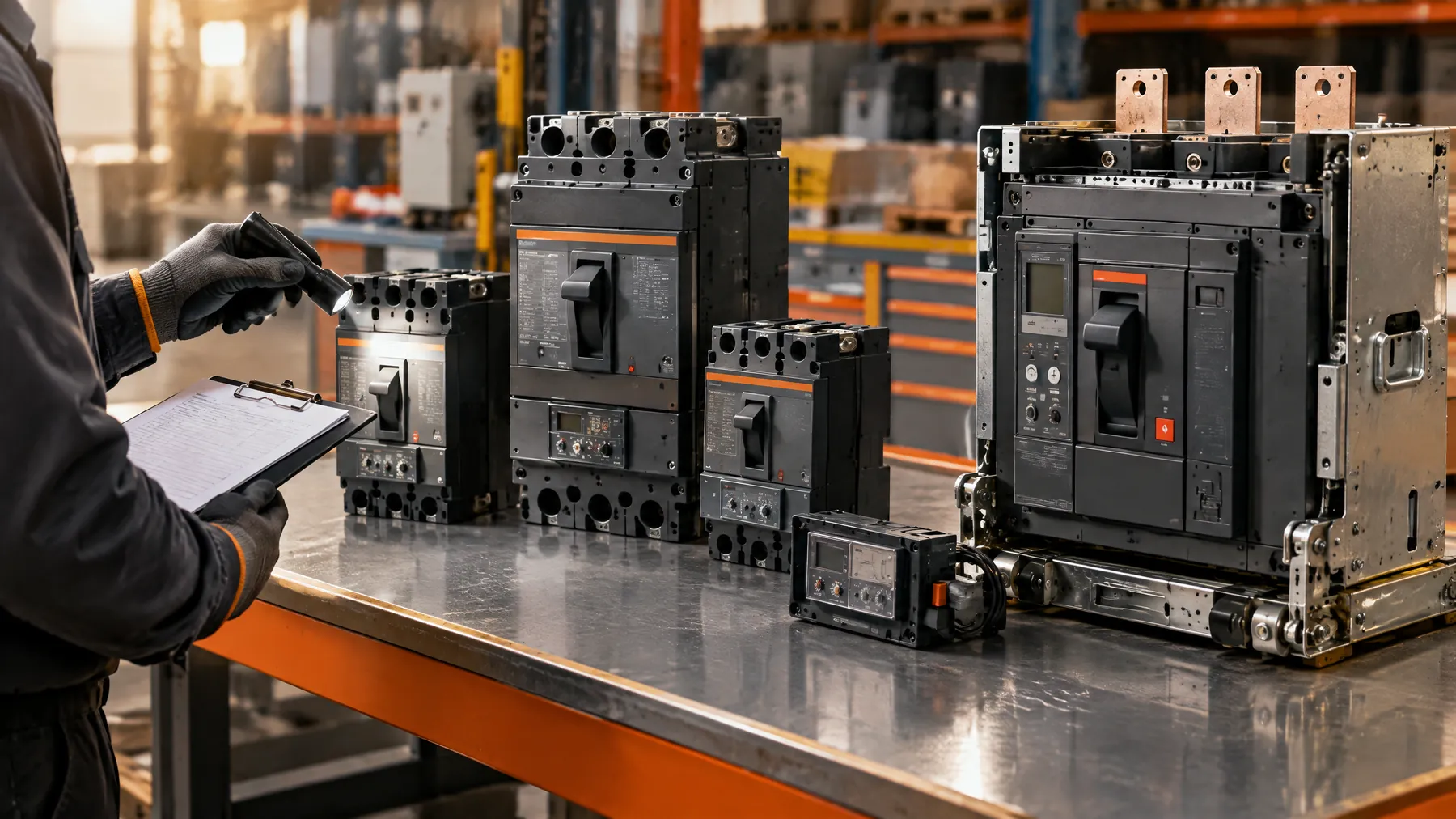
What affects marketability and value?
2500–3200 amp breakers remain marketable because they are critical principal components in commercial switchgear and large distribution systems. Demand is driven by system upgrades, retrofit projects, and rebuilders seeking specific frames and trip-unit types. Marketability rises when nameplates, original trip electronics, racking hardware, and recent maintenance records are present. Corrosion, arc damage, missing accessories, or undocumented modifications reduce resale appeal. We evaluate each unit against current buyer needs and provide straightforward feedback on commercial prospects.
Manufacturer/Series
Certain manufacturers and series have higher resale demand because spare parts and trip-unit options are available. Rare frames may be slower to sell despite good condition; we match series to buyer needs when valuing units.
Nameplate Completeness
Complete, legible nameplates and serial numbers dramatically improve value. They confirm model, interrupting rating, and manufacturing date, enabling buyers to verify compatibility and safety limits without costly onsite inspection.
Mechanical Condition
Intact racking mechanisms, undamaged interlocks, and clean contact faces increase appeal. Visible arc damage, heavy corrosion, or seized mechanisms reduce offers because repair or refurbishment is costly for buyers.
Documentation & History
Maintenance logs, trip calibration records, and recent test reports increase trust and marketability. Units with documented service histories move faster and attract buyers willing to pay more than undocumented or ex-failure equipment.
Where this equipment is commonly found
These breakers are used as mains and feeder protection in switchgear, substations, large manufacturing plants, hospitals, and data centers. Project history—installation date, loads served, fault events, and maintenance records—helps buyers judge remaining life and interchangeability. Breakers removed for planned upgrades generally sell better than those removed after failures. Tell us whether the breaker served a generator bus, MCC, or main distribution panel for an accurate appraisal.
How to prepare the breaker for review
Preserve nameplates, serial tags, and any trip‑unit labels. Photograph the front face, nameplate, trip-unit type/serial, interior contacts/arc chutes, terminal connections, and racking hardware. Do not energize or disassemble the unit for photos. Qualified personnel must handle energized, testing, disconnection, and removal work when relevant. Note any arc damage, corrosion, or aftermarket modifications, and keep manuals or maintenance logs handy; we’ll discuss removal logistics after reviewing documentation.
Do not clean labels with harsh chemicals, dismantle the breaker for better photographs, remove copper, separate matched accessories, or energize an unknown unit. Keep the inventory dry, protected from impact, and associated with its records. Qualified personnel must control any testing, electrical isolation, disconnection, racking, rigging, or field removal.
How the sale moves forward
Frequently asked questions
Do you buy used or obsolete 2500–3200 amp breakers?
Yes — we may buy used or obsolete 2500–3200 amp breakers depending on condition, documentation, parts demand, and buyer needs. Heavily damaged, undocumented, or unsafe units are often declined. Provide full photos and history so we can assess salvageability versus refurbishment value.
What photos and information do you need to evaluate a breaker?
Provide clear photos of the front face, nameplate and serials, trip-unit label and serial, interior contacts/arc chutes, terminal connections, and racking hardware. Add closeups of any damage, and include catalog/model numbers and recent maintenance records. Do not power the unit for photos.
Do you buy single breakers or large quantities, and who handles shipping or removal?
We buy single units and large lots. Shipping can be arranged or coordinated, and we can quote onsite removal for many sites. Any deenergizing, disconnection, and removal must be performed by qualified personnel; we’ll evaluate access and scope after initial documentation.
How long does it take to get an offer once I submit details?
Response time depends on identification quality, quantity, condition, location, and project complexity. Complete catalog information, readable labels, current photographs, and clear logistics details reduce follow-up questions. Large or installed inventories may require additional review before terms are final.