Do we buy 800- to 1200-amp circuit breakers?
Yes—Surplus Generator Buyers purchases 800–1200 amp circuit breakers when manufacturer, exact catalog/series, ampere/frame/trip ratings, voltage and interrupting capacity, condition, quantity, location, completeness, and current demand align. Send clear photos and full nameplate data for a prompt review. We evaluate each unit individually. Qualified personnel must perform energized testing, disconnection, and removal. Response times vary with location and quantity.
What sellers should know
Surplus Generator Buyers purchases 800–1200 amp commercial and industrial circuit breakers from decommissioned switchgear, substations, and distribution panels nationwide. We focus on three-frame and draw-out units used as main breakers, generator feeders, and distribution ties in commercial sites. Sellers should provide catalog numbers, interrupting ratings, mechanical condition, and any maintenance records for a faster evaluation. We evaluate single pieces and full lots. Qualified technicians must handle live testing, disconnection, and removal.
Examples we review
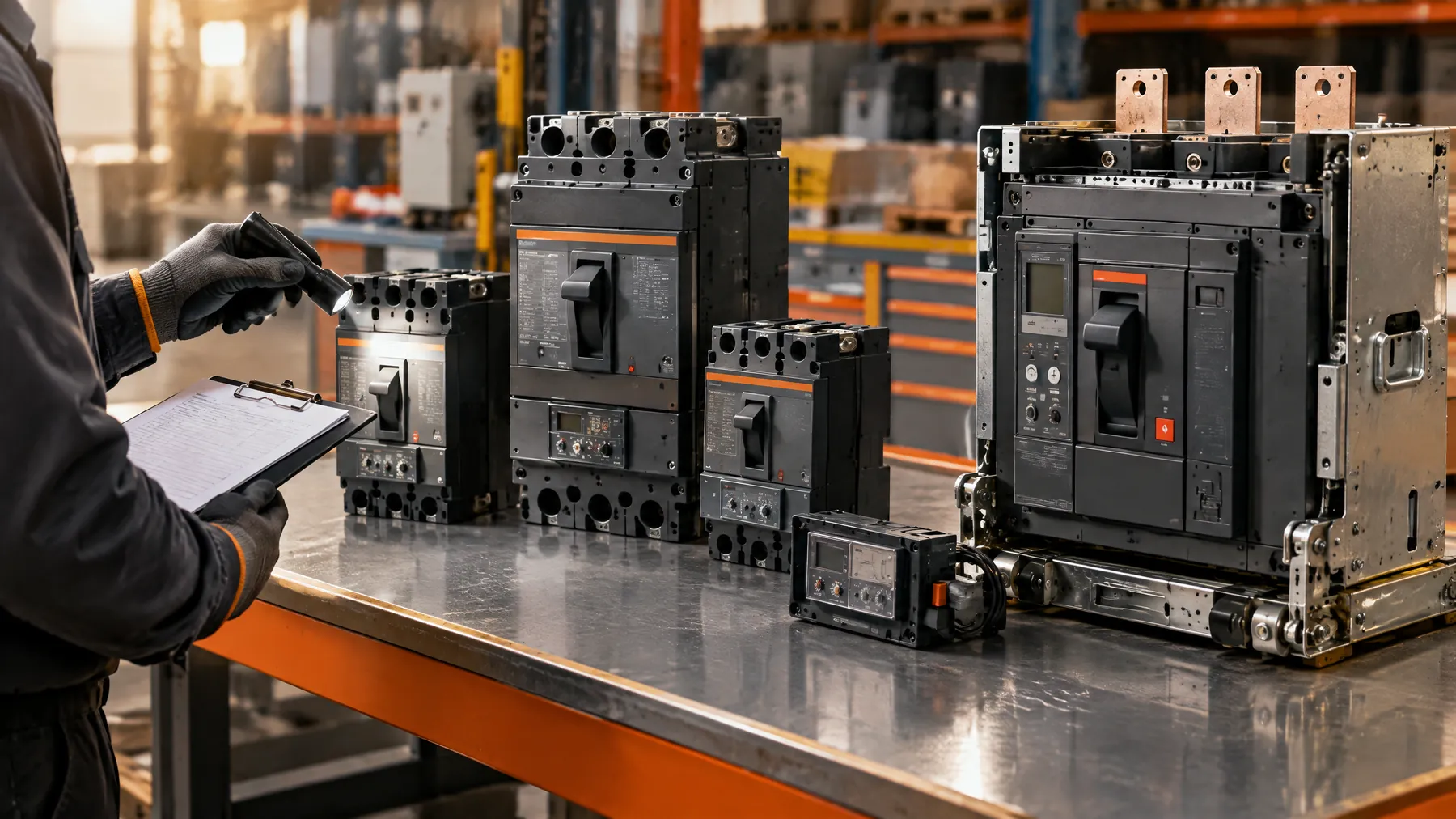
Use the list below as an identification guide, not a promise that every unit will qualify. The exact model, configuration, condition, quantity, location, completeness, and present demand still control the purchasing decision.
What information should you send?
A complete submission lets a buyer answer the seller’s real question: whether this exact breaker or inventory has a practical commercial market. Copy identifiers exactly as shown and support them with current photographs.
Manufacturer (brand on nameplate)
Complete catalog/model number and series
Ampere, frame, and trip-unit information
Voltage, poles, and interrupting (kA) rating where applicable
Condition and any testing or maintenance records
Quantity available and pick-up/shipping location
What affects marketability and value?
800–1200 amp breakers remain marketable because they match common commercial distribution capacities and are often needed for switchboard repairs, generator panels, and temporary power setups. Units with intact nameplates, known manufacturers, and documented interrupting ratings attract more buyers. Breakers with replaceable trip units and standard frames are easier to resell. Damaged frames, missing plates, or obsolete trip electronics reduce marketability. Accessories and matching racking hardware improve sale prospects and speed the transaction.
Manufacturer & Series
Well-known manufacturers and current series numbers increase buyer confidence. Complete factory series or catalog IDs allow parts interchangeability checks and matching to available trip units, which shortens evaluation and expands resale channels in commercial and industrial markets.
Interrupting Rating
High interrupting capacity rated to facility fault levels preserves reuse options. Breakers with documented kAIC ratings are prioritized because they meet safety and code expectations for commercial distribution. Missing or unclear interrupting data reduces market demand.
Condition & Testing
Physically intact frames, clean contacts, and recent trip testing raise resale value. Test reports or NETA-style maintenance records are helpful. Units showing arcing, corrosion, or mechanical damage often need costly refurbishment and attract fewer buyers.
Quantity & Location
Multiple identical breakers in a single location simplify logistics and increase buyer interest. Lot sales reduce per-unit handling and shipping costs. Remote or staged locations may incur higher removal and transport charges that affect net offers.
Where this equipment is commonly found
These breakers are typically used as main feeders, generator breakers, and distribution tie breakers in commercial buildings, hospitals, data centers, and industrial plants. Buyers value documented service history: original installation voltage, load duty cycles, and any fault events. Equipment from planned upgrades or controlled decommissioning carries clearer provenance than items from unknown service. Project names, dates, and one-line diagrams help validate reuse. Qualified electricians must perform all energized work; we do not provide live-work guidance.
How to prepare the breaker for review
Preserve all nameplates, trip-unit covers, racking hardware, and accessory parts before requesting an offer. Photograph the breaker installed and removed, including close-ups of the nameplate, serial number, trip unit model, connection lugs, and any physical damage. Note whether the breaker is draw-out or fixed, and record any modifications or past test dates. Keep maintenance logs and prior trip test reports handy. Do not perform live testing unless qualified technicians are present. Proper labeling and packaged accessories speed inspection.
Do not clean labels with harsh chemicals, dismantle the breaker for better photographs, remove copper, separate matched accessories, or energize an unknown unit. Keep the inventory dry, protected from impact, and associated with its records. Qualified personnel must control any testing, electrical isolation, disconnection, racking, rigging, or field removal.
How the sale moves forward
Frequently asked questions
Do you buy used or obsolete 800–1200 amp breakers?
Yes. We may buy used or obsolete 800–1200 A breakers when frames, nameplates, or reusable components remain serviceable. Obsolete trip electronics or missing plates lower offers. Provide photos and documentation to assess reuse or parts value. Qualified technicians must perform energized testing or disconnection before removal.
What photos and information should I send for an offer?
Include clear photos of the full breaker assembly, close-ups of the nameplate and serial number, trip-unit label, connection lug areas, racking mechanism, and any visible damage. Show the breaker installed and removed if possible. Attach catalog/model data and quantity to speed accurate offers.
Do you buy single units or only lots, and who handles shipping/removal?
We buy single breakers and full lots. Larger quantities often improve logistics and offer rates. For shipping or removal we discuss crate needs, lift equipment, site access, and turn-key removal options. Qualified crews must perform energized disconnection; we coordinate transport after de-energization.
How do I get a quote and how long will it take?
Response time depends on identification quality, quantity, condition, location, and project complexity. Complete catalog information, readable labels, current photographs, and clear logistics details reduce follow-up questions. Large or installed inventories may require additional review before terms are final.