Do we buy 4000-amp circuit breakers?
Yes—We buy 4000-amp circuit breakers, but purchases depend on manufacturer, exact catalog/series, ampere/frame/trip settings, interrupting rating, condition, quantity, location, completeness (draw-out mechanisms, trip units, accessories), and current market demand. Provide location, quantity, and any available test or maintenance records for a prompt offer review. Qualified personnel must handle energized testing, disconnection, and removal.
What sellers should know
4000-amp circuit breakers are heavy-duty industrial interrupters used in large switchgear, generator paralleling systems, and primary plant distribution. Surplus Generator Buyers evaluates these breakers by exact catalog number, trip unit type, interrupting rating, and mechanical condition before making an offer. Sellers typically contact us after plant upgrades, generator removals, or decommissioning. Because these units are large and often integrated, we consider removal logistics, available accessories, and documentation when assessing value. We buy nationwide and request clear identification and condition details to expedite appraisal.
Examples we review
Use the list below as an identification guide, not a promise that every unit will qualify. The exact model, configuration, condition, quantity, location, completeness, and present demand still control the purchasing decision.
What information should you send?
A complete submission lets a buyer answer the seller’s real question: whether this exact breaker or inventory has a practical commercial market. Copy identifiers exactly as shown and support them with current photographs.
Manufacturer and brand
Complete catalog/model number and series
Ampere, frame, and trip settings
Voltage, poles, and interrupting rating (kAIC)
Condition and available test/maintenance records
Quantity and pickup or site location
What affects marketability and value?
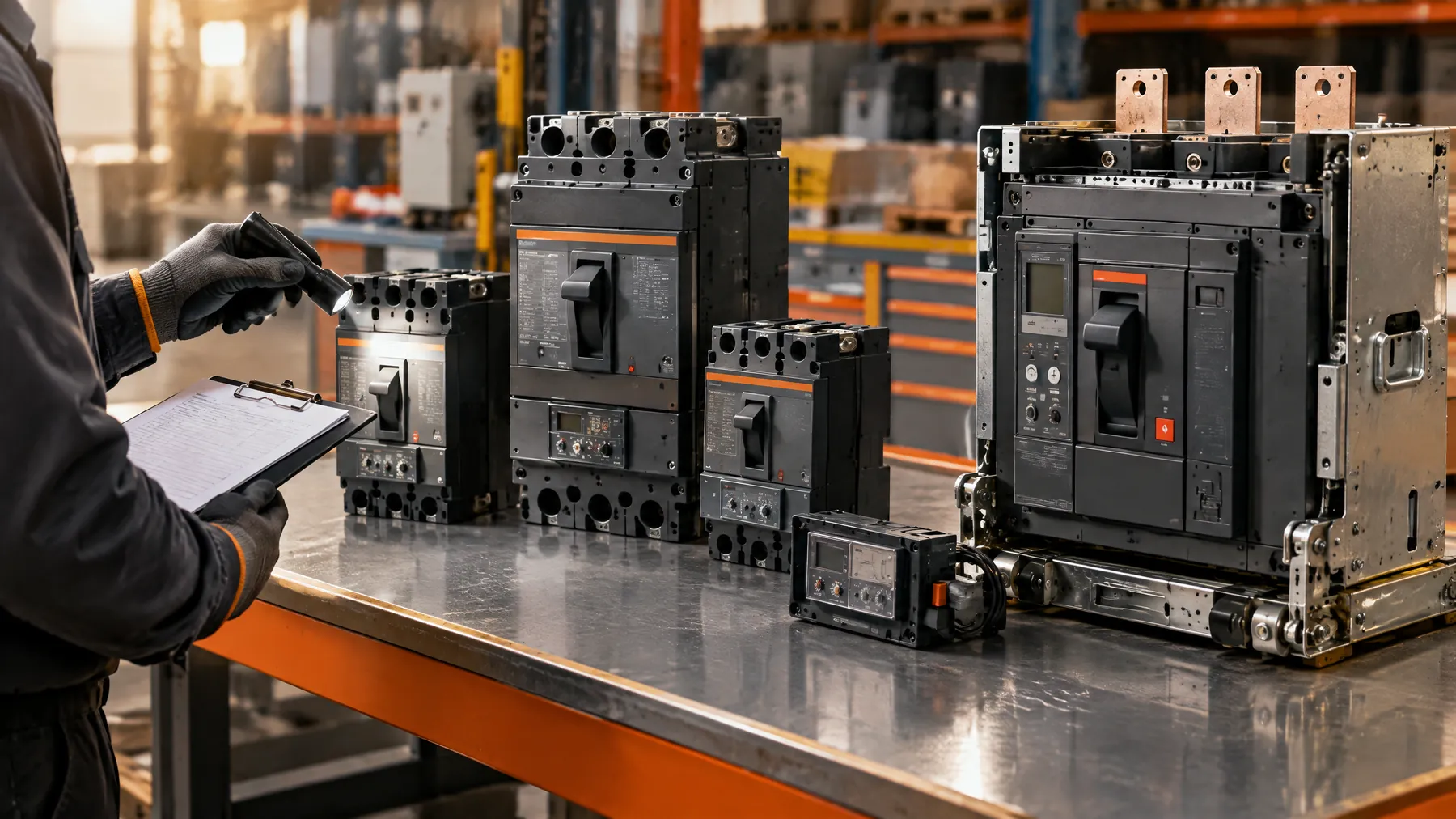
Marketability for 4000-amp breakers depends on compatibility and completeness. Units with original nameplates, intact draw-out frames, standard trip units, and recorded test data attract utilities, rental fleets, and contractors. High interrupting ratings and compatible voltage/pole configurations broaden buyer interest. Obsolete, modified, or undocumented breakers are harder to place and may require refurbishment. Proximity to freight hubs and available quantities also affect interest and logistics. We evaluate each breaker on its individual merits rather than assuming universal value.
Manufacturer/Series
OEM and series identify replacement parts and buyer pools. Well-supported manufacturers and common series attract more buyers because parts, trip units, and retrofit options are easier to source and validate for reuse.
Interrupting Rating
Higher interrupting (kAIC) ratings increase applicability to utility and heavy industrial projects. Buyers prioritize documented short-circuit capability to ensure the breaker meets their system protection requirements.
Trip Unit Type
Electronic or microprocessor trip units with calibration records are more desirable. Adjustable protection settings, communications, and recent test records simplify resale and integration into modern control schemes.
Completeness & Accessories
Complete assemblies with drawout racks, racking handles, secondary control wiring, and spare trip modules reduce refurbishment time. Missing accessories materially lower marketability and increase removal costs.
Where this equipment is commonly found
4000-amp breakers appear in power plants, large diesel or gas generator paralleling panels, utility feed bays, and major industrial distribution switchgear. Project history — removal reason, service life, and any fault or trip history — matters to buyers assessing remaining life and compatibility. Breakers removed as part of scheduled upgrades or kept as spares are often more marketable. Do not perform energized testing or removal yourself; qualified electrical personnel must handle those activities.
How to prepare the breaker for review
Preserve nameplates and any test or maintenance records. Photograph the nameplate, full assembly, trip unit face, draw-out mechanism, serial numbers, terminal areas, and any visible damage or corrosion. Note mounting hardware, racking handles, and lift points. Keep wiring diagrams and service logs if available. If the breaker is still installed, document bay location and rigging access. Qualified personnel should manage energized disconnection and any lifting preparations.
Do not clean labels with harsh chemicals, dismantle the breaker for better photographs, remove copper, separate matched accessories, or energize an unknown unit. Keep the inventory dry, protected from impact, and associated with its records. Qualified personnel must control any testing, electrical isolation, disconnection, racking, rigging, or field removal.
How the sale moves forward
Frequently asked questions
Do you buy used or obsolete 4000-amp breakers?
Yes — we evaluate used and obsolete 4000-amp breakers case by case. Obsolete models can be purchased if they are complete, have readable nameplates, or suit a buyer’s retrofit project. Pricing reflects condition, documentation, and demand; we do not assume every unit has resale value.
What photos do you need to start an offer?
Provide clear photos of the nameplate, full breaker assembly from multiple angles, trip unit face, draw-out mechanism and serial numbers, terminal areas, and any visible damage. Include wide shots showing bay location and rigging access. Do not perform energized photography; qualified personnel must handle energized areas.
How many breakers do you buy and can you handle shipping or removal?
We buy single units and large lots, depending on market demand. Tell us quantity, dimensions, and site access. We can coordinate buyers and logistics, but removal and energized disconnection must be performed by qualified electrical contractors. Freight or rigging costs are considered in the offer.
How fast can I get an offer for a 4000-amp breaker?
Response time depends on identification quality, quantity, condition, location, and project complexity. Complete catalog information, readable labels, current photographs, and clear logistics details reduce follow-up questions. Large or installed inventories may require additional review before terms are final.