Do we buy high-interrupting-capacity circuit breakers?
Yes—Surplus Generator Buyers purchases high-interrupting-capacity circuit breakers, but every offer depends on manufacturer, exact catalog or series, interrupting rating and frame/ampere details, physical condition, quantity, location, completeness of accessories, and current market demand. Provide photos and nameplate data to get a prompt review; our team will respond with an offer after inspection details are reviewed.
What sellers should know
High-interrupting-capacity circuit breakers are devices rated to safely clear very large fault currents in commercial and industrial switchgear, substations, and plant distribution systems. Surplus Generator Buyers buys these assets when we can verify manufacturer, catalog/series, interrupting rating, and physical condition. Typical commercial ratings range from 65 kAIC to 200 kAIC and include air circuit breakers, power frames, and draw-out units. Common sellers are contractors, utilities, and facility owners removing switchgear during upgrades. Provide full nameplate data, photos, and removal location to start an offer. Contact us by phone or email so we can evaluate logistics and remarket potential.
Examples we review
Use the list below as an identification guide, not a promise that every unit will qualify. The exact model, configuration, condition, quantity, location, completeness, and present demand still control the purchasing decision.
What information should you send?
A complete submission lets a buyer answer the seller’s real question: whether this exact breaker or inventory has a practical commercial market. Copy identifiers exactly as shown and support them with current photographs.
Manufacturer and brand
Complete catalog or model number/series
Ampere rating, frame size, and trip unit type
Voltage class, number of poles, and interrupting (AIC/kAIC) rating
Condition, visible damage, and any test or maintenance records
Quantity available and exact removal/shipping location
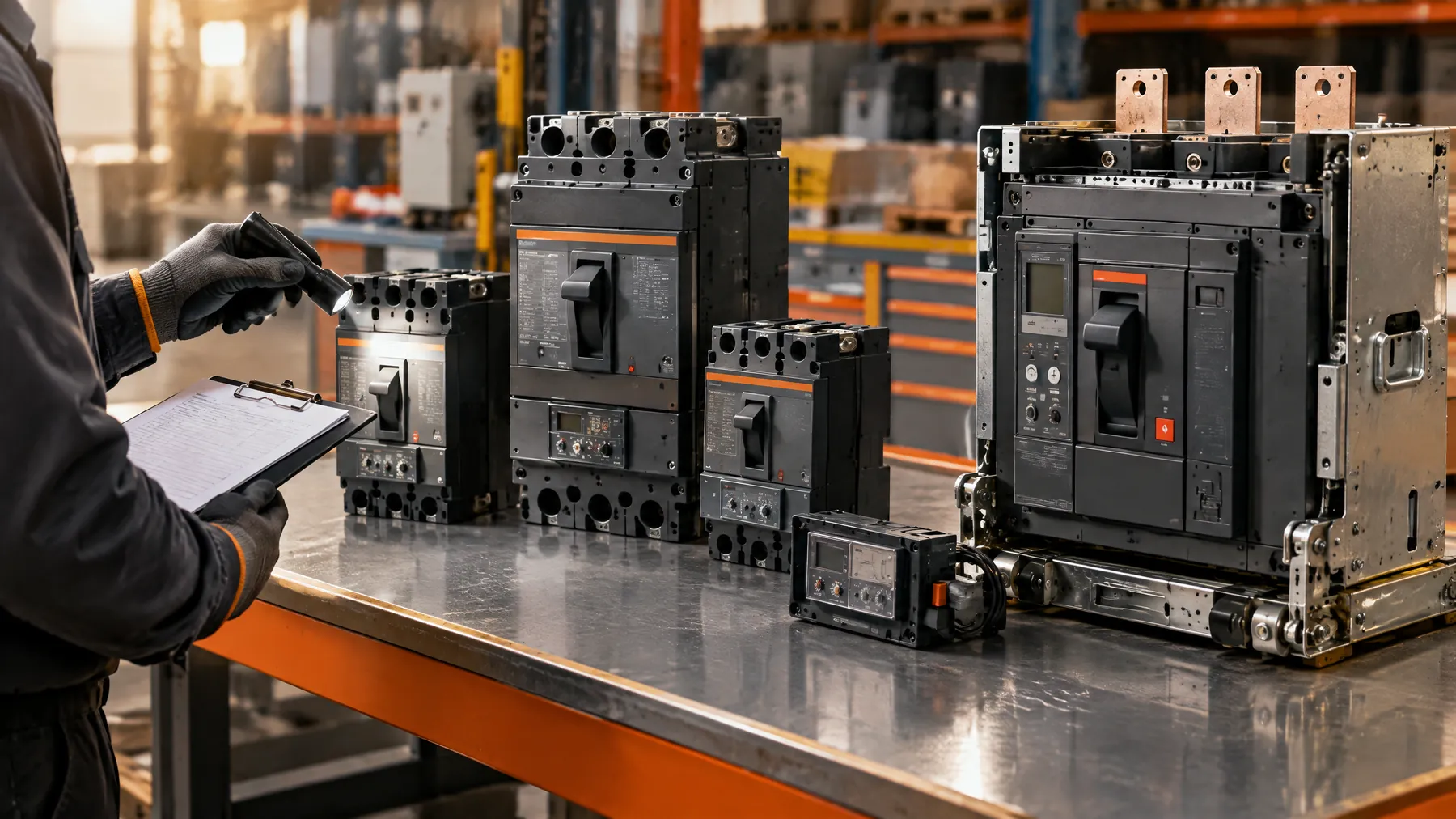
What affects marketability and value?
High-interrupting-capacity breakers remain marketable when they match common OEM lines, retain original trip units and accessories, and have verifiable nameplate data and maintenance history. Buyers value intact draw-out assemblies, factory refurbishments, and breakers with recent secondary testing or calibration records. Quantity and compatibility with common switchgear increase demand because buyers repackage units as spares for utilities, data centers, and industrial plants. Damage, missing parts, or unknown test status lower interest. Provide documentation and photos so we can determine remarket channels, whether for parts, spares, or full unit resale. Lead times and logistics affect pricing.
Interrupting Rating
Higher AIC/kAIC ratings command broader demand because they fit heavy fault-current applications. Exact interrupting capacity must be verifiable on the nameplate to match buyer needs and reduce remarketing risk.
OEM Compatibility
Breakers compatible with common switchgear lines and OEM parts are easier to resell. Matching series and accessory fit increases interest from facilities needing spares or drop-in replacements.
Condition & Testing
Units with clean internals, intact draw-out mechanisms, and documented secondary testing or calibration attract buyers. Unknown test status or internal corrosion reduces marketability and may limit offers to parts-only.
Quantity & Logistics
Larger lots and accessible sites increase buyer interest by lowering per-unit handling costs. Remote locations, complex rigging, or restrictive windows add removal expenses and affect net offer terms.
Where this equipment is commonly found
High-interrupting-capacity breakers are used in utility substations, central plant switchgear, large commercial buildings, data centers, and heavy industrial motor feeders. Buyers look for breakers that were part of known projects because installation and service history clarify remaining life and compatibility with common gear. Projects with documented removal and clear reasons for replacement (upgrade, decommission, damage) increase buyer confidence. Always preserve maintenance logs, test reports, and original spare parts to improve remarketability. Qualified electricians should handle energized testing, disconnection, and safe removal.
How to prepare the breaker for review
Before contacting us, retain the breaker’s nameplate and any trip-unit or relay serial numbers. Photograph front, back, nameplate, trip unit, draw-out racking mechanism, and internal contact areas. Note any dents, corrosion, or missing accessories. Keep maintenance logs, test reports, and factory manuals with the unit. Do not attempt live testing or removal yourself; a qualified electrical contractor must de-energize and disconnect equipment. If offloading is needed, list site access, crane or forklift availability, and preferred removal dates for a realistic quote.
Do not clean labels with harsh chemicals, dismantle the breaker for better photographs, remove copper, separate matched accessories, or energize an unknown unit. Keep the inventory dry, protected from impact, and associated with its records. Qualified personnel must control any testing, electrical isolation, disconnection, racking, rigging, or field removal.
How the sale moves forward
Frequently asked questions
Do you buy used or obsolete high-interrupting-capacity breakers?
We will consider used or obsolete high-interrupting-capacity breakers based on manufacturer, catalog number, interrupting rating, condition, and market demand. Obsolete models often sell for parts. Provide nameplate and photos. Do not energize; qualified personnel must handle disconnection and removal. We’ll evaluate and respond with options.
What photos and documents do you need?
Send clear photos of the breaker nameplate, front and rear views, trip or relay serials, draw-out racking mechanism, and internal contact areas. Attach maintenance logs and test reports if available. Do not perform live tests yourself; qualified technicians should provide any energized testing.
What quantities and shipping/removal details are required?
We buy single breakers and larger lots, but quantity affects interest and pricing. Tell us exact count, site access, crane or forklift availability, lift restrictions, and preferred removal windows. Qualified contractors must de-energize and disconnect. We can coordinate transportation quotes once details are confirmed.
How long until I receive an offer?
Response time depends on identification quality, quantity, condition, location, and project complexity. Complete catalog information, readable labels, current photographs, and clear logistics details reduce follow-up questions. Large or installed inventories may require additional review before terms are final.