Do we buy 400- to 600-amp circuit breakers?
Yes—Surplus Generator Buyers purchases 400–600 amp commercial and industrial circuit breakers, subject to manufacturer, exact catalog/series, ampere/frame/trip characteristics, voltage and interrupting rating, condition, quantity, location, completeness, and current demand. Send full identification, clear photos, and quantity for fast review. Energized testing, disconnection, or removal must be performed by qualified electrical personnel before pickup or shipment.
What sellers should know
Surplus Generator Buyers evaluates 400–600 amp circuit breakers from commercial and industrial sources such as MCCs, switchboards, generator outputs, and transfer switches. We need the exact catalog or series, nameplate details, trip unit type, and photos to assess resale potential. Our review focuses on maker, ratings, condition, accessories, and lot size. Provide location and removal timeline up front. Qualified electrical personnel must carry out any energized work, testing, or disconnection prior to pickup or shipment.
Examples we review
Use the list below as an identification guide, not a promise that every unit will qualify. The exact model, configuration, condition, quantity, location, completeness, and present demand still control the purchasing decision.
What information should you send?
A complete submission lets a buyer answer the seller’s real question: whether this exact breaker or inventory has a practical commercial market. Copy identifiers exactly as shown and support them with current photographs.
Manufacturer
Complete catalog/model number (including series)
Ampere rating, frame size, and trip type (thermal‑magnetic, electronic)
Voltage, poles, and interrupting rating (AIC/kAIC) where applicable
Condition and testing history (damage, corrosion, last maintenance)
Quantity and location (site access, removal timeline)
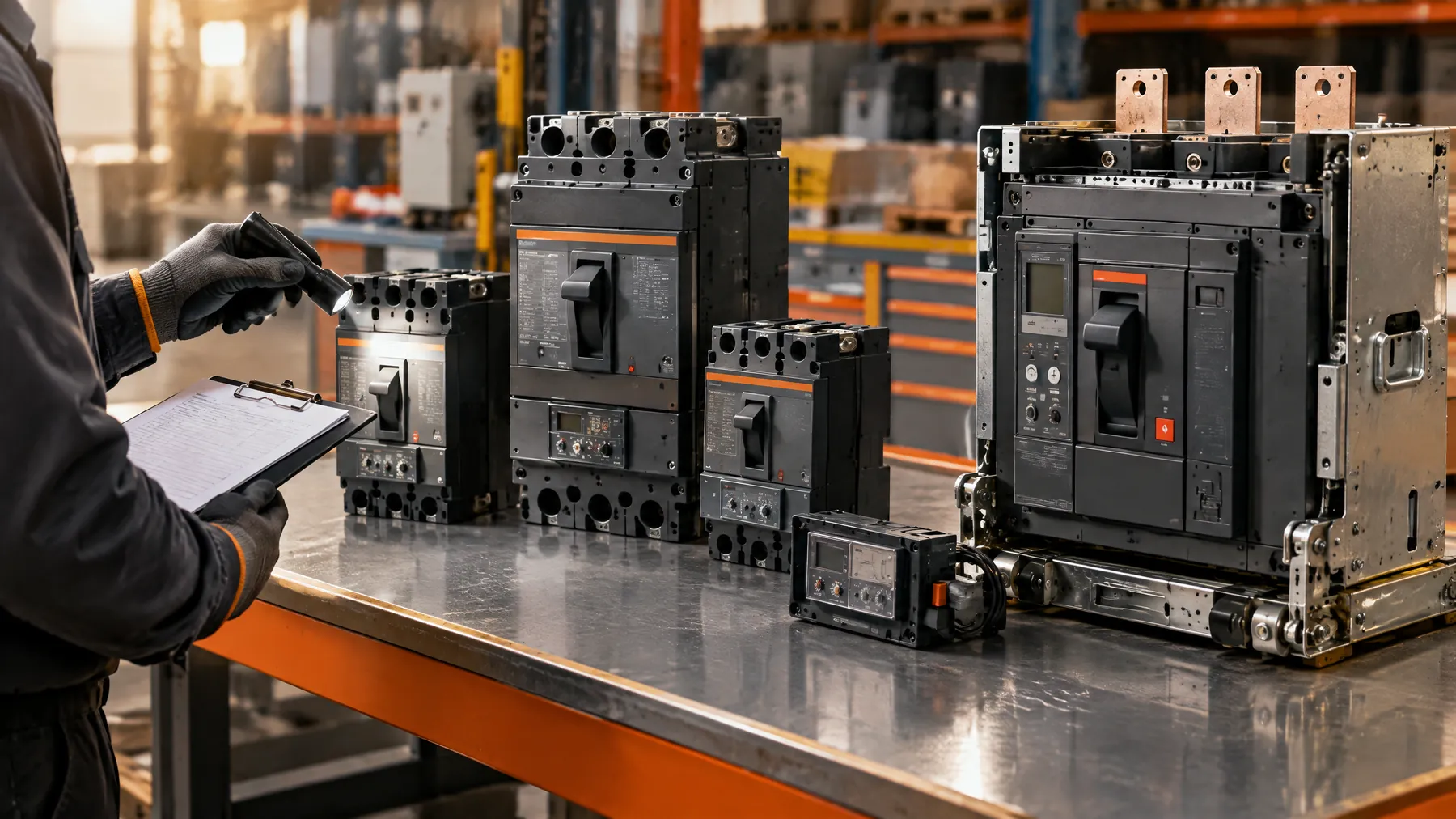
What affects marketability and value?
Marketability for 400–600 amp breakers depends on technical fit and buyer demand. Units with intact nameplates, common voltage classes (e.g., 480V or 600V), original trip units, and standard interrupting ratings move faster. Matched sets, unused spares, and recently removed, undamaged breakers attract rebuilders, EPCs, and facility buyers. Corroded or altered units and missing identification reduce interest. We review specs and photos to identify the right resale channel and timing without guaranteeing a price.
Manufacturer & Series
Recognized commercial and industrial manufacturers and current series increase buyer interest. Known series simplify compatibility checks and attract rebuilders and facilities seeking direct replacements or spares, which improves liquidity and resale pathways.
Interrupting Rating
Higher interrupting ratings and common AIC values broaden the buyer pool. Buyers need assured interrupting capacity for their systems; clear nameplate ratings make a breaker ready for evaluation and resale.
Physical Condition
Good mechanical condition, intact nameplates, and no evidence of overheating or corrosion greatly improve marketability. Damaged cases, missing parts, or signs of internal fault reduce buyer confidence and resale options.
Lot Size & Logistics
Larger quantities and accessible on‑site locations reduce per‑unit handling costs and increase interest from bulk buyers. Small single units can sell, but lot sales often receive quicker attention and better logistical efficiency.
Where this equipment is commonly found
These breakers are typically used as feeder mains, MCC mains, generator output breakers, and switchboard distribution devices in manufacturing, hospitals, data centers, campuses, and large commercial buildings. Knowing why a breaker was removed—planned upgrade, retrofit, or failure—helps determine remaining life and refurbishment needs. Provide maintenance history when available. Qualified electrical personnel must handle energized testing, disconnection, and safe removal before sale or pickup.
How to prepare the breaker for review
Preserve the breaker nameplate and any attached tags. Photograph the front, side, rear, nameplate close-up, trip unit, handle position, and accessory modules. Retain serial numbers, date codes, manuals, accessory kits, and original packing if available. Note signs of overheating, corrosion, or mechanical damage. Do not perform energized testing unless conducted by qualified electrical personnel. List exact locations and access notes to speed onsite inspection and removal scheduling. Also list any included mounting hardware or buswork.
Do not clean labels with harsh chemicals, dismantle the breaker for better photographs, remove copper, separate matched accessories, or energize an unknown unit. Keep the inventory dry, protected from impact, and associated with its records. Qualified personnel must control any testing, electrical isolation, disconnection, racking, rigging, or field removal.
How the sale moves forward
Frequently asked questions
Do you buy used or obsolete 400–600 amp breakers?
Yes—we consider used and older breakers, but purchase depends on identification, condition, and market demand for that series. Obsolete models without clear specifications or nameplates have limited markets. Send photos and nameplate data so we can evaluate potential buyers.
What photos do you need to get an offer?
Provide clear, well‑lit photos: close‑up of the nameplate, front view, side/rear, trip unit close‑up, handle position, and any accessories or damage. Do not attempt energized photos. Qualified electrical personnel must handle any live testing or disconnection.
What quantities do you buy, and do you handle shipping or removal?
We buy single units and full lots of 400–600 amp breakers. We can coordinate logistics depending on location and access, but energized disconnection and safe removal must be done by qualified electrical personnel. Provide site access details and preferred removal timeline.
How long will it take to get an offer?
Response time depends on identification quality, quantity, condition, location, and project complexity. Complete catalog information, readable labels, current photographs, and clear logistics details reduce follow-up questions. Large or installed inventories may require additional review before terms are final.