How do I identify a commercial generator for sale?
Identify a commercial generator by reading the nameplate and serial, confirming manufacturer and model, recording kW/kVA, standby/prime rating, voltage, phase, frequency, fuel type, year, and runtime hours. Note engine and alternator make, generator controls, breaker size, enclosure and tank details, and physical dimensions/weight. Provide photos and service records to support a purchase review.
What sellers should know
This guide explains the concrete pieces of information buyers and reviewers need to evaluate a commercial generator. The business evaluates qualifying inventory but does not guarantee purchase, pricing, testing, certification, or removal.
A practical identification includes nameplate data, runtime hours, engine/alternator model details, control panel type, and any recent load-bank or maintenance records. Photographic evidence and access information speed decisions and reduce follow-up questions. Clear, verifiable details are decisive for review eligibility.
Specifications that support a purchase review
Key specifications reviewers use to determine eligibility and value. Include exact readings from the unit and supporting documents where available.
Condition and documentation
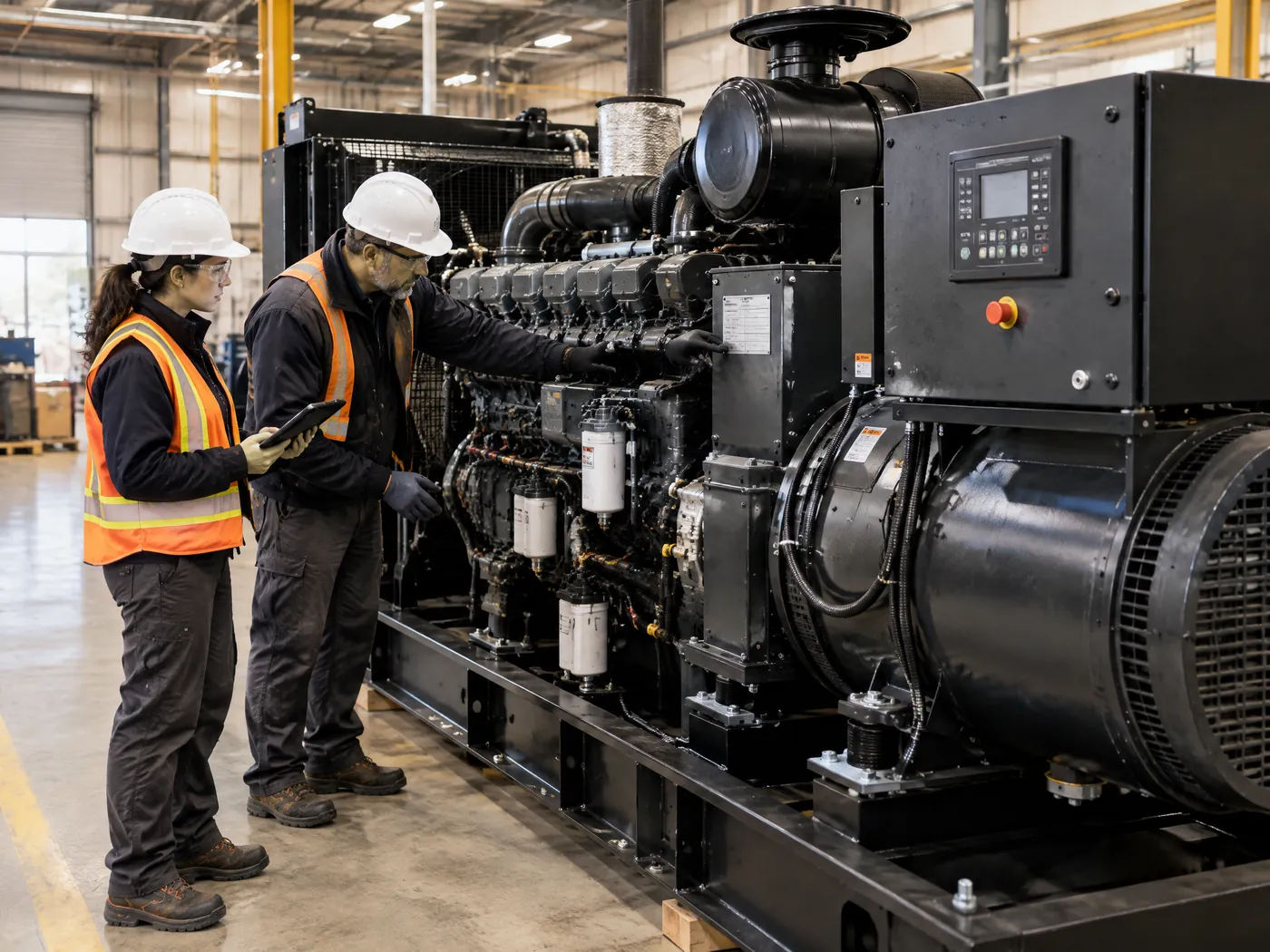
Condition is assessed from nameplate accuracy, visible wear, engine hours, recent maintenance, and test history. Note corrosion, evidence of heat or fuel leaks, enclosure damage, and whether the unit has been regularly exercised or load-bank tested. Sellers should supply hour meter screenshots, maintenance logs, and recent start/load-test notes where available.
What affects marketability?
Age and runtime hours
Newer units with low hours generally attract more buyers; however, thorough service records can offset higher hours. Both calendar age and operating hours are considered together.
Service history and test records
Maintenance logs, oil analysis, and load-bank test reports are strong evidence for review. Records that show regular servicing and recent tests reduce perceived risk.
Controls, emissions, and compliance
Control panels, generator emissions equipment, and local compliance (e.g., NFPA or state requirements) influence buyer suitability and potential refurbishment cost.
Quantity, compatibility, and spare parts
Multiple identical units, common alternator/engine makes, and available spare parts increase market interest and potential for grouped offers.
Photo and inventory checklist
Clear photo of the nameplate showing manufacturer, model, serial, and ratings
Close-up of engine nameplate and hour meter reading
Alternator nameplate and overall alternator view
Control panel with model and display visible (power on if safe)
Fuel tank and fuel connections, including capacity labeling
Exterior enclosure from multiple angles showing damage or corrosion
Interior compartment photos (if accessible) showing wiring and breaker
Overall unit dimensions and nearby access (clearance, doors, yard)
Pickup and logistics planning
Provide precise location (site address), access limitations, approximate dimensions and weight, lifting points, whether the unit is wired into a load or hardwired to building services, and any required permits or security procedures. State whether liquids and batteries will be removed prior to transfer and whether on-site skidding or fork access exists. The business reviews this information but does not commit to removal services or timelines.
Safety and scope boundary
Sellers must ensure the unit is safe to photograph and inspect. That typically means the unit is de-energized from the distribution system, fuel lines are secure, and site access complies with local safety rules. Do not assume reviewers will perform live testing on-site; provide documented test reports instead. Follow site and company safety policies when facilitating visits from inspectors or contractors.
Frequently asked questions
What single document speeds a purchase review?
A clear photo of the generator nameplate combined with a recent hour-meter photo and any maintenance logs is the single most effective packet for initial review.
Do I need a load-bank test?
A recent load-bank report is strong evidence of operability and reduces follow-up. It is not always required for review but it materially improves confidence in the unit’s condition.
How specific should location and access details be?
Be specific: provide site address, gate hours, nearest highway access, on-site equipment that can lift the unit, and any special handling restrictions or permits.
If the nameplate is missing or damaged, what helps?
Engine and alternator nameplates, serial tags on ancillary components, clear photos of control panels, and service records can often substitute, but missing primary nameplate data will require more documentation to verify specifications.