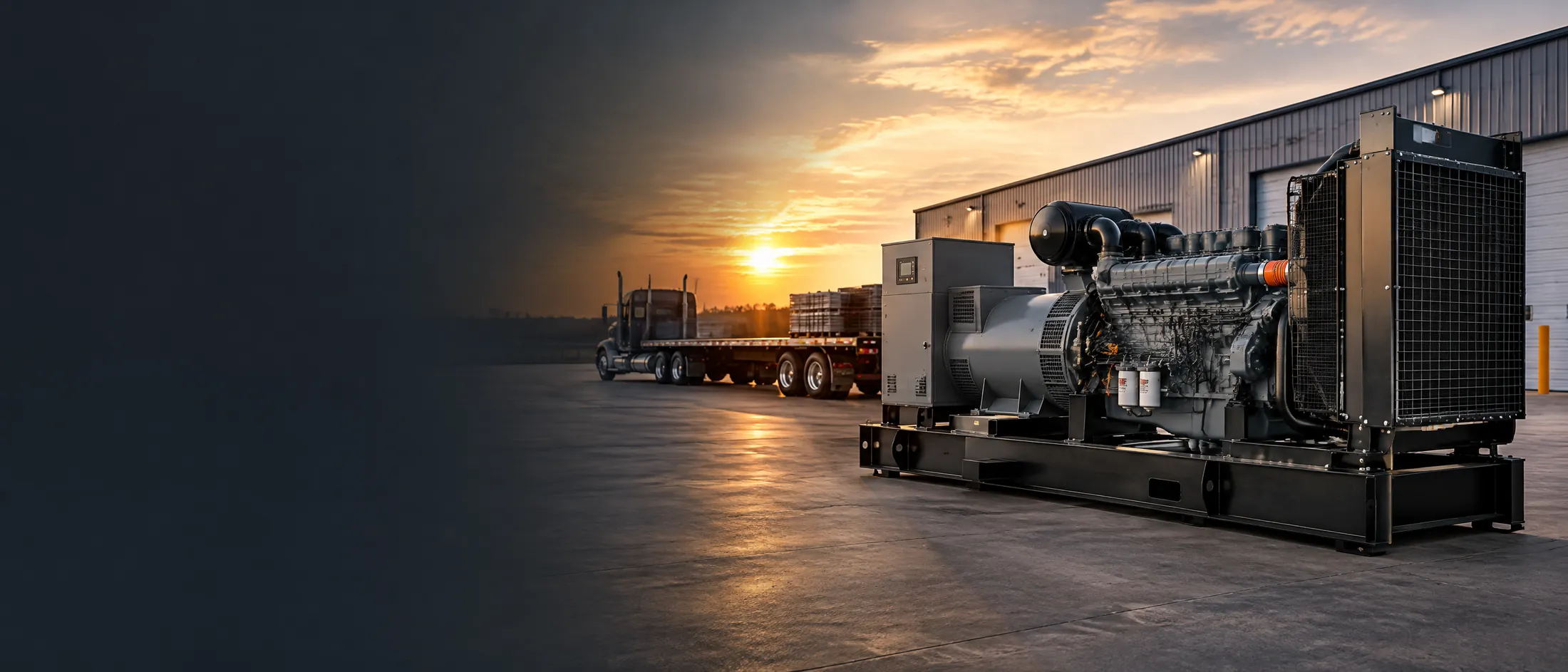
Do you buy diesel generator sets and what information matters most?
We review qualifying diesel gensets for potential purchase. The decisive specifications are manufacturer/model/serial, kW or kVA with standby or prime rating, voltage/phase/frequency, engine and alternator details, recorded run hours, year, enclosure and tank configuration, recent test history, condition, quantity and location — these items determine whether we proceed to a formal review.
What sellers should know
We consider commercial and industrial diesel generator sets from single units to complete fleets. We evaluate portable skid sets, trailer-mounted units, sound-attenuated enclosures, and package units designed for standby or continuous use.
We do not guarantee purchase, price, or removal. Instead, we perform a documented review of qualifying equipment based on the specifications and evidence you provide. The buyer decision depends on technical fit, condition, market demand and logistics constraints at the time of review.
Specifications that support a purchase review
When submitting gensets for review, include the following decisive specifications and supporting evidence. Each entry below explains why it matters to our assessment.
Condition and documentation
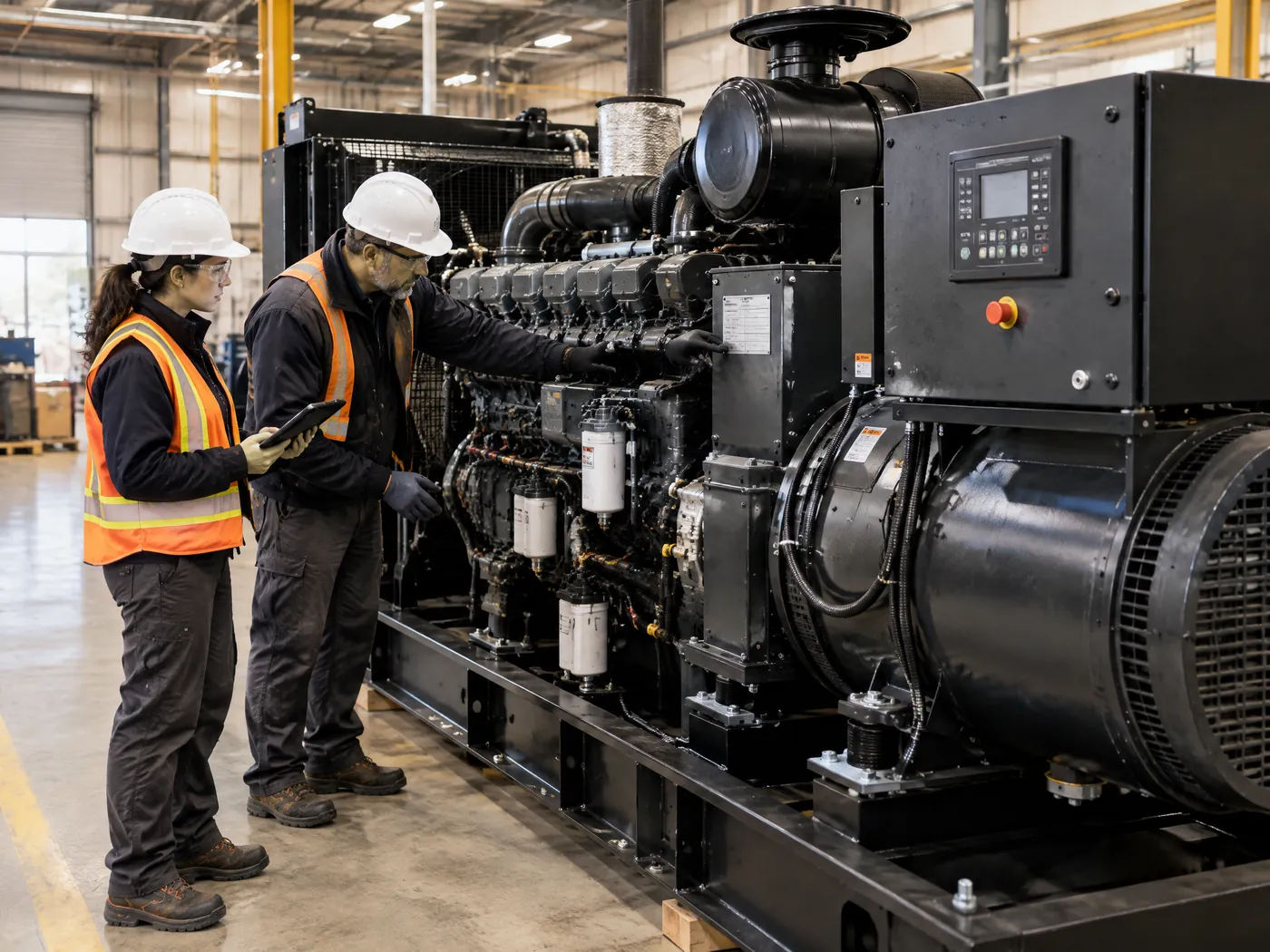
Condition assessments should be honest and supported by evidence. We review units from serviceable used to damaged; acceptable candidates typically have verifiable run-hours, maintenance records, recent load tests or run logs, and clear photos showing the control panel, engine room, alternator, enclosure, and nameplate. Items that materially affect a review include signs of saltwater corrosion, smoke-damaged internals, fuel contamination, seized engines, missing major components, or environmental spill history. Provide service invoices, load bank reports, and recent start/run video when available.
What affects marketability?
Demand and specification fit
Buyer interest varies by kW class, voltage, and application. Industrial 500–2,000 kW prime units have different markets from 20–200 kW standby packages. We weigh whether the specifications match current secondary-market demand.
Parts and serviceability
Common engines and alternators with available parts are more attractive. Older or rare models may require evaluation of rebuild versus scrap value.
Emissions and compliance
Tier level or EPA compliance affects redeployment options in regulated areas. Emission control equipment or SCR aftertreatment may change purchaser interest.
Test history and documentation
Recent load bank tests, maintenance logs, and run-hour records materially increase confidence and speed a review.
Photo and inventory checklist
Nameplate / data plate showing kW/kVA, voltage, phase, frequency, and serial number
Engine nameplate and serial
Alternator nameplate and serial
Control panel / controller close-up
ATS or breaker assembly
Full-unit exterior shots from all sides, including enclosure and fuel tank
Photos of any visible corrosion, leaks, or damage
Photos showing access points (doors, lifting points) and skids/trailer tags
Pickup and logistics planning
Provide exact location (city, state), site access notes (gate hours, crane or forklift availability), unit dimensions and weight, and the number of units. Transportation responsibility is defined only in agreed purchase terms. Clear logistics data affect whether a unit is practical to move and whether it progresses to an offer discussion.
Safety and scope boundary
Do not perform hazardous work for the sake of listing equipment. For review, disclose test conditions, who performed tests, and whether load bank runs were supervised by qualified personnel. We will not provide operating or safety instructions. If units have hazmat or spill history, include the remediation documentation.
Frequently asked questions
What evidence most speeds a review?
A readable nameplate photo (genset, engine, alternator), recent run hours, maintenance records, and an existing video recorded by qualified personnel showing the unit operating. Load bank reports and emissions paperwork are also helpful.
Do you buy damaged or salvage diesel gensets?
We review damaged or salvage units on a case-by-case basis. Decision drivers include the extent of damage, availability of major components, and transportability. Full disclosure and photos of the damage are required for assessment.
How do you treat units with unknown hours or missing paperwork?
Missing run hours or records reduce the likelihood of a favorable review but do not exclude consideration. Additional evidence such as serial numbers, recent inspection photos, or the seller’s operational history with the unit can substitute.
Will you sign nondisclosure or purchase agreements early in the process?
We review documentation and may request standard forms, but we do not guarantee execution of NDAs or purchase contracts during initial qualification. Any contractual steps occur later in the process if both parties agree.