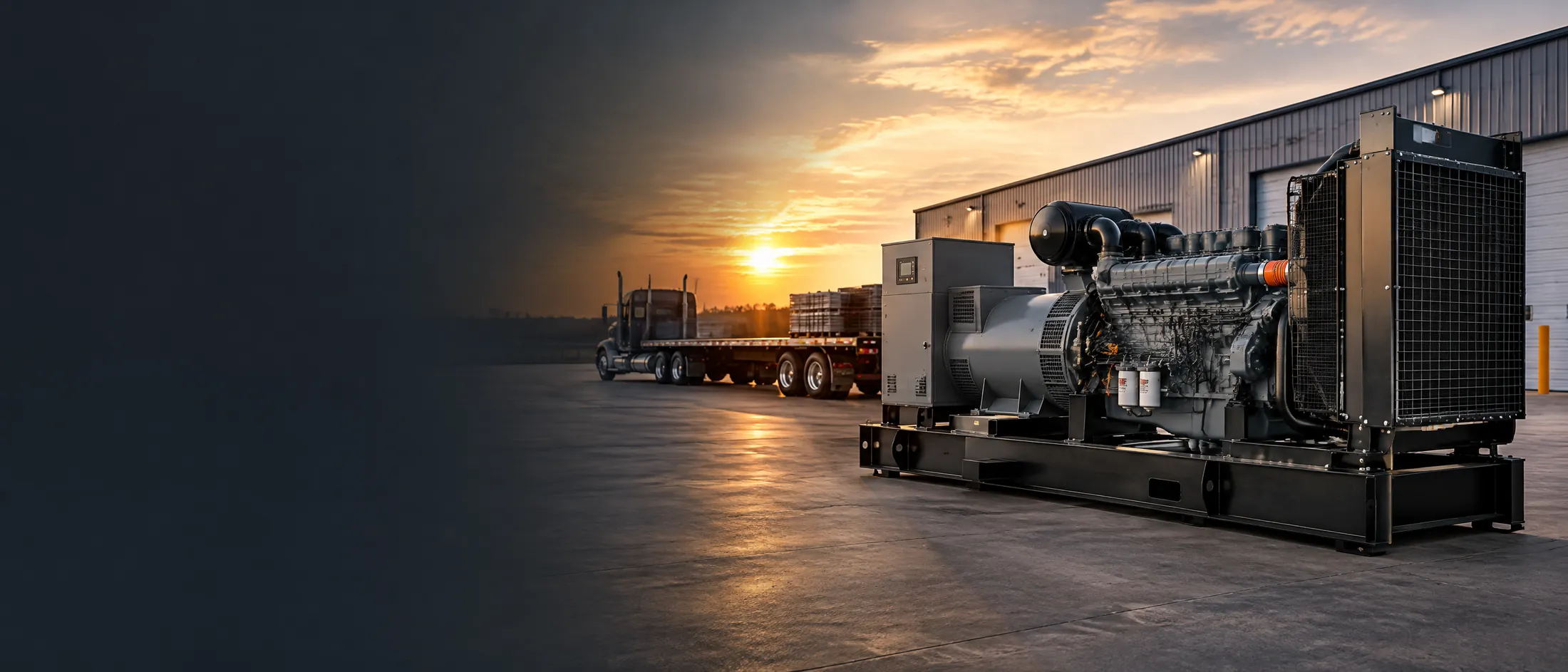
Do you review enclosed (weather-protected, sound-attenuated) generator sets for purchase?
We review qualifying enclosed generators for purchase consideration. The decisive specifications are manufacturer/model/serial, kW/kVA and standby or prime rating, fuel type, voltage/phase/frequency, year and hours, engine and alternator models, control system and breaker details, enclosure type, tank and skirt configuration, test/run history, condition, quantity, and site access.
What sellers should know
This page explains what we review when evaluating enclosed generator sets — units with integrated weather and noise control enclosures used at commercial, industrial, or institutional sites. We assess technical details and supporting evidence to determine eligibility for purchase consideration.
Typical enclosed units include diesel or natural-gas sets from manufacturers such as Caterpillar, Cummins, Kohler, MTU, FG Wilson, Generac, and Mitsubishi. Relevant models range from small sound-attenuated 30 kW units to containerized 2,000 kW systems. We do not represent manufacturers and do not promise purchase or pricing based on this page alone.
Specifications that support a purchase review
The following specifications are decisive in a purchase review. Provide as many exact data points and supporting documents or photos as possible.
Condition and documentation
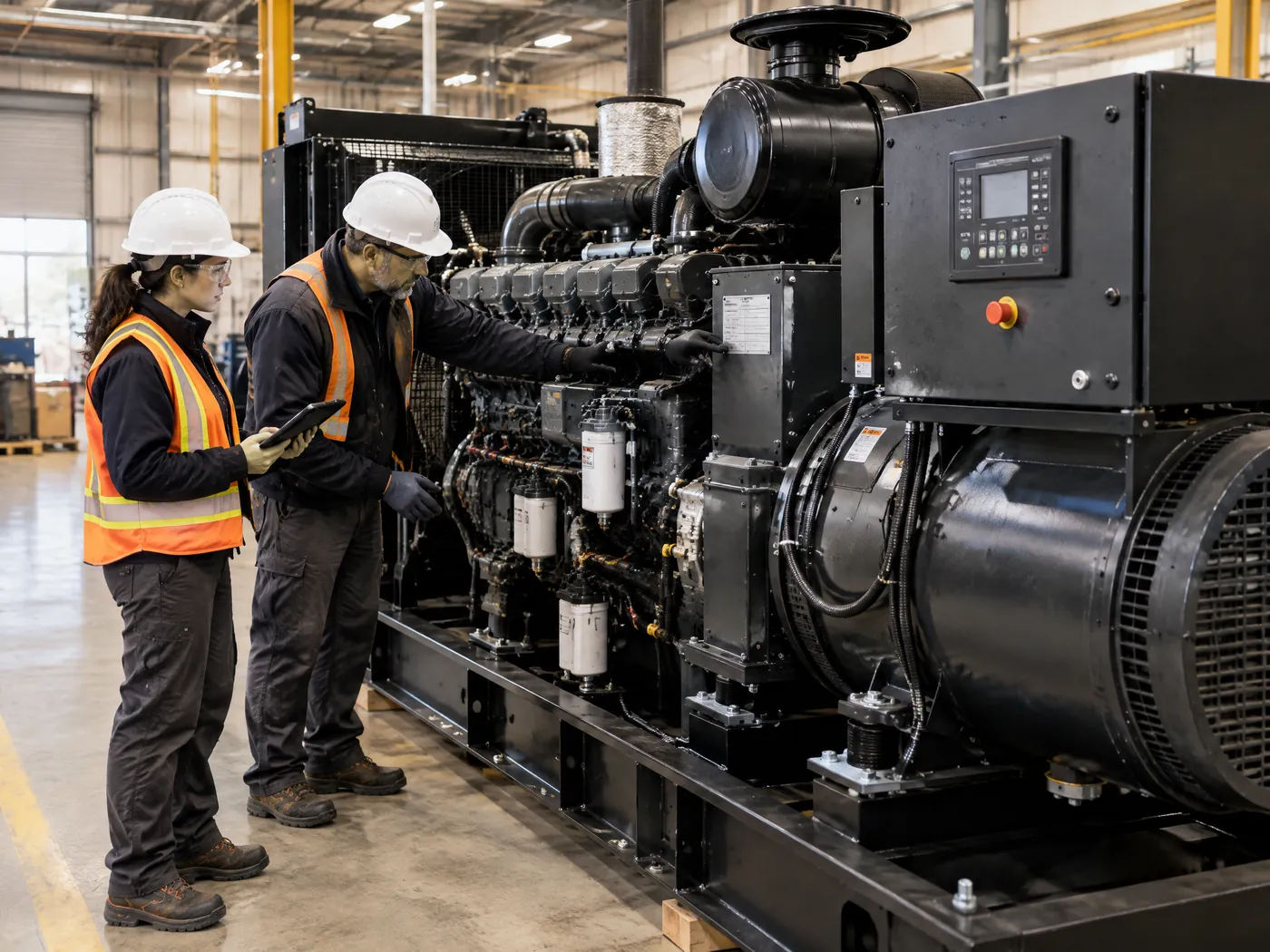
We consider enclosed generator sets in a range of conditions: surplus new/unused in crate, lightly used with documented service, or older units that require refurbishment. Units heavily corroded, cannibalized for parts, or missing critical components may still be considered if quantities, location, and salvage value justify a review. We do not guarantee purchase based on condition alone.
What affects marketability?
Emissions and Compliance
Local and regional emissions regulations (Tier/Stage) and availability of compliance documentation influence buyer interest in diesel gensets.
Fuel and Installation Type
Natural gas or propane units often have different demand profiles than diesel; permanent installations with buried fuel lines or generator rooms can raise removal costs.
Age and Hours
Lower-hour, newer units typically attract more buyers. High-hour but well-maintained sets can be attractive to refurbishment markets.
Sound Attenuation and Enclosure Quality
Factory sound-attenuated enclosures and weatherproof ratings (e.g., NEMA, IP) increase usable life and resale value compared with makeshift covers.
Photo and inventory checklist
Engine and alternator nameplates (close-up, legible)
Generator nameplate showing model, serial, kW/kVA, voltage, phase, frequency
Control panel (model, firmware, GSM/ATS modules) and hour meter reading
Exterior enclosure views from all sides (doors closed and open)
Fuel tank and fuel lines, including skid or belly-tank configuration
Breaker/transfer switch and primary electrical connections
Evidence of corrosion, oil leaks, or mechanical damage
Load bank or run test photos/records if available, and maintenance logs
Pickup and logistics planning
When submitting a unit for review, include exact location, site access limitations, lifting and removal constraints (e.g., crane access, door openings, site hours), and estimated unit dimensions and weight. We assess removal complexity as part of a purchase review but do not provide or guarantee removal, transport, or timing.
Safety and scope boundary
Provide information only after confirming site safety and owner authorization. We require that qualified personnel prepare units for inspection and that sellers comply with applicable site safety rules and legal requirements. We do not provide procedural safety instructions or certify on-site practices.
Frequently asked questions
Do you buy weather-protected diesel generators of any size?
We review enclosed diesel generators across a broad size range, from smaller sound-attenuated 30–150 kW sets to large containerized 500–2,000 kW installations. The decisive factors are clear identification (model/serial/ratings), hours and maintenance history, enclosure condition, and site logistics.
What documentation speeds a purchase review?
Maintenance records, original spec sheets/nameplates, run-test/load-bank reports, emissions certificates, transfer switch and breaker specs, and proof of ownership all accelerate evaluation.
Will you consider units that haven’t been run recently or lack load tests?
Yes. We accept units without recent run tests when other documentation and photos are strong, but lack of test history typically reduces market interest and may require onsite inspection to proceed.
Do you accept units with aftermarket enclosures or modified exhaust systems?
We review modified units, but modifications affect marketability. Provide full photos and documentation of modifications, including any reinforcements, acoustic treatments, or emissions-control changes.