Do we buy air circuit breakers?
Yes—We buy air circuit breakers depending on manufacturer, exact catalog/series, ampere/frame/trip settings, voltage class, interrupting rating, condition, quantity, location, completeness, and current market demand. Send full nameplate photos and serial numbers so we can confirm compatibility and testing options. Removal and energized work must be handled by qualified personnel; we evaluate each lot and provide firm offers after inspection or detailed documentation.
What sellers should know
Surplus Generator Buyers purchases commercial and industrial air circuit breakers from decommissioned switchgear, plant upgrades, and liquidation projects nationwide. We evaluate ACBs by manufacturer, exact catalog or series, frame and trip ratings, interrupting capacity, and overall mechanical and electrical condition. Provide serials and nameplate photos for a faster review. We buy single units and full MCC sections. To get an offer, email detailed photos and specifications or call our acquisitions team to arrange an inspection and logistics discussion. Removal, disconnection, and any energized testing must be performed by qualified electricians or service technicians. We can advise on local riggers and transport partners once we confirm lot size.
Examples we review
Use the list below as an identification guide, not a promise that every unit will qualify. The exact model, configuration, condition, quantity, location, completeness, and present demand still control the purchasing decision.
What information should you send?
A complete submission lets a buyer answer the seller’s real question: whether this exact breaker or inventory has a practical commercial market. Copy identifiers exactly as shown and support them with current photographs.
Manufacturer (name on nameplate)
Complete catalog/series/model number and serial number
Ampere rating, frame size, and trip unit type/settings
Voltage, number of poles, and interrupting rating (kAIC) if shown
Condition and testing history (last test date, observed faults)
Quantity, exact location on site, and availability for removal
What affects marketability and value?
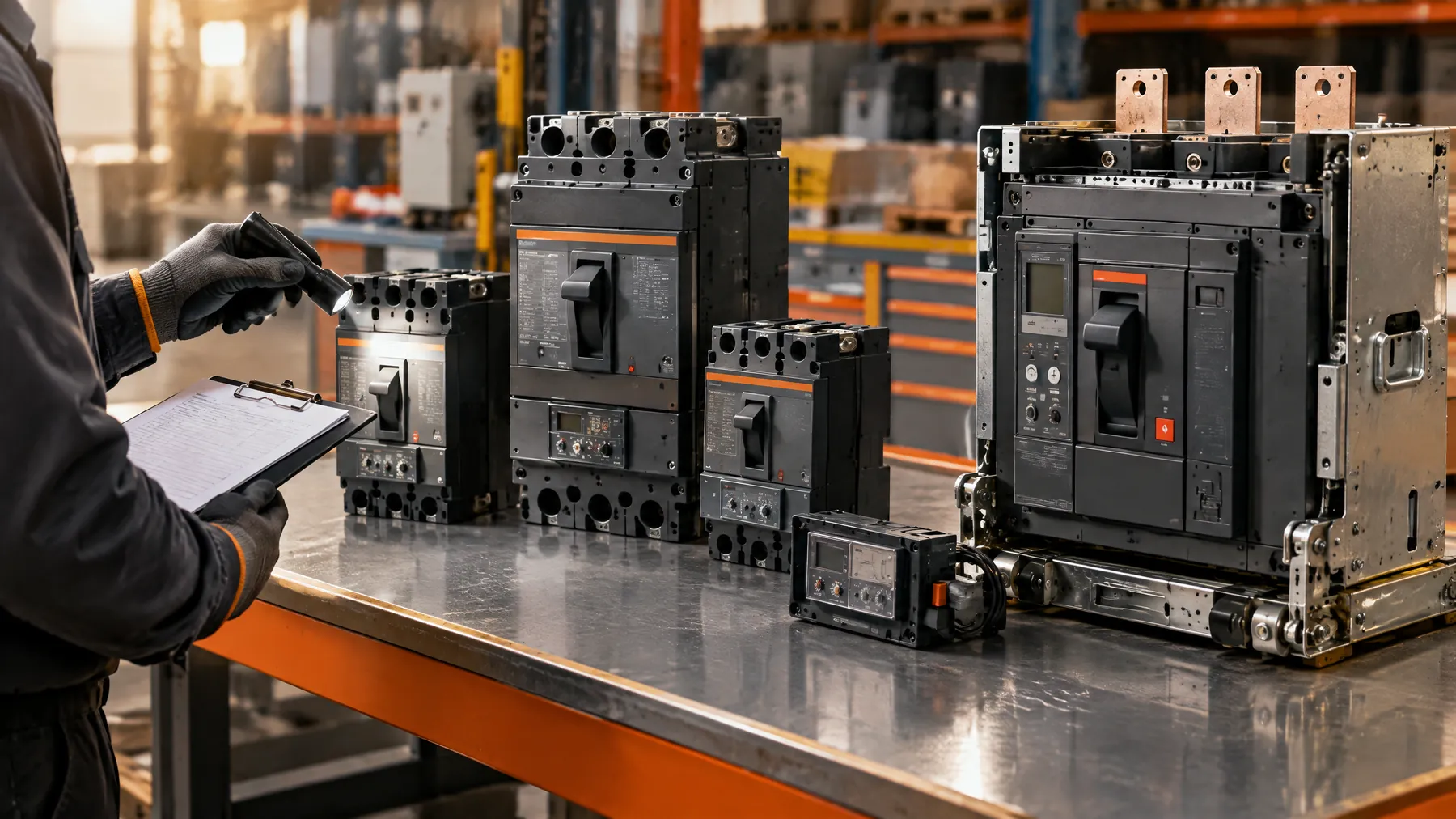
Air circuit breakers are marketable when specs match common retrofit and spares needs. Units with current trip technology, high interrupting ratings, standard frame sizes, and intact draw-out mechanisms are in steady demand for plant expansions, temporary power, and inventory stocking by contractors. Complete nameplates, OEM trip units, and available accessories increase resale value. Obsolete frames can still sell if parts or trip modules are usable. Voltage class (480–600V) and recorded kAIC ratings are particularly important. Location and quantity affect logistics and net value. We do not assume operational status and consider required testing or refurbishment in our assessment.
Manufacturer Reputation
Well-known OEMs typically have steadier demand. Buyers look for recognizable names and compatible trip units. Identification reduces de-risking time. Lesser-known brands can still sell if parts or retrofit trip modules are common.
Interrupting Rating
High interrupting capacity (kAIC) increases applicability for main feeders and allows resale into tough service environments. Buyers verify nameplate kAIC and matching frame rating before progressing to price and logistics evaluation.
Trip Unit Type
Electronic trip units, adjustable protections, and communications options make ACBs more valuable. Spare or replaceable trip modules speed resale. Document firmware versions and model numbers when present to aid market matching.
Mechanical Condition
Smooth draw-out action, intact racking mechanisms, and minimal burn or corrosion drive higher interest. Mechanical wear often dictates refurbishment costs, so clear photos and notes on mechanical faults help us price accurately.
Where this equipment is commonly found
ACBs are used in large switchboards, MCCs, main distribution sections, and portable power skids in commercial and industrial sites. Buyers ask where the breakers were installed because project history shows duty cycle, maintenance, and exposure to contaminants. Breakers removed after short service lives or planned upgrades fetch better interest than those from fire, flood, or prolonged arcing events. Provide past maintenance records and testing history.
How to prepare the breaker for review
Before removal, preserve nameplates, serial numbers, and the trip-unit module. Photograph the breaker in-situ and out-of-cabinet: clear images of nameplates, front and rear connections, draw-out racking mechanisms, control wiring, and any accessory modules. Note stickers, test date labels, and mechanical damage. Leave energized work and disconnection to qualified electricians. Package components together and mark which unit they belong to. Email high-resolution photos and a short description of service history. Include quantity and location details.
Do not clean labels with harsh chemicals, dismantle the breaker for better photographs, remove copper, separate matched accessories, or energize an unknown unit. Keep the inventory dry, protected from impact, and associated with its records. Qualified personnel must control any testing, electrical isolation, disconnection, racking, rigging, or field removal.
How the sale moves forward
Frequently asked questions
Do you buy used or obsolete air circuit breakers?
Yes, we consider used and obsolete air circuit breakers. Value depends on parts salvageability, trip-module compatibility, and condition. Provide nameplate photos and parts lists. We will not assume operability; qualified technicians should handle live testing or disconnection before shipment or inspection.
What photos and information do you need to get an offer?
Send high-resolution pictures of the nameplate, front and rear terminations, draw-out racking mechanism, trip unit barcode/label, control wiring, and any damage or test stickers. Include a wide shot showing location and rack or cabinet layout. Email files or share cloud links with unit counts.
What quantities do you buy and do you handle shipping or removal?
We buy single air circuit breakers and large consignment lots. Quantity affects offers and available haulage options. We can coordinate transport partners and local rigging once terms are agreed, but removal and energized disconnection must be completed by the seller’s qualified personnel or pre-approved contractors.
How long until I receive an offer?
Response time depends on identification quality, quantity, condition, location, and project complexity. Complete catalog information, readable labels, current photographs, and clear logistics details reduce follow-up questions. Large or installed inventories may require additional review before terms are final.