Do we buy molded-case circuit breakers (MCCBs)?
Yes—Surplus Generator Buyers purchases molded-case circuit breakers (MCCBs) when we can verify manufacturer, exact catalog/series, ampere and interrupting ratings, physical and electrical condition, quantity, location, and accessory completeness. Offers depend on current demand and whether units are tested or have documentation. Provide clear ID photos, rating data, and removal details so we can evaluate and return an offer promptly.
What sellers should know
Molded-case circuit breakers (MCCBs) are common commercial and industrial protective devices used in switchboards, motor control centers, and distribution panels. Surplus Generator Buyers reviews MCCBs from manufacturers and series with identifiable nameplates and complete ratings. We evaluate breakers for reuse as spares, rebuilds, or component harvest. Sellers should expect an equipment review that values exact catalog numbers, interrupting capacity, trip type, condition, and quantity. We do not install equipment; qualified technicians must handle energized or live work during disconnection and removal.
Examples we review
Use the list below as an identification guide, not a promise that every unit will qualify. The exact model, configuration, condition, quantity, location, completeness, and present demand still control the purchasing decision.
What information should you send?
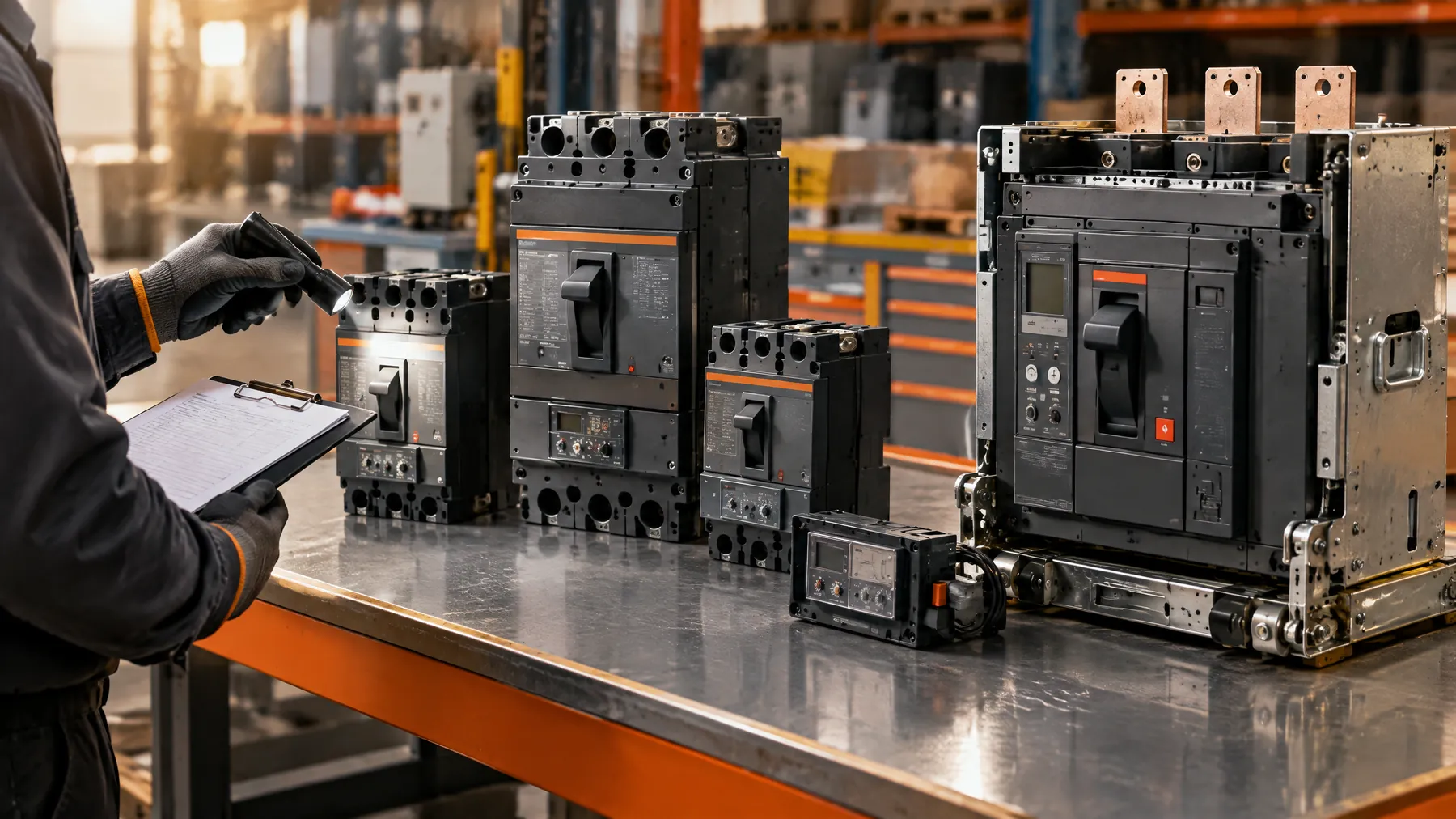
A complete submission lets a buyer answer the seller’s real question: whether this exact breaker or inventory has a practical commercial market. Copy identifiers exactly as shown and support them with current photographs.
Manufacturer name on nameplate
Complete catalog/model and series number
Ampere/frame size and trip type (electronic/thermal-magnetic)
Voltage rating, poles, and interrupting current (kAIC)
Physical condition and testing/status (proof of test if available)
Quantity available and exact storage/removal location
What affects marketability and value?
MCCBs remain marketable when they match common industrial specifications and known series. High-demand attributes include familiar manufacturer names, common ampere frames, adequate interrupting ratings, drawout designs, and available trip units. Breakers with factory options, documentation, and recent testing attract engineering buyers and contractors. Obsolete or damaged units may still have value for parts or rebuilds, but marketability drops when ratings are unclear or labels are missing. We evaluate each lot on specifics rather than promising value for every unit.
Manufacturer and Series
Recognizable brands and intact series/catalog numbers increase demand because buyers match replacements exactly. Known series simplify compatibility checks and often command stronger interest for spares and rebuild programs.
Interrupting Rating
Higher interrupting capacity (kAIC) is more desirable for industrial feeders. Units rated for common commercial fault levels are easier to resell to contractors and plant maintenance teams.
Trip Unit Condition
Removable electronic or thermal trip units in working condition add value. Factory-configured trips with documentation reduce buyer risk and often sell faster than unknown or modified trip assemblies.
Completeness and Accessories
Breakers accompanied by handles, racking kits, shunt trips, and auxiliary contacts are more marketable. Complete assemblies reduce buyer refurbishment time and increase usefulness as drop-in spares.
Where this equipment is commonly found
Commercial uses for MCCBs include main feeders in distribution gear, motor protection in manufacturing, UPS input protection in data centers, and subcontractor replacement spares. Project history matters because breakers removed from routine maintenance programs or short-term rentals are often cleaner and better documented. Units from emergency replacements or faulted circuits require inspection and testing before resale. Always have qualified electrical personnel disconnect and de-energize equipment before removal or handling.
How to prepare the breaker for review
Preserve nameplates, serial numbers, trip unit modules, and any factory labels or calibration tags. Photograph breaker fronts, rating plates, terminal bus, accessory mounting points, and any damage. Keep trip units and accessory hardware with the breaker, or clearly note missing items. Do not attempt live testing unless done by qualified personnel. Provide packing and removal constraints, crane or forklift access, and whether breakers are palletized or still in panels.
Do not clean labels with harsh chemicals, dismantle the breaker for better photographs, remove copper, separate matched accessories, or energize an unknown unit. Keep the inventory dry, protected from impact, and associated with its records. Qualified personnel must control any testing, electrical isolation, disconnection, racking, rigging, or field removal.
How the sale moves forward
Frequently asked questions
Do you buy used or obsolete MCCBs?
Yes—we consider used and obsolete MCCBs case-by-case. Obsolete breakers may still sell for parts or rebuilds if identification is clear. Condition, completeness, and interrupting ratings determine interest. Provide photos and identification and we will evaluate market options.
What photos and documentation should I send?
Photograph the rating/nameplate, front handle, trip unit, terminal connections, and any damage. Include close-ups of catalog numbers and serials. Attach any test reports, maintenance records, or original spec sheets to speed evaluation.
How many breakers do you buy and who handles shipping or removal?
We buy single pieces to full equipment lots nationwide. Provide quantity, weight estimate, and site access details. We can arrange buyer pickup or coordinate third-party freight. Qualified personnel must perform disconnection and safe removal of energized equipment.
Do you require testing before making an offer?
We prefer test documentation for higher-value units, but will still evaluate untested breakers when identification is clear. Any energized testing, functional checks, or disconnection must be done by qualified electrical technicians prior to removal or shipment.