Do we buy motor circuit protectors?
Yes—Surplus Generator Buyers buys motor circuit protectors depending on manufacturer, exact catalog/series, ratings, condition, quantity, location, completeness, and current market demand. We evaluate nameplate details, trip units, and frame size. Provide clear photos, serial/catalog numbers, and removal logistics for a prompt offer. Final decisions require inspection; qualified personnel must safely handle energized testing and disconnection.
What sellers should know
Motor circuit protectors (MCPs) are specialized breakers used to protect motors from overload and short-circuit damage. Surplus Generator Buyers purchases commercial and industrial MCPs nationwide when they match buyer needs. We look for clear manufacturer and catalog data, trip style (thermal-magnetic or electronic), frame/ampere ratings, horsepower or locked-rotor protection settings, interrupting capacity, and service history. Provide quantity, condition, and site location for the quickest offer. Do not attempt live testing yourself; qualified electrical personnel should handle energized inspection, disconnection, and removal for safety and compliance.
Examples we review
Use the list below as an identification guide, not a promise that every unit will qualify. The exact model, configuration, condition, quantity, location, completeness, and present demand still control the purchasing decision.
What information should you send?
A complete submission lets a buyer answer the seller’s real question: whether this exact breaker or inventory has a practical commercial market. Copy identifiers exactly as shown and support them with current photographs.
Manufacturer name as shown on the nameplate
Complete catalog/model and series number
Ampere/frame and trip adjustment or trip unit details
Voltage, poles, and interrupting rating where applicable
Condition, visible damage, and any recent test records
Quantity available and removal/shipping location
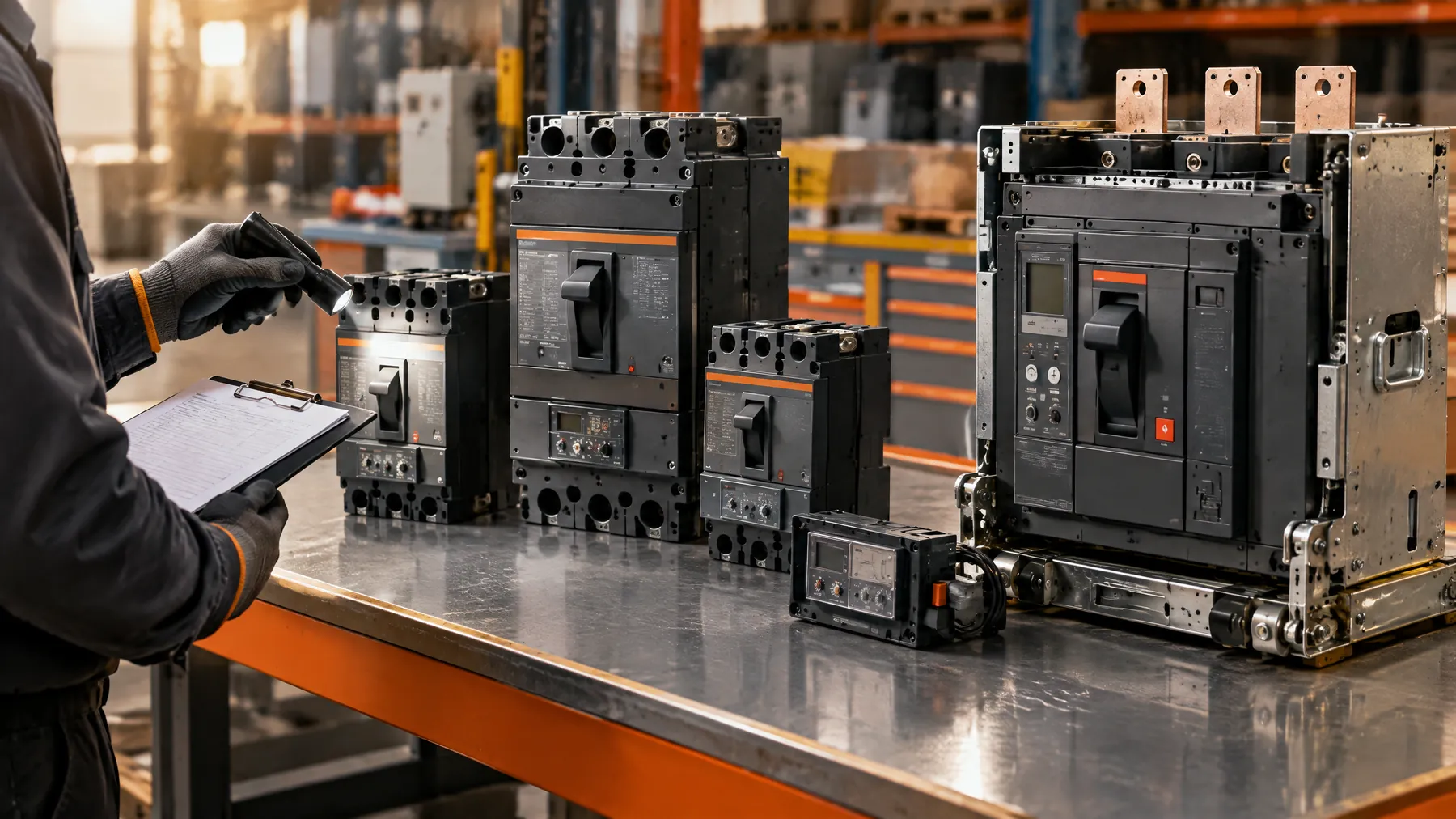
What affects marketability and value?
Marketability of motor circuit protectors hinges on identifiable specs and usable condition. Clear nameplates with manufacturer, exact catalog/series, ampere/frame, trip type, and interrupting rating are essential. MCPs from widely used commercial motor protection series and those with adjustable electronic trip units tend to sell faster. Quantity matters a lot. Complete units with handles, auxiliary contacts, and recent test records increase interest. Obsolete series or missing trip modules can still move, but offers reflect reconditioning or remanufacture needs rather than full retail value.
Nameplate clarity
Clear nameplate data lets buyers confirm catalog numbers, amperage, frame and interrupting rating without teardown. Missing identification often reduces offers because testing or teardown is required before resale or remanufacture decisions.
Trip unit type
Thermal-magnetic, electronic, or adjustable trip modules determine application fit and buyer demand. Electronic trip units with adjustable curves often command better interest due to flexibility and modern protective coordination.
Quantity & lot
Lots from plant shutdowns or inventory reductions move faster. Buyers prefer dozens to hundreds because logistics and testing scale favor larger lots; single pieces still sell but may take longer and attract lower offers.
Condition & history
Corrosion, mechanical damage, and missing trip modules reduce reuse value. Maintenance logs, installation age, and reason for removal help estimate remaining service life and whether units are resale-ready or better suited for parts or refurbishment.
Where this equipment is commonly found
Motor circuit protectors are found in motor control centers, factory production lines, pump stations, HVAC chillers, and large generator prime-mover motor circuits. Buyers want to know the original application because duty cycles, overload settings, and environmental exposure affect remaining life. Project history—installation date, reason for removal, and maintenance records—helps us assess reuse potential. When offering MCPs, include whether units were in corrosive, high-vibration, or clean indoor environments. Qualified electricians must perform any live verification and disconnection.
How to prepare the breaker for review
Before removal or listing, preserve the factory nameplate and any accessory parts such as handles, trip modules, auxiliary contacts, and internal arc chutes. Photograph the front nameplate, whole unit, removed trip unit labels, and interior terminal/bus connections. Include close-ups of catalog/model numbers, serial tags, and any damage or corrosion. Note how units were mounted and collect any recent test or maintenance records. Do not power or disconnect energized equipment yourself; a qualified electrical team must perform de-energization and safe removal.
Do not clean labels with harsh chemicals, dismantle the breaker for better photographs, remove copper, separate matched accessories, or energize an unknown unit. Keep the inventory dry, protected from impact, and associated with its records. Qualified personnel must control any testing, electrical isolation, disconnection, racking, rigging, or field removal.
How the sale moves forward
Frequently asked questions
Do you buy used or obsolete motor circuit protectors?
Yes. We consider used and obsolete motor circuit protectors when manufacturer, catalog/series, and condition support reuse or parts value. Obsolete modules may still sell for spares or remanufacture. Provide photos, serials, and quantity so we can assess. Qualified personnel should handle energized checks and removal.
What photos and details do you need to make an offer?
Photograph the full unit, clear nameplate front and rear, trip unit label, interior terminal/bus connections, and any accessory parts. Include close-ups of catalog/model and serial numbers and visible damage. High-resolution images from multiple angles speed accurate offers.
What quantities do you buy and do you arrange removal or shipping?
Small lots are acceptable, but large quantities from decommissioning are preferred for national resale. Tell us quantity, location, and removal status. We can quote for pickup, palletized freight, or provide guidance. All energized disconnection and lifting must be done by qualified contractors.
How long does it take to get a preliminary offer?
Response time depends on identification quality, quantity, condition, location, and project complexity. Complete catalog information, readable labels, current photographs, and clear logistics details reduce follow-up questions. Large or installed inventories may require additional review before terms are final.