Do we buy draw-out circuit breakers?
Yes—We buy draw-out circuit breakers depending on manufacturer, exact catalog/series, ratings, condition, quantity, location, completeness, and current demand. Send full identification, serial and frame numbers, and clear photos so we can evaluate. Breakers with intact carriages, racking mechanisms, or maintenance history are most marketable. Qualified personnel must handle any energized testing, disconnection, and removal.
What sellers should know
We buy commercial draw-out circuit breakers removed from switchgear, MCCs, generator switchboards, and transfer panels nationwide. Sellers should provide the complete catalog/series and nameplate data, frame and trip ratings, and carriage condition. We assess age, service history, and whether units include racking hardware or accessories. Offers depend on exact fit to current demand and resale channels. Do not energize or operate equipment; qualified personnel must perform any live testing, isolation, and removal prior to shipment.
Examples we review
Use the list below as an identification guide, not a promise that every unit will qualify. The exact model, configuration, condition, quantity, location, completeness, and present demand still control the purchasing decision.
What information should you send?
A complete submission lets a buyer answer the seller’s real question: whether this exact breaker or inventory has a practical commercial market. Copy identifiers exactly as shown and support them with current photographs.
Manufacturer and brand
Complete catalog/series and model number (full stamping)
Ampere rating, frame size, and trip unit type
Voltage class, pole count, and interrupting/ICR rating
Operational condition and recent testing or maintenance records
Quantity available and storage or installation location
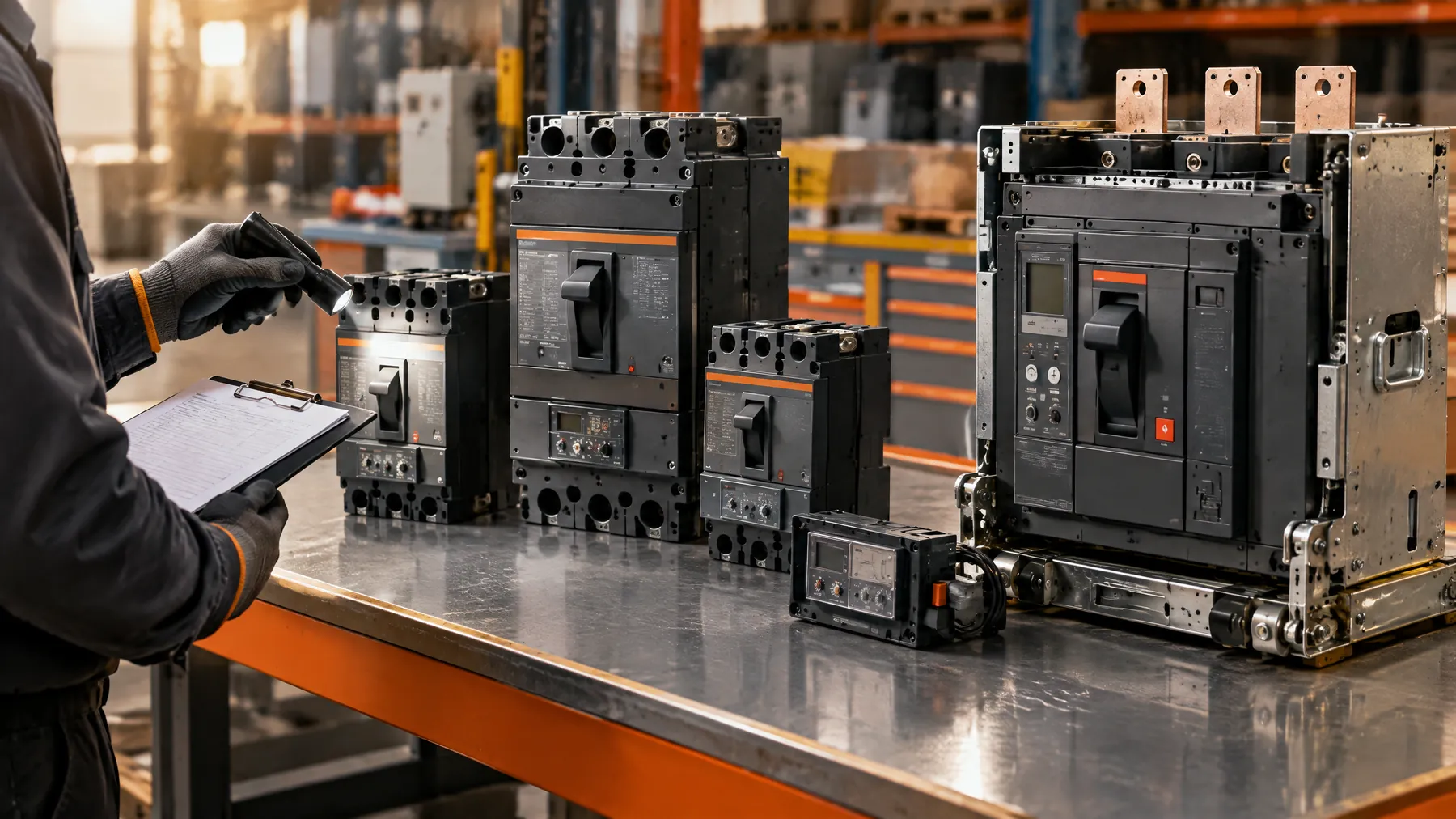
What affects marketability and value?
Draw-out circuit breakers are marketable when they match in-service replacements or spare lists used by service centers and contractors. Standard frames, common trip units, intact racking, and clear nameplates speed resale. Accessories and original carriages raise buyer interest. Rare or heavily modified units may still sell to rebuilders but often take longer. Offers reflect condition, completeness, and current market demand; not every breaker will receive a purchase offer.
Manufacturer & Series
Breakers from common OEMs and current series have broader aftermarket demand. Exact series and OEM parts compatibility shorten resale cycles and increase price compared to obscure or discontinued lines that require specialty buyers or rebuild work.
Frame & Trip Fit
Matching frame size and trip unit type simplifies replacement and attracts service centers. Universal or easily replaceable trip units are more liquid than welded or custom trip assemblies.
Carriage & Accessories
Intact draw-out carriages, racking mechanisms, and mounting hardware significantly boost value. Missing carriage parts or damaged racking often reduce an item to parts or scrap, increasing handling and rebuild costs for buyers.
Documentation & History
Maintenance logs, calibration stickers, and recent test records lower buyer risk. Units with clear service history move faster and command stronger offers than unknown-history breakers that require inspection or full rebuild.
Where this equipment is commonly found
Draw-out breakers are common in industrial distribution, generator paralleling gear, motor control centers, and large commercial switchgear. Project history — including load cycles, fault events, and preventive maintenance — helps buyers estimate remaining life and rebuilder requirements. That context determines resale channels: OEM spares, rebuild shops, or parts markets. Never attempt energized verification; qualified electricians or technicians must handle live testing, disconnection, and removal.
How to prepare the breaker for review
Leave all nameplates, serial plates, and calibration stickers intact. Preserve the draw-out carriage, racking mechanism, interlocks, and auxiliary contacts. Photograph front, side, carriage, trip unit, nameplate, and any damage. Gather maintenance logs and test reports. Do not operate or energize breakers for photos. Qualified personnel must perform any live testing, disconnection, and removal prior to shipment or handling.
Do not clean labels with harsh chemicals, dismantle the breaker for better photographs, remove copper, separate matched accessories, or energize an unknown unit. Keep the inventory dry, protected from impact, and associated with its records. Qualified personnel must control any testing, electrical isolation, disconnection, racking, rigging, or field removal.
How the sale moves forward
Frequently asked questions
Do you buy used or obsolete draw-out breakers?
Yes, we evaluate used and obsolete draw-out breakers case-by-case. Demand, safety, and available rebuild paths determine interest. Older or discontinued series may move to rebuilders or parts markets. Provide identification, photos, and service history. Do not perform energized testing; qualified personnel must handle any live work.
What photos do you need to evaluate a draw-out breaker?
Photograph the breaker nameplate, full front and side views, the draw-out carriage with serial numbers, trip unit detail, racking mechanism, and any accessories. Include close-ups of rating stamps and damage. Do not energize equipment for photos; have qualified staff open or isolate equipment.
What about quantities and shipping/removal?
We buy single units and large lots depending on model demand. For bulk sales we can coordinate freight and removal quotes, or accept seller-arranged shipping. On-site disconnection or hot work must be performed by qualified electricians. Provide exact quantities, locations, and any rigging constraints for a firm offer.
How quickly will I get an offer for draw-out breakers?
Response time depends on identification quality, quantity, condition, location, and project complexity. Complete catalog information, readable labels, current photographs, and clear logistics details reduce follow-up questions. Large or installed inventories may require additional review before terms are final.