Do we buy commercial panelboard circuit breakers?
Yes—Surplus Generator Buyers purchases commercial panelboard circuit breakers depending on manufacturer, exact catalog/series number, ampere/frame/trip settings, interrupting rating, condition, quantity, and location. Completed units, original accessories, and documentation improve offers. Final decisions reflect current demand and marketability. Provide photos and data for an accurate quote. Removal and energized work must be handled by qualified personnel.
What sellers should know
Surplus Generator Buyers is a nationwide purchaser of commercial panelboard circuit breakers from office buildings, warehouses, data centers, and industrial plants. We evaluate catalog and series numbers, trip and frame ratings, interrupting capacity, and whether breakers are factory-fitted for panelboards. We buy molded-case and bolt-on breakers used specifically in commercial panelboards, not residential plug-in types. Provide serials, service history, and quantities so we can assess refurbishment potential and resale channels. Condition, completeness, and local transport affect offers. We typically request breaker data sheets and trip unit labeling to confirm ratings.
Examples we review
Use the list below as an identification guide, not a promise that every unit will qualify. The exact model, configuration, condition, quantity, location, completeness, and present demand still control the purchasing decision.
What information should you send?
A complete submission lets a buyer answer the seller’s real question: whether this exact breaker or inventory has a practical commercial market. Copy identifiers exactly as shown and support them with current photographs.
Manufacturer (name on nameplate)
Complete catalog/model/series number
Ampere, frame, and trip unit type/settings
Voltage, number of poles, and interrupting rating (kAIC)
Condition and recent testing or service history
Quantity and precise location for pickup/removal
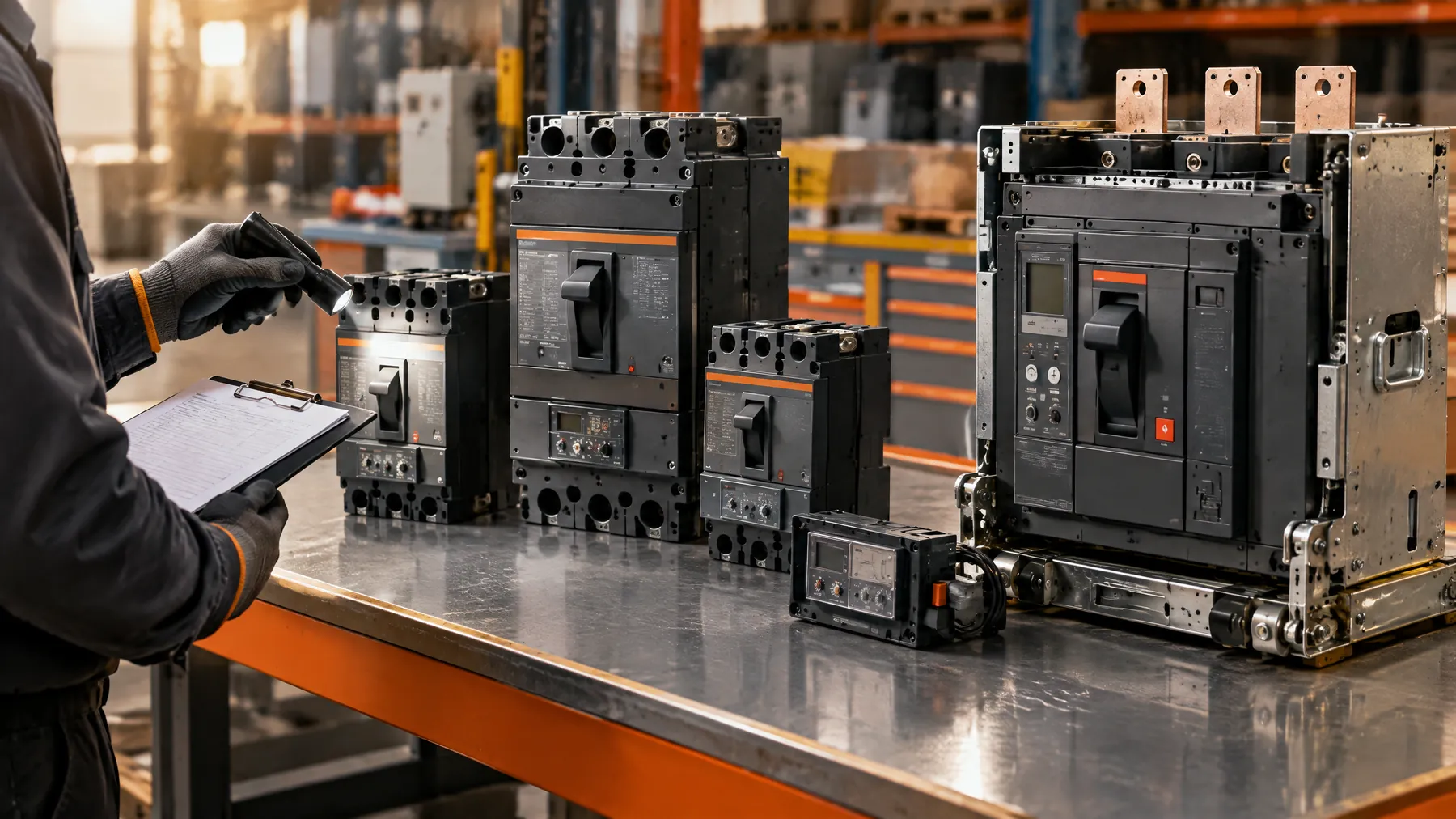
What affects marketability and value?
Commercial panelboard circuit breakers are marketable when they match common panelboard platforms, have clearly stamped catalog numbers, and retain original trip units and accessories. Brand recognition and standard ampere/frame ratings increase demand from electrical contractors, builders, and reconditioners. Complete breakers with intact lugs, bus stabs, and labels are easier to resell than stripped or modified pieces. Large lots, recent service records, and local availability for pickup boost interest. Obsolete or nonstandard parts can sell to specialty repair shops, but their value depends on scarcity and documented application.
Manufacturer & Series
Recognized brands and intact series numbers make matching to panelboard platforms easier. Certain series are in steady demand for retrofit or replacement. Missing series information reduces buyer confidence and can lower offers.
Interrupting Capacity
Breakers with clearly stamped kAIC ratings are preferred because they verify safe application limits. Higher interrupting ratings broaden resale opportunities to commercial projects. Unstamped or unclear ratings require documentation or testing, affecting valuation.
Physical Condition
Intact lugs, undamaged housings, and readable labels increase buyer confidence. Corrosion, modifications, or missing hardware reduce demand and may require refurbishment before resale or testing.
Lot Size & Location
Large, contiguous lots and on-site accessibility make logistics simpler for pickup and increase interest from dealers. Remote sites or single breakers raise handling costs and impact the offer.
Where this equipment is commonly found
Panelboard circuit breakers commonly come from tenant fit-outs, building upgrades, data center refreshes, and plant decommissioning. Knowing the project type, original installation date, and downstream loads helps us determine remaining life and compatibility with replacement panels. Breaker history reveals whether units served resistive or motor loads and if they saw frequent trips. That information affects refurbishing paths and buyer interest. Do not energize or attempt live testing; qualified personnel must perform any energized testing, disconnection, and removal for safety and compliance.
How to prepare the breaker for review
Before removal, preserve nameplates, catalog/model labels, trip unit markings, and any factory stickers. Photograph each breaker in place showing the panelboard, bus connections, labels, and adjacent breaker positions. Capture close-ups of ampere/frame, trip settings, and interrupting rating. Keep original accessories, handles, shrouds, and installation hardware together. Do not attempt live testing or removal while energized. Have qualified electrical personnel disconnect and remove equipment. Retain any service tags, maintenance records, and drawings to speed evaluation.
Do not clean labels with harsh chemicals, dismantle the breaker for better photographs, remove copper, separate matched accessories, or energize an unknown unit. Keep the inventory dry, protected from impact, and associated with its records. Qualified personnel must control any testing, electrical isolation, disconnection, racking, rigging, or field removal.
How the sale moves forward
Frequently asked questions
Do you buy used or obsolete panelboard breakers?
Yes — we buy used and some obsolete panelboard breakers on a case-by-case basis. Value depends on manufacturer, catalog/series, ratings, condition, and demand. Obsolete units often sell to specialty rebuilders. Submit photos, labels, and quantities so we can determine marketability and provide a quote.
What photos do you need to get an offer?
Send clear photos of each breaker installed in the panelboard, close-ups of the nameplate, catalog/model, ampere/frame/trip markings, interrupting rating, bus connections, and any damage. Include overall shots showing panel ID and breaker locations. Do not take pictures while attempting live testing.
How many breakers will you buy and who handles shipping or removal?
We purchase single breakers but prioritize larger, contiguous lots. For small quantities sellers may ship if properly packaged. For larger lots we arrange on-site pickup. Any disconnection and removal must be performed by qualified electrical personnel. Provide location, quantity, and access details for logistics planning.
How quickly can I expect an offer after I contact you?
Response time depends on identification quality, quantity, condition, location, and project complexity. Complete catalog information, readable labels, current photographs, and clear logistics details reduce follow-up questions. Large or installed inventories may require additional review before terms are final.