Do we buy switchboard circuit breakers?
Yes—We buy switchboard circuit breakers when the manufacturer, exact catalog or series number, electrical ratings, physical and functional condition, available quantity, site location, completeness (draw-out components, accessories), and current demand align. For offers we require clear ID, condition photos, and logistics. Qualified personnel must handle energized testing, disconnection, and removal before shipment. Call or email us for a quick review.
What sellers should know
Surplus Generator Buyers purchases commercial and industrial switchboard circuit breakers nationwide. We focus on transfer, distribution, and power breakers removed from electrical switchboards and gear: draw-out power breakers, fixed-mounted molded-case units in switchboards, and high‑capacity three-phase breakers. Sellers should supply manufacturer and full catalog/series numbers, ampere and trip settings, voltage, interrupting rating, photos, quantity, and location. We review equipment for completeness, mechanical draw‑out parts, control wiring, and mounting hardware. Offers depend on that information, condition, and current demand. Qualified electricians must handle energized testing and disconnection before removal or shipment.
Examples we review
Use the list below as an identification guide, not a promise that every unit will qualify. The exact model, configuration, condition, quantity, location, completeness, and present demand still control the purchasing decision.
What information should you send?
A complete submission lets a buyer answer the seller’s real question: whether this exact breaker or inventory has a practical commercial market. Copy identifiers exactly as shown and support them with current photographs.
Manufacturer and OEM name
Complete catalog/series and serial number
Ampere rating, frame size, and trip unit type/settings
Voltage rating, number of poles, and interrupting (kAIC) rating
Condition status and functional testing or maintenance records
Quantity available and exact pickup/shipping location
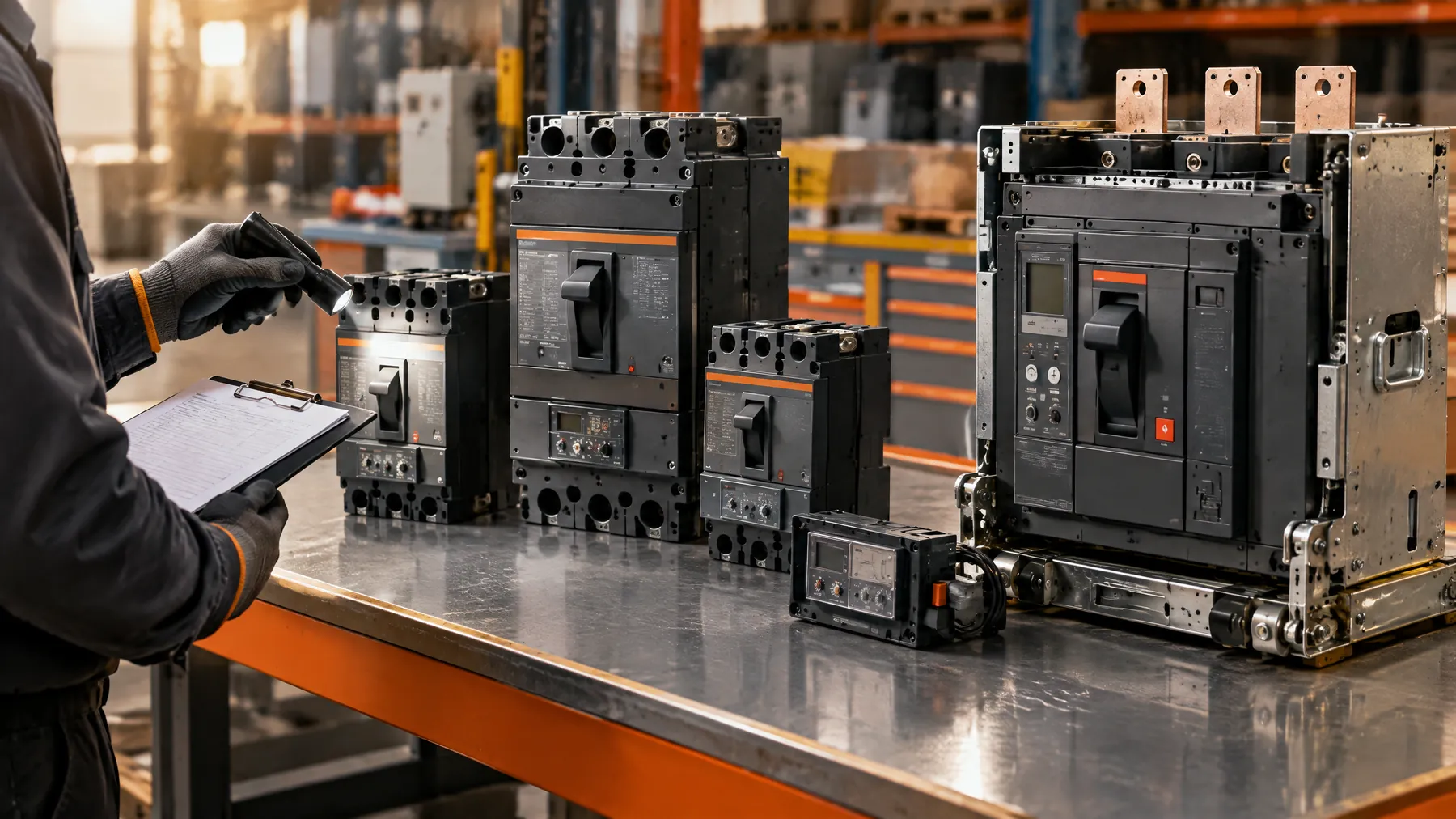
What affects marketability and value?
Marketability of switchboard circuit breakers depends on brand, frame and trip ratings, interrupting capacity, and whether breakers include original draw‑out carriages, racking handles, and control modules. Common commercial buyers seek breakers from major OEMs with documented catalog numbers and replaceable trip units. Breakers that match existing switchboard systems or spare critical capacity for power plants, data centers, and industrial facilities are more liquid. Obsolete or incomplete units can still sell if lots or cores are available for parts or rebuild programs. We evaluate quantity, condition, and logistics to determine market interest and feasible offers.
Manufacturer & Series
Known OEMs and intact series numbers make breakers identifiable for spares matching. Buyers prefer catalog-identified units since replacement parts and trip modules are sourced by series. Unknown or relabeled breakers reduce marketability.
Interrupting Rating
High interrupting capacity and documented kAIC ratings directly increase usability in heavy commercial systems. Breakers with stamped or nameplate interrupting values are easier to place than units lacking clear interrupting documentation.
Condition & Test History
Complete service records, recent trip tests, and evidence of proper storage materially affect value. Breakers removed for upgrades with clean history are more marketable than units removed after faults or without testing documentation.
Quantity & Logistics
Larger lots and on‑site accessibility reduce unit handling costs and make recycling or rebuild programs viable. Single breakers can sell, but lots allow buyers to spread transportation and reconditioning costs across inventory.
Where this equipment is commonly found
Switchboard circuit breakers commonly come from utility substations, commercial switchgear rooms, industrial plants, hospitals, and data center distribution systems. Knowing project history—why the breaker was removed, how it was used, maintenance and test records, and what switchboard it came from—affects valuation. Breakers retired for system upgrades may be in good condition. Units removed after fault, overload, or age need documentation and testing. Provide project notes and service records when available. Qualified personnel should manage energized evaluation and removal.
How to prepare the breaker for review
Preserve nameplates, serial and catalog numbers, and any trip unit or electronic trip modules. Keep draw‑out carriages, racking handles, faceplates, shunt trip coils, and auxiliary contacts with the unit. Photograph: full unit in situ, close‑ups of nameplate and catalog numbers, trip unit face, racking mechanism, bus connections, and control wiring. Note any visible damage, labels, or modification tags. Do not attempt energized testing yourself. Qualified electricians must perform de‑energized verification, functional testing, and safe disconnection before removal or shipment.
Do not clean labels with harsh chemicals, dismantle the breaker for better photographs, remove copper, separate matched accessories, or energize an unknown unit. Keep the inventory dry, protected from impact, and associated with its records. Qualified personnel must control any testing, electrical isolation, disconnection, racking, rigging, or field removal.
How the sale moves forward
Frequently asked questions
Do you buy used or obsolete switchboard circuit breakers?
Yes. We evaluate used and obsolete switchboard breakers on a case‑by‑case basis. Value depends on identification, interrupting rating, condition, completeness, and available lots for parts or rebuild. Provide detailed photos and documentation. Qualified technicians must de‑energize and disconnect equipment before pickup.
What photos do you need for an offer?
Send clear, in‑place photos: full breaker in the switchboard; close‑ups of nameplate and catalog numbers; trip unit face; racking mechanism; bus and cable connections; and any damage or modification tags. Include wide shots showing surrounding gear and removal access. Do not attempt energized testing.
What quantities do you buy, and who handles shipping or removal?
We buy single breakers and multi‑unit lots nationwide. Larger quantities usually attract better interest. For removal and shipping we can coordinate logistics or accept seller-arranged transport. All energized disconnection and removal must be performed by qualified contractors. Provide site access and handling constraints in your inquiry.
How long does it take to receive an offer?
Response time depends on identification quality, quantity, condition, location, and project complexity. Complete catalog information, readable labels, current photographs, and clear logistics details reduce follow-up questions. Large or installed inventories may require additional review before terms are final.