Do we buy vacuum circuit breakers?
Yes—Surplus Generator Buyers purchases vacuum circuit breakers depending on manufacturer, exact catalog/series number, ratings, condition, quantity, location, completeness, and current demand. We buy indoor and medium‑voltage vacuum breakers from utilities, substations, OEM panel rebuilds, and plant retirements. Provide detailed ID data and photos for a quick response. Removal and live testing must be performed by qualified personnel only.
What sellers should know
Surplus Generator Buyers purchases vacuum circuit breakers from decommissioned switchgear, substations, industrial plants, and OEM surplus nationwide. We evaluate draw‑out and fixed vacuum breakers used in medium‑voltage distribution (typically 2.4–38 kV), including interrupter bottles, racking frames, and control/trip assemblies. To quote we need nameplates, ratings, serial numbers, and condition notes. We buy single pieces and lots. Presence of trip units, spare parts, and test reports affects lead time. Send photos and the site location to start an offer. Common manufacturer names on the nameplate help with identification and compatibility checks.
Examples we review
Use the list below as an identification guide, not a promise that every unit will qualify. The exact model, configuration, condition, quantity, location, completeness, and present demand still control the purchasing decision.
What information should you send?
A complete submission lets a buyer answer the seller’s real question: whether this exact breaker or inventory has a practical commercial market. Copy identifiers exactly as shown and support them with current photographs.
Manufacturer (name on nameplate)
Complete catalog/series and model number
Ampere rating, frame size, and trip unit details
Voltage class, number of poles, and interrupting rating (kA)
Condition notes and any test or maintenance records
Quantity available and exact site location
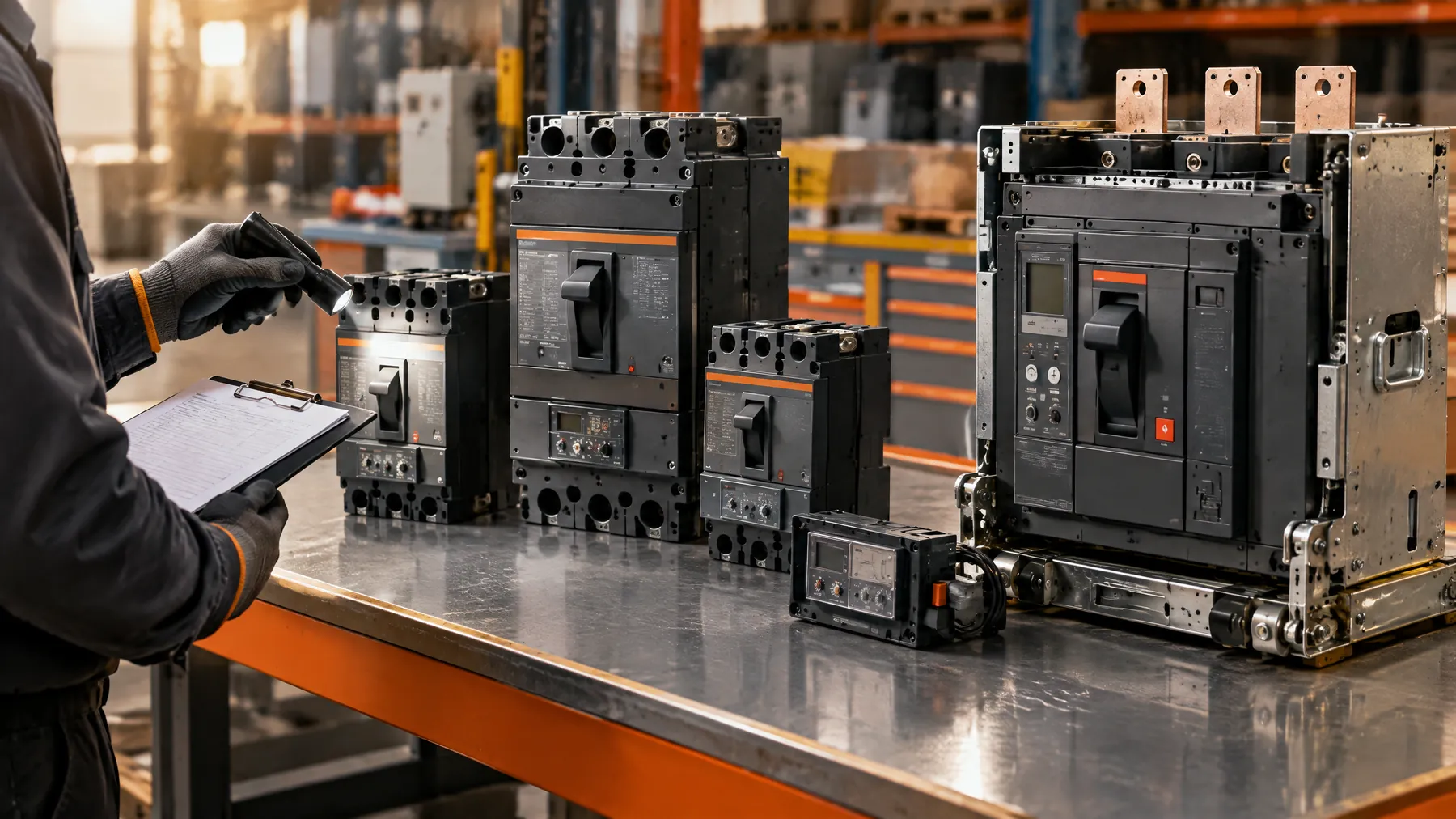
What affects marketability and value?
Marketability depends on intact vacuum interrupters, legible nameplates, and documented ratings. Breakers with original trip units, controls, and mounting accessories are easier to remarket to facilities replacing like‑for‑like equipment. Low mechanical operations count, recent maintenance records, and successful dielectric or secondary injection test reports increase buyer confidence. Even obsolete frames can sell for parts or rebuild cores if interrupters and racking mechanisms are serviceable. Volume and location also influence interest. Send full ID photos and any service history so we can assess remarket potential. We do not guarantee value for every item.
Nameplate Legibility
Legible nameplates and serial numbers let us confirm exact frame, voltage, and interrupting ratings quickly. Clear IDs reduce research time and increase the likelihood of an accurate, timely offer.
Mechanical Condition
Smooth racking, intact mechanisms, and low operation counts indicate suitability for reuse. Damage to racking, interlocks, or linkages often requires refurbishment, which lowers marketability and increases customer lead times.
Test Documentation
Recent dielectric, secondary injection, or factory test reports substantially increase buyer confidence. Documentation that shows interrupter integrity and trip function helps us place breakers into rebuild or resale channels faster and with fewer inspection steps.
Quantity & Logistics
Multiple units or complete breaker bays attract more buyers due to scale. Accessible staging areas, clear counts, and documented site access reduce removal costs and improve offer competitiveness for industrial or utility surplus.
Where this equipment is commonly found
Vacuum circuit breakers are common in medium‑voltage distribution, industrial plants, generator switchgear, and utility substations. Buyers want project history: why the breaker was removed, hours of service, fault events, and recent repairs. That history helps estimate remaining life and refurbishment needs. Compatibility with existing switchgear controls or racking systems determines reuse potential. Provide project notes and any test certificates. Do not attempt energized inspection; all live testing and disconnection must be done by qualified electricians or technicians before we evaluate or remove equipment.
How to prepare the breaker for review
Before contacting us, preserve the breaker’s nameplate, serial numbers, and any attached trip or control modules. Photograph the front, side, rear, interior interrupter area, racking mechanism, and control wiring labels. Keep maintenance logs, test reports, and shipping crates if available. Note whether the breaker is installed, racked out, or already removed. Do not attempt disconnection or live testing yourself; qualified personnel must perform those tasks. For large lots, mark unit numbers and provide a simple count and site access details for removal planning.
Do not clean labels with harsh chemicals, dismantle the breaker for better photographs, remove copper, separate matched accessories, or energize an unknown unit. Keep the inventory dry, protected from impact, and associated with its records. Qualified personnel must control any testing, electrical isolation, disconnection, racking, rigging, or field removal.
How the sale moves forward
Frequently asked questions
Do you buy used or obsolete vacuum circuit breakers?
Yes—we buy used and obsolete vacuum circuit breakers on a case‑by‑case basis. Even out‑of‑production frames can have value for parts or rebuilds if interrupters and mechanisms are serviceable. Provide nameplates, condition notes, and photos. Energized disconnection must be performed by qualified personnel before removal.
What photos do you need to evaluate a vacuum circuit breaker?
Send clear photos of the nameplate, full‑frame front, side and rear views, interior interrupter or bottle area, racking mechanism, trip unit/control modules, and any wiring or label close‑ups. Include a photo showing unit location and surrounding clearance. Do not perform live testing yourself.
How many breakers do you buy and who handles shipping or removal?
We buy everything from single breakers to entire switchgear bays nationwide. For single units sellers often ship or arrange pickup; for large lots we coordinate removal logistics with qualified rigging and electrical contractors. Provide unit counts, staging area, and on‑site lifting access for removal planning.
How do I get an offer for my vacuum circuit breakers?
Email photos, nameplate images, catalog/model numbers, ampere and voltage ratings, quantity, and location to our acquisitions team. We’ll review and respond with questions or a preliminary indication. For site visits or large lots we may request additional documentation and coordinate a scheduled inspection.